Now that they’ve had a chance to recover and digest, Rob Bates and Victoria Gomelsky share all their takeaways from the JCK and Luxury shows in Las Vegas. They talk about the success many exhibitors at the shows reported in the face of turbulent times, challenges in the natural and lab-grown diamond spaces, and the phenomenon of “premiumization” in the watch industry and luxury market at large. The hosts also discuss a Collective Horology event Vic attended in Hollywood, as well as the ongoing economic strain on the middle-class customer.
Listen Now
Title sponsor: De Beers (adiamondisforever.com)
Show Notes
02:00 A record-breaking show
03:30 Analyzing jewelry’s enduring prosperity amid turbulent times
05:40 Possible paths forward for the natural diamond market
09:40 Bridal retailers and the lab-grown vs. natural diamond conversation
13:50 A big year for watches at JCK
16:40 Premiumization in the watch and luxury space
21:30 A recent Collective Horology event
23:50 Challenges for middle-class customers
Episode Credits
Hosts: Rob Bates and Victoria Gomelsky
Producer and engineer: Natalie Chomet
Editor: Riley McCaskill
Plugs: @jckmagazine; adiamondisforever.com
Episode Transcript
This transcript has been abridged and edited for clarity.
Victoria:
Welcome to The Jewelry District. By the time this airs, it’s going to be almost a month since I last saw you in Vegas.
Rob:
I didn’t expect to be that busy this Vegas, and it was crazy. We’re still recovering, right?
Victoria:
I agree. My first Vegas was in 2000 with Russ Shor, who we pinned down for a quick podcast. He was our former longtime diamond editor at JCK, and my boss when I first joined the industry at GemKey. Then for many years, he was GIA’s senior industry analyst, now retired and consulting. But it was so funny to run into him in the press room, because it really felt full-circle.
For all the years I’ve been going, this year felt extra extra. I saw Instagram posts from longtime veteran of the show Lauren McCawley, who works with Lafonn. And she said “record-breaking show” in one of them.
Lafonn makes accessibly priced jewelry. They use simulated and lab-grown diamonds. So it’s not just brands that are operating at that very high end—natural diamonds 3 carats and above.
I think maybe it boils down to: Are you marketing? Are you reaching your customers? Are you engaging with them? Do they know you’re at the show? Are they making appointments? If you’re not doing any of that, then it’s pretty reasonable to expect you didn’t have a great show. But for those people who pulled it out, people turned out and people were spending.
Is it a comment on jewelry’s long-term potential and viability and why—even in the broader luxury landscape when handbags and fashion might be down—jewelry remains this bright spot? Watches are both good and bad, depending on where you are in that world. But for those luxury groups like Richemont and LVMH, it’s jewelry that remains the bright spot in their earnings reports.
Rob:
There are a lot of theories why that is. First of all, it’s said that in turbulent times—and I think we can all agree these are turbulent times—people tend to turn to jewelry because it’s a way to express feelings. People get more emotional and think about the people they care about. We saw that after 9/11. We even saw it to some extent after the financial crisis, which is not when you would expect it. So jewelry tends to do well when people are feeling emotionally raw.
Secondly, and this is something I’ve heard quite a bit, some of the big luxury brands took a lot of price increases during COVID because they could. And consumers are starting to rebel a bit. They’re saying, “Why are you taking these price increases and we’re not getting anything more for it?” The top-end handbags and watches still have these incredible waiting lists, [but] it’s not a great customer experience for a lot of people, and I think more people are starting to question that.
Jewelry has always been majority unbranded. People will say that a lot of the growth is in the branded segment, but I think the price increases you’re seeing on jewelry are understandable because of the price of gold. So at least there’s a reason for that. It’s not just “We’re taking a price increase because we can and because so many people want this.”
Victoria:
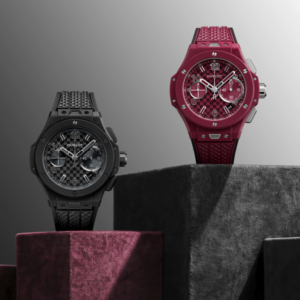
Right. I just covered this very conversation with respect to the watch world. It’s this idea of premiumization: The growth is not so much from selling more or having more customers; it’s from selling more expensive pieces.
In Vegas, there were a lot of diamond events. A lot of natural diamond events—let’s underline that part. The Natural Diamond Council, De Beers, Botswana, Angola, and Namibia had a presence at the show, so there was a focus on natural diamonds.
You moderated a discussion between Al Cook, CEO of De Beers, and Bogolo Joy Kenewendo, Botswana’s minister of minerals and energy. You asked what happens to the broader production that comes from a mine. You can’t survive on just selling these large rocks. You have to sell the run of mine. I don’t recall if they really answered that question or if that got answered in a way that was satisfactory.
Rob:
Well, there’s no easy answer. One of the things Al brought up was the De Beers Desert Diamonds campaign, which is focused on off colors, lower colors. It’s this idea that if something is natural, it has flaws, it’s not perfect. It’s not turned out by a machine, it has something different about it, and that’s what gives it character.
I remember years ago, somebody said colored diamonds are like people—their flaws make them interesting. That’s the message they’re trying to put out, that having a lower-quality diamond isn’t something to be ashamed of…is something to be excited about because it’s individual, and it’s a reflection of you now.
Whether that will work, I don’t know. There’s anecdotal evidence that certain lower colors are starting to pick up a little bit, but it’s tough. And I don’t think there are any easy answers.
I went to the Rapaport breakfast and his whole thing is “Sell diamonds to rich people.” I talked to diamond dealers there who said, “We would if we could, but that’s not where the bulk of the business is.” So you can’t just surrender that part of the market.
The natural diamond market has undoubtedly lost a lot of ground, probably more even than they expected, even more than some of the lab-grown businesses expected. I think it’s going to take a lot of time to make it up, if it can. I don’t think anything is definite at this point, but they need to think of creative ways to promote smaller, lesser-quality goods and the image of natural diamonds in general. If everybody’s wearing a big, near-perfect 3-to-4 ct. lab-grown diamond, is it that special? That’s what they’re trying to promote.
Victoria:
Yes, I appreciate the real mess that this trade has gotten itself in. I wrote about it for the show daily. I went to the De Beers breakfast on Friday where Al Cook reiterated a lot of the comments he’d made during your discussion with Minister Kenewendo the day before during the panel with the House of Botswana, trying to strike this note of optimism. And the show was incredibly optimistic, but the diamond conversation felt fraught.
I chatted with a retailer, Diane Garmendia. She owns this lovely boutique, 33 Jewels, in Santa Barbara, Calif. Bridal’s her key business. She’s been doing engagement rings for a long time. And now, since labs have become mainstream, that’s what women and couples come in and ask for. They want the same kind of big diamond that their girlfriends have and that they see on social media. Steering them away from that into a natural, which is inevitably going to be smaller because their budget can only accommodate so much…
She doesn’t stock the lab. It’s not something that she promotes, but when they come in and they want that ring, that’s what she has to do. I mean, she’s in this incredible position. How can she turn around and say, “No, I’m not going to sell that,” when that’s what her customers want?
Rob:
I don’t think anyone is 100% clear about where this goes. As you mentioned, the natural diamond market is trying. They’re putting a lot of money and effort and their voice behind it.
The day after the De Beers talk, I had a lab-grown panel. And it was actually a much more interesting conversation. We had a retailer on there, the CEO of Riddle’s Jewelry, a retail consultant, people who deal in labs. And one of the things that people came back to is for retailers, this is a difficult situation because they don’t necessarily want to give their entire business over to lab.
Now, I’m sure there are some retailers who would disagree, but I think many retailers are a little nervous about giving their entire business over to lab, which is a depreciating asset, and is produced in these unlimited quantities. It’s a very different product than what the industry is used to.
It sells for a lesser price point, and even though the margins are better, in some cases the actual dollars are less, so you can have a better margin on lab, but if you’re making less money, it doesn’t really help you. So a lot of retailers feel the need to have a more balanced inventory and a more balanced selection because they understand that it’s a problem.
I was talking to people from a lab-grown company and I said, “What would happen if the natural business goes away?” Let me be clear: We’re far from that point, but if the natural business goes away, your business will suffer too because no one will promote diamonds. And they said, “People have always loved diamonds,” which is true, and yet people said the same thing about natural diamonds and look where we are now. So you can’t take anything for granted.
People are understanding the need to get some balance back in the market, but we’re at this very fraught point, and I don’t think there’s any easy way out.
Sponsor message:
This podcast is brought to you by De Beers. It’s not every day a bridal offering reflects love the way Desert Diamonds do. Both are completely natural. Both take time to form. And no two are ever alike. That’s what makes these rings mean so much more. From sunlit whites to golden-hour champagnes and sunrise blushes, colors as natural as love itself. This year introduce your bridal clients to Desert Diamonds. A diamond is forever. Visit adiamondisforever.com to learn more.
Rob:
We should also talk about premiumization. That’s something that I know you’re following in the watch business. There was a lot of watch stuff at the show this year, probably the most in years.
Victoria:
Yes. I mentioned my first JCK was in 2000 and I was really wowed by the watch presence there. I knew nothing about Swiss watches at all. I remember going to an Ebel party at some fancy penthouse—this is back when the watch companies really embraced the risqué. I distinctly remember an ice sculpture of an Ebel watch with a naked woman covered in blue paint standing next to it. And it just wouldn’t fly today, but it was clear that JCK was an important showcase and platform for Swiss watch brands.
And that was true for many years until it wasn’t. Some of them migrated to the other show. Then a lot of them put all their focus on the shows in Geneva and of course, Baselworld prior to that.
So we hadn’t seen as much watch presence at JCK until this year. Hats off to the team there under Sarin Bachmann, of course, and Meghan Margewicz, who runs the Timepieces salon that opened. So we did have a much bigger watch presence at JCK, not just from exhibiting brands—the Citizen Group brought all its brands. G-Shock and Casio were there. Some smaller makers, like Nivada Grenchen, which is an up-and-coming old brand that has been reestablished and revived.
There was some really cool watch momentum, but there was also a lot of education. The FHH, the Fondation de la Haute Horlogerie, had a big education component at the show. There were a lot of interesting sessions on watches and therefore a lot of important, relevant speakers who came.
I had lunch with the team from Chrono24 and their new CEO, which was great. Chrono24 is, of course, one of the world’s biggest resale platforms for watches, right alongside eBay in terms of size and import. They’re based in Germany and brought their team to the show.
WatchPro had a big party and RedBar, the collectors group, had a cocktail event. There was just a much bigger watch presence at JCK this year than ever. So that was really exciting because it seems like if you’re not going to get the brands exhibiting, you can at least have people in the ecosystem talking about watches.
Even though watches are in some ways such a different world to jewelry, they are united by the fact that they’re sold often by the exact same retailers. I think one of the bigger conversations in the watch world these days is this premiumization topic and rising prices in general. We have seen so many price increases that used to happen once a year.
The watch world would account for rising costs or inflation with a few percentage points of rise. Now, I think the pandemic was—I wouldn’t say it’s the only reason, but it is one of the bigger reasons. People raised prices during the pandemic because they could and because there was this interplay between less production (because factories were closed during lockdowns) and the secondary market. A lot of high-end brands have seen that their pieces on the secondary market are capturing greater value. So those brands in the primary market want to take some of that money for themselves. And so, they see there’s an opportunity to raise prices.
When you ask the brands, they’ll tell you, “Our costs are up.” And of course, we know they are because costs on everything are up, not just gold, which obviously has increased, but a lot of those watches are in steel or other metals. It’s a little disingenuous to say, “Well, gold’s gone up, so we’re raising prices.” I mean, all-gold watches are still pretty rare.
It is the Swiss franc. That’s another big conversation. It’s risen almost 20% against the U.S. dollar. They used to be at parity in early 2022 and now it’s quite a bit more. So those costs for Swiss watchmakers are up. Of course, the U.S. is their biggest market. So they’re earning dollars, but those dollars are costing them much more in Swiss francs. They’re earning less in their biggest market. And they always try to keep parity among currencies.
So, when the U.S. dollar falls against the franc and they’re trying to establish some general parity across the world, they have to raise prices in other markets too. We’ve just seen constant price increases, some of them legitimate because they’re covering their own increased costs and some of them this strategy of premiumization where they’re trying to sell higher-price pieces.
I think collectors, not people in general, but collectors are saying, “Wait a minute. We keep seeing these price increases, sometimes two or three times a year, but we’re not getting more value for our watches. We’re not getting a different or better watch. We’re just paying more for the same watch.” I’ve heard that a lot of collectors, especially at the very high end, are just shaking their heads saying these prices are disconnected from reality. There’s not a real explanation for them.
And it’s not just brands at the higher end. We’re seeing brands that used to be “accessible.” Breitling comes up a lot in these conversations. You used to be able to buy a Breitling for $3,500 and now a lot of them are $10,000 and people woke up and are saying, “What happened here?”
Well, what happened is premiumization, and when Breitling vacates that place at the $3,500 to $5,000 range, plenty of brands are there to take its place. So you’re seeing brands like Oris and Frédérique Constant and Tudor to some degree filling that space, maybe rising in their own way. It seems almost inevitable.
I don’t know where this goes, but at some point, again, we talked about this in a broader sense, but premiumization…I mean, how many wealthy clients are there? And when all these brands are rising, trying to demand from that affluent space, I think it’s pretty crowded at this point.
Rob:
From what I hear, if you look at very low-end watches, they’ve lost a lot of market share to things like the Apple Watch. That part of the market is having a tough time. At the 24 Karat Club two years ago, I got a Bulova watch that I wear now. I don’t think I would ever get an Apple Watch because the last thing I need is another gadget in my life. I feel like I’ve become over-gadgeted, but having a regular watch is extremely handy. I endorse it wholeheartedly.
Victoria:
It is. And that business is phenomenal. Over the weekend, I went to an event. Collective Horology started out as a collectors group cofounded by two people who’ve been friends for decades, Asher Rapkin and Gabe Reilly. They were both watch lovers and they founded this group when they worked at Facebook. They’ve since both left Facebook, but they’ve now transformed into watch retailers specializing in independent watchmakers. And in early June, they had an open house in Hollywood with about 14 brands, a number of which came from Europe.
I showed up thinking I was early and would have time to talk to some of the brands. And there was a line queuing to get in. It was swarmed. I could hardly hear anybody because it was so loud and busy. That business is booming—independent watch brands.
Rob:
That’s not necessarily affordable stuff, right?
Victoria:
No, some of them were. I mean, I asked what the range of watches on offer was, and it went from $2,500 up to $500,000. There was a minute repeater on view. But some of the watches were definitely more affordable, in the maybe $5,000–$6,000 range. I mean, not affordable for me or my friends as a spur-of-the-moment purchase, but in the context of Swiss watches, considered more affordable.
So they were swarmed, swarmed. Gabe Reilly was one of the panelists at JCK. He’d come in for some of the education. I think if you’re in the independent watchmaking business and you are stocking some really interesting brands, whether they’re high-end or more accessible, you’ve got interest. Maybe it’s because of the Apple Watch. In fact, I ran into a collector and he’s a head of design at Apple. He’d flown in from the Bay Area specifically for this Collective Horology open house. So it all ties in together. It’s funny how many overlapping conversations we can all have at once.
Rob:
Yes. People talk about the middle class. I mean, obviously this happens, but what if you graduate from college and you have student loans, the job market is uncertain right now, your long-term prospects are a little shaky, and that you don’t know what’s going to happen with your field because of AI and because of all the disruption that we all kind of live under?
I think that kind of middle-class customer—which is what built the industry and built companies like Zales and Sterling and Signet—that’s a tough customer right now. Even a 28-, 29-year-old doesn’t necessarily want to slap $6,000 on a watch or a diamond unless they feel they have a big pile of money waiting somewhere. But I think there are a lot of kids in that demo that are a little more cautious. Obviously, there’s the price of gas, and tariffs.
I think it’s a tough market, but for whatever reason, and we’re extremely fortunate, jewelry is doing very, very well. So that’s great. And it was definitely one of the strongest shows that I’ve seen.
Victoria:
Amen. We’re blessed to be in a very interesting, always fascinating business and that many people did so well.
Any views expressed in this podcast do not reflect the opinion of JCK, its management, or its advertisers.
- Subscribe to the JCK News Daily
- Subscribe to the JCK Special Report
- Follow JCK on Instagram: @jckmagazine
- Follow JCK on X: @jckmagazine
- Follow JCK on Facebook: @jckmagazine