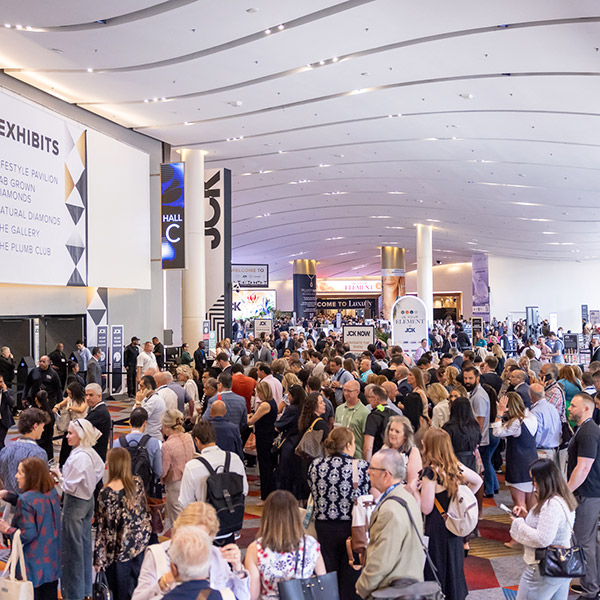
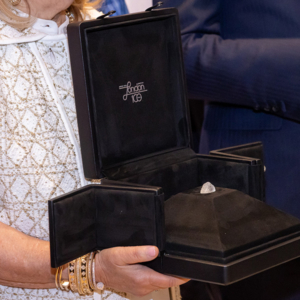
On Friday, the first day of the JCK show at the Venetian Expo in Las Vegas, Mark Udell, CEO of London Jewelers in Manhasset, N.Y., passed a 63 ct. natural rough diamond back and forth between his fingers as if it were a worry stone.
“We have to be very positive today with what’s going on,” Udell said as he stood beside his family, expressing his support for natural diamonds. “There are too many people talking maybe not so positive. Diamonds are beautiful and we can’t lose track of that.”
With respect to the stone in Udell’s hands, there was, literally speaking, no chance of that. A part of De Beers’ traceability-backed Origin program, the gem will soon return to Botswana, its country of origin, where it will be cut by Grandview Klein Diamonds, a diamond manufacturer with headquarters in New York City, into a 20.26 ct. D flawless old-mine cushion cut, in honor of London Jewelers’ 100th anniversary. According to a press release, every stage of the gem’s transformation will be documented.
The fanfare surrounding the transfer of the stone from De Beers to the Udells—Al Cook, CEO of the mining giant, presided over the unveiling alongside Grandview Klein CEO Moshe Klein, and a slew of dignitaries from Botswana—stood in sharp contrast to the anxiety many people at the Venetian were feeling about the future of the natural diamond business in light of growing competition from lab-grown diamonds.
“I was going to say we’re at a crossroads, but it’s more like a spaghetti junction,” longtime diamond industry analyst Russell Shor said during a break at the show. “Anybody who says ‘Here’s the way forward’ is either lying or they don’t know anything, because it’s a real unknown zone out there.”
While Cook struck an upbeat tone during his many appearances at JCK—including a discussion on Thursday with Bogolo Joy Kenewendo, Botswana’s minister of minerals and energy (organized by the House of Botswana), and a Friday breakfast where Cook and several De Beers executives emphasized their optimism about natural diamond sales—he did not sugarcoat the situation.
“It’s been a tough two to three years in our industry,” Cook said at the House of Botswana event. “Let’s be open about that. I think what we’re seeing at the moment is the beginnings of a recovery.
“For the last three years on stages like this, I’ve been asked, ‘Will it be a V-shaped recovery? Will it be a U-shaped recovery?’ I think actually what we’re seeing now is a K-shaped recovery. I think the larger, higher-quality diamonds are really growing in value and in desire. But the lower-quality, smaller diamonds—we’re still seeing challenges.”
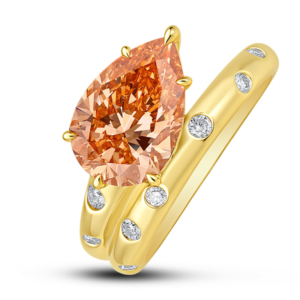
In order to sustain the nascent recovery and ensure it translates “into midstream demand for rough diamonds,” Cook announced on Friday that De Beers—whose impending sale by current owner Anglo American has cast further doubt on the future of the natural diamond business—had increased its marketing budget for 2026, citing the miner’s Desert Diamonds, which aims to promote diamonds across a range of colors that help differentiate the natural stones in a sea of colorless lab diamonds.
Meanwhile, on the JCK show floor, companies in the natural diamond pavilion touted their own efforts to support sales.
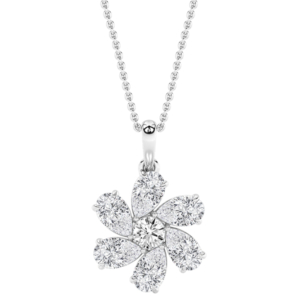
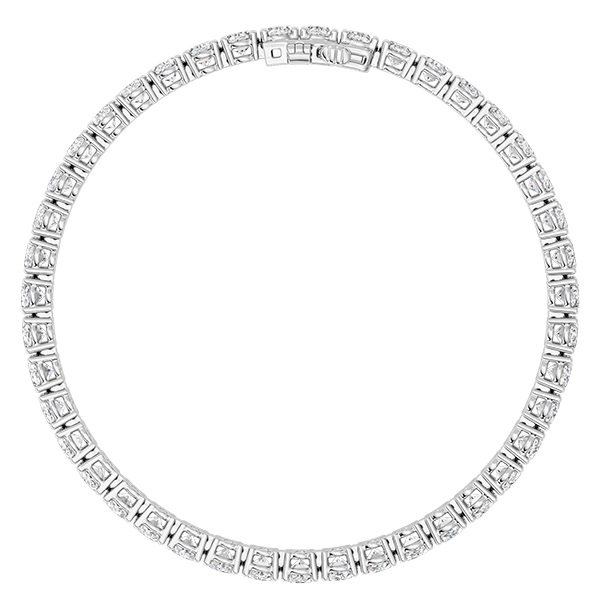
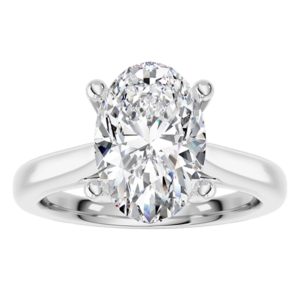
Jay Choksi, vice president at Kiran Gems USA, the American subsidiary of Mumbai-based Kiran Gems (one of the world’s largest producers of natural diamonds), showcased its new Featherweight diamond necklaces, rings, and bracelets in minimal gold frames, its first-ever finished jewelry collection.
“We’re definitely turning a corner. In fact, a lot of retailers are also saying the same thing because they cannot survive only on lab-growns anymore,” Choksi said.
He was referring to the precipitous decline in lab diamond wholesale prices and how retailers accustomed to enjoying large margins would be hard-pressed to continue charging reasonable prices for lab jewels given growing consumer awareness about declining value.
As De Beers’ Friday breakfast concluded, however, Diane Garmendia, owner of the Santa Barbara, Calif., boutique 33 Jewels at El Paseo, highlighted what for many retailers feels like an impossible situation.
“The industry shot itself in the foot by promoting lab diamonds. Now they’re trying to dig themselves out of a really big hole,” she said. “I sell primarily lab diamonds. I don’t love them, but they’re a necessary evil.”
Trying to convince couples to go back to buying a natural diamond, Garmendia said, is an uphill battle.
“It used to be that 1 carat was the goal,” she said. “A carat and a quarter was amazing. They’d work extra hours and they’d save up. Now if they have a carat or a carat and a quarter, it’s like, ‘Oh, that’s so cute.’
“They just want big diamonds,” she said. “A lot of the romance is gone, which is so heartbreaking for me.”
Top: The packed hallway outside the entrance to JCK’s 2026 show on opening day (top two photos courtesy of JCK Events)
- Subscribe to the JCK News Daily
- Subscribe to the JCK Special Report
- Follow JCK on Instagram: @jckmagazine
- Follow JCK on X: @jckmagazine
- Follow JCK on Facebook: @jckmagazine