All over the world, mollusks are unwitting employees of the international gem industry. None of them applied for the job. No oyster ever sent a résumé, nor has a mussel ever negotiated a freshwater contract.
One day they’re filter-feeding in peace; the next, a technician has slipped them a bead or inserted a sliver of tissue and handed over a quota that takes years to fill.
They work around the clock, underwater, without weekends or pay. They never call in sick—though, unfortunately, they do get sick.
Lately, that sickness has become a supply problem. Since 2019, die-offs of young akoya oysters have continued to thin stocks in Japan. And at the 2025 CIBJO Congress, Kakuda Pearl CEO George Kakuda linked lower Japanese output to warming seas.
Fewer pearls are reaching the market just as American customers are asking more questions about where they come from. Nobody in the pearl business can cool the oceans, but the question of origin is one pearl jewelers can start to answer.
Kira Høg Kampmann, founder of Danish pearl supplier Marc’Harit and a 23-year veteran of the pearl trade, took up the issue during an Oct. 7 webinar hosted by Truly Precious, an Amsterdam nonprofit founded in 2025 to clarify sustainability information for the jewelry trade. Pearls are farmed all over the world, she said, but much of the supply chain can’t provide real traceability.
Kampmann makes the case that healthy oysters make better pearls and well-run farms make healthy oysters, but none of that matters if a buyer can’t trace a pearl back to its farm.
The first point to consider in establishing a healthy pearl supply chain is biology. A pearl is built from an oyster’s own nacre—something it can’t do well if it’s sick, crowded, or short on food or oxygen. “If the oyster is healthy, then the chance of having a good-quality pearl is much higher,” Kampmann said.
The second is the farm itself. Operators that limit how many oysters they stock, keep shells clean, and protect the surrounding water improve the odds of culturing healthy pearls. Farmers rarely change their methods out of principle, Kampmann said, but better pearls fetch better prices at harvest. A farmer chasing the most beautiful pearl in the world ends up caring for the water that produces it.
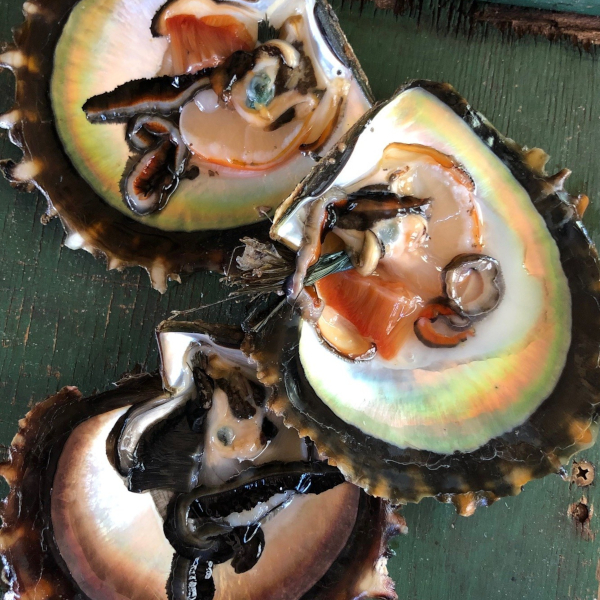
Some farms go further, using what Kampmann calls restorative and regenerative practices, which aim to leave the water healthier than they found it. The oysters themselves can do the job quite well, if they’re set up for success by farm operators. A 2024 case study by The Nature Conservancy, which Kampmann shared with JCK, lays out some of the basics—such as stocking oysters sparsely so they don’t damage the seafloor, cleaning shells and gear regularly, and letting the oysters do what they do naturally: filter the water.
At Cygnet Bay Pearl Farm in Western Australia, the study’s main example, 40,000 adult oysters were filtering 2 million liters (the equivalent of an Olympic-size swimming pool) every hour.
Farms also can become a habitat for other species. The study found nearly twice as many fish around oyster farms, as compared with habitats where farmed oysters weren’t present.
Because of this, pearl farms often can double as marine protected areas, closed to commercial fishing boats. At a farm in Mexico’s Sea of Cortez, Kampmann said, marine life has flourished since operations began in 1993. Farms that have worked this way for years are seeing results quickly, she said. “It really does make a difference.”
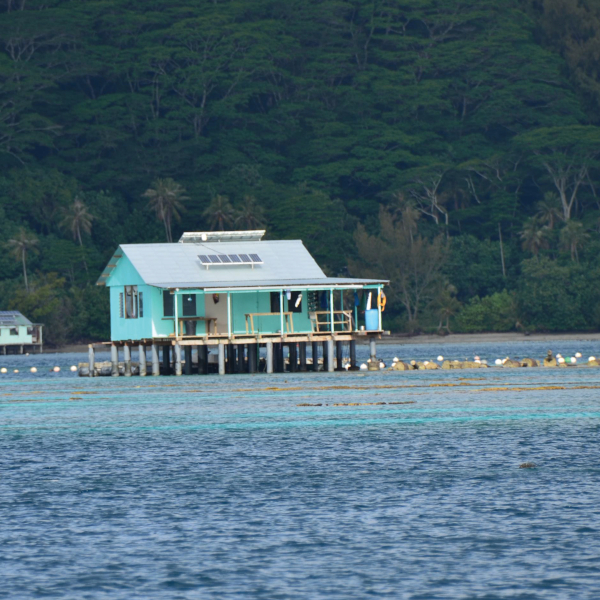
Kampmann cited another farm, in the southwestern Philippines, that managed to persuade nearby communities to stop fishing with dynamite and cyanide. Aside from the obvious environmental damage to coral reefs and the seafloor, pearl-making oysters are not fans of chemicals or explosives.
Off the farm and into the pearl jewel-case
The third point, and currently the weakest, is traceability: A jeweler can’t reward a well-run farm without knowing which one produced their pearls. In China and Japan, Kampmann said, pearls from many farms are typically pooled for sorting, bleaching, and luster enhancement, and their origin often is lost along the way.
“There might be some pearl farms that are working with restorative and regenerative practices, but I don’t know, because they have been mixed with so many other pearls,” she said. That is slowly changing, she added: Some farms in China, and a few in Japan, now sell their pearls individually or directly to wholesalers.
In Indonesia and Australia, by contrast, she buys directly from farms. “Then I will know what type of practices this pearl farm works with,” she said. Even large suppliers rarely name the farm, she told JCK in an earlier interview.
The industry is starting to take notice. Over the past five years, Kampmann said, the conversation has moved up the agenda. At CIBJO’s recent congress in Vicenza, Italy, in September, the Pearl Commission heard that traceability tools, possibly a digital product passport, could be delivered to retailers in the future.
Until then, Kampmann’s advice for jewelers is to decide what matters most.
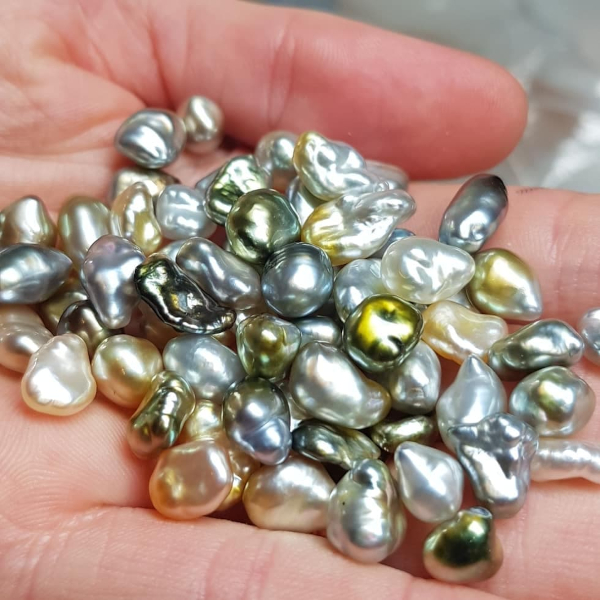
As a supplier herself, she routinely gets vague orders like this: 10 mm baroques, closely matched, a set quantity, a fixed budget—and sustainable. Rarely can all of that be delivered.
A jeweler who puts origin first must design around what traceable farms can supply. Then ask the question most of the supply chain can’t answer: Which farm did this pearl come from?
Kampmann recommends jewelers reach out to suppliers with the same set of questions, and to stick with the ones who answer honestly, even if the answer is no.
“When I don’t know, I am happy to share that I don’t know where this pearl is from,” she said.
The oysters might be doing the biggest share of the work, but they’ll never ask where their pearls end up. Retailers’ customers already are.
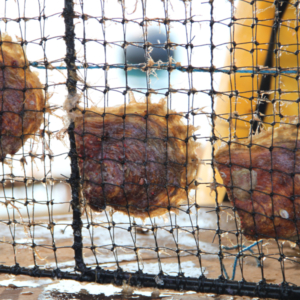
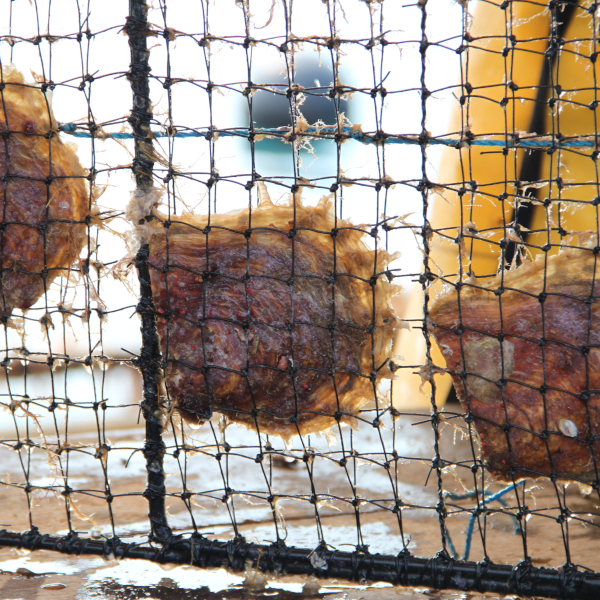
Top: Healthy oysters being cleaned and sorted, by size, on a pearl oyster farm in Bali. This location is used mainly for growing oysters before they are transferred to another location where the oysters are grafted.
(Photos courtesy of Marc’Harit)
- Subscribe to the JCK News Daily
- Subscribe to the JCK Special Report
- Follow JCK on Instagram: @jckmagazine
- Follow JCK on X: @jckmagazine
- Follow JCK on Facebook: @jckmagazine