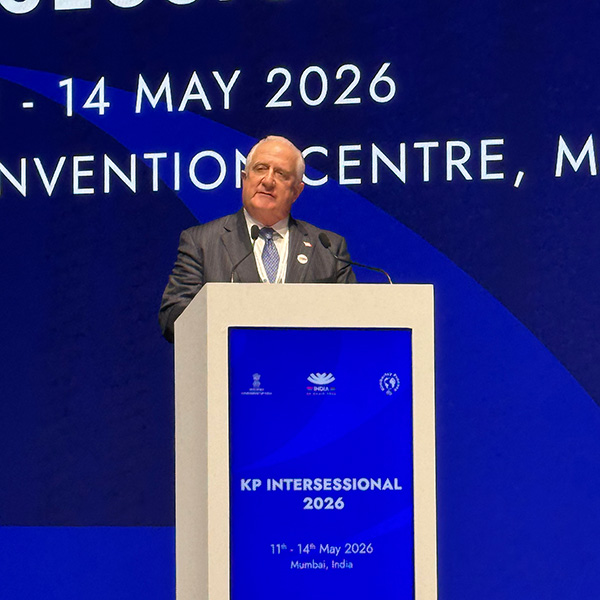
At the Kimberley Process meeting today in Mumbai, Ronnie VanderLinden—the new president of the World Diamond Council (WDC)—pressed the jewelry industry to champion natural diamonds and speak with one voice about value, origin, and transparency.
VanderLinden’s comments came during his opening address at a four-day intersessional meeting, which the Kimberley Process (KP) said is centered on its “3Cs” initiative—credibility, confidence, and compliance.
But a bigger topic could be expansion of the KP’s definition of conflict diamonds, which has been limited to “rough diamonds used by rebel movements to finance wars against legitimate governments.”
A proposed new definition includes “armed conflict and systematic or widespread violence” that is “carried out by…militias, mercenaries, organized criminal networks, private military and security companies, and other non-state actors.”
At the KP plenary last fall in Dubai, some members—Canada, Australia, the European Union, the U.K., Switzerland, and Ukraine—asked for the expanded definition to also cover violence by “state actors.” The plenary concluded with no agreement on a new definition.
“We must pick up where we left off in November and get back to work on changing the definition of a conflict diamond now,” VanderLinden said on Monday. “The world has changed. The industry has changed. Our definition needs to reflect that. We all know it.
“We came so close. Now we need to finish the job,” he added. “We need to remind ourselves what this body is for. We are not here to solve global conflict; we are here to support confidence in natural diamonds. That includes continuing our work on changing the definition of conflict diamonds to reflect the reality of today, agreeing on that new definition, and enshrining it in our core document.”
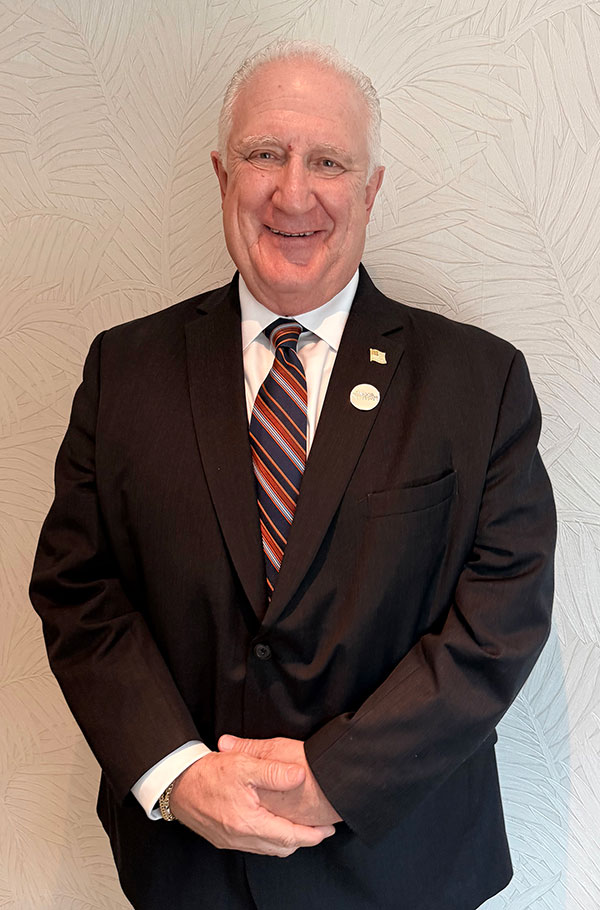
VanderLinden was just elected World Diamond Council president at that group’s May 7 annual general meeting in Antwerp. In his KP address, he said, “The WDC worked tirelessly for the entire three-year review and reform window to change the definition of a conflict diamond.
“I want to give special recognition to two remarkable women: to my predecessor, WDC honorary president Feriel Zerouki, for leading that effort, and to Kele Mafole, whose hard work led to significant progress…. We must not let their effort and energy go to waste. We must not wait for the next review and reform window.”
VanderLinden’s speech also highlighted the WDC’s concerns about lab-grown diamonds and called on those in the jewelry business to understand and promote the natural diamond industry’s positive impact on mining communities and countries.
“If we are not helping sell natural diamonds, we are not doing our job,” he said. “We can talk about governance, we can talk about process. But if we are not supporting the trade and helping to selling natural diamonds, we are missing the point. We must be honest about that, because we are all in this together. And if we are not aligned, we all lose.
“We have to understand what people expect from us today. It is not longer enough to say natural diamonds have value. We have to show it,” said VanderLinden. “We have to show where they come from. We have to show how they move through the pipeline. And we have to show what they do—the jobs they create, the communities they support, the countries they help build.”
VanderLinden reminded attendees that the Kimberley Process exists to build confidence in natural diamonds, and he reaffirmed the WDC’s commitment to helping update the definition of conflict diamonds while supporting the global diamond industry.
The Kimberley Process was established in 2003 as an international certification body aimed at preventing the trade of conflict diamonds and ensuring responsible diamond sourcing practices worldwide.
Top: A few days after taking over as WDC president, Ronnie VanderLinden addresses the Kimberley Process’ intersessional meeting in Mumbai. (Photo courtesy of the World Diamond Council)
- Subscribe to the JCK News Daily
- Subscribe to the JCK Special Report
- Follow JCK on Instagram: @jckmagazine
- Follow JCK on X: @jckmagazine
- Follow JCK on Facebook: @jckmagazine