In late July, I traveled to Louisville, Ky., to deliver a trends presentation at the IJO Louisville show (and, yes, sample some bourbon, of course!). Organized by the Independent Jewelers Organization—a buying group founded in 1972 that stages a twice-yearly show for independent jewelry retailers—the event was my introduction to IJO. I came away impressed by the vendors, the education schedule, and the friendly, tight-knit community the organization has built.
I titled my breakfast presentation “K-Shaped Luxury: Trends to Help You Navigate Jewelry’s Split Market.”
The slides explored everything from the emergence of “Desert Diamonds” to sustained demand for lab-grown stones, as well as the renewed fascination with antique cuts and the growing value of one-of-a-kind design (especially vintage).
I also covered what the shifting metal markets mean for pricing and inventory, how retailers should interpret the so-called “K-shaped” economy, and which colors, styles, and categories are poised to perform this holiday season.
Below, I’ve recapped the key takeaways, including half a dozen trends that emerged or strengthened at the recent JCK and Luxury shows in Las Vegas, as well as a quartet of macro trends that have been building across the fine jewelry industry since the pandemic and are changing the way jewelry is bought and sold.
The upshot? Fine jewelry sales—especially those at the top end of that K—are poised to have a stellar year. But even retailers who serve less affluent communities can prosper if they understand the factors driving consumers to spend. I hope the bullet points below offer JCK readers helpful insights. I’m keen to hear your feedback. Please feel free to email me at vgomelsky@jckonline.com.
What Is the K-Shaped Economy?
- The term K-shaped entered the popular parlance in 2020 to describe the uneven post-COVID recovery and is now ubiquitous, used to describe divergent consumer outlooks.
- Another way to describe this economy is one in which we are seeing extremely high income inequality.
- The very wealthy, making expensive purchases, are driving spending while many lower-income Americans are buying discounted versions of items or financing them with credit cards.
- According to The New York Times, Moody’s Analytics recently estimated that the top 10 percent of households were responsible for nearly half of all spending.
- While the term K-shaped is fairly new, it describes a bifurcated market that’s been building over at least the past decade, intensifying in the years since the pandemic.
- Financial markets have hit record highs, and the wealthiest Americans have been on “an escalator” going up.
- But lower-income families have been struggling owing to a host of factors: tariffs, unemployment, inflation, and job market risks posed by AI.
How Does It Play Out In the Fine Jewelry Industry?
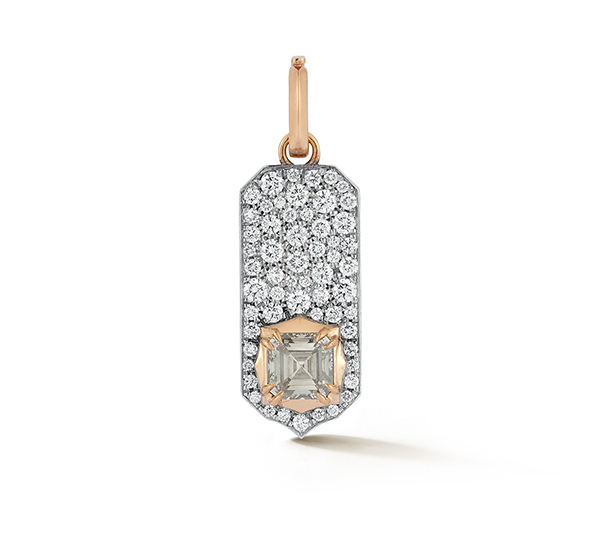
- According to the data analytics firm Tenoris, jewelry sales in the first half of this year continued to grow, even as unit sales declined.
- Sales increased 8.6% in H1, while the average purchase price jumped 19%. The figures indicate that consumer demand has strengthened as the year has progressed, an encouraging sign for jewelry industry stakeholders.
- In June, jewelry sales rose 13% year over year, while unit sales of items priced below $1,500 continued to decline.
- Incidentally, the Swiss watch industry has been grappling with a similar phenomenon in recent years: The total value of exports has risen, while volumes have drastically declined.
- Analysts have cited “premiumization”—a phenomenon in which brands try to improve customers’ perception of goods to support price increases—as a recurring theme.
- All of this has reshaped the pricing landscape.
Jewelers Have Been on a Wild Metals Ride
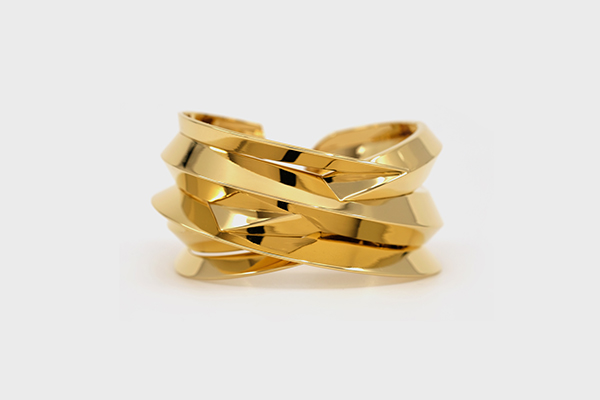
- In recent weeks, gold has hovered between $4,000 and $4,300 per ounce. A year ago, it traded around $3,300. In late January, it peaked at $5,586.
- The volatility has been such that when I showed the jagged graph of gold prices over the past six months to a doctor friend of mine, she said it looked like the electrocardiogram of a patient in extreme distress.
- Gold isn’t the only precious metal that has experienced record-setting daily volatility this year.
- Silver prices increased by 60% in January, following a year of sustained gains. The white metal’s price peaked at $122 an ounce, then fell in early February and is trading at $62 as of press time.
- Platinum, the industry’s traditional prestige metal, is trading around $1,600, up slightly from a year ago. It reached an all-time record high of $2,923 in January.
- The confusion sowed by the ups and downs set the stage for the trends we saw in Las Vegas and has impacted what we can expect to see during the upcoming holiday.
Diamonds Are at a Crossroads
- At the JCK show, I ran into my old boss and mentor, the longtime diamond industry analyst Russell Shor. When I asked him what he thought about the current diamond market, he said: “I was going to say we’re at a crossroads, but it’s more like a spaghetti junction.”
- At the show, Al Cook, CEO of De Beers, talked about the K-shaped recovery. “I think the larger, higher-quality diamonds are really growing in value and in desire. But the lower-quality, smaller diamonds—we’re still seeing challenges.”
- The tension between natural diamond advocates and those supporting lab-grown is not only unresolved, it seems to be growing more intense.
- Let’s go back to the year 2018. That’s when De Beers unveiled Lightbox, its proprietary brand of lab-grown diamonds, which it introduced with great fanfare at that year’s JCK show.
- The company was trying to get ahead of the lab-grown conversation by positioning Lightbox, which set a flat rate of $800 per carat for stones, as a brand of fun, fashion jewelry, ideal for teens and beach vacations. (If you lose it on holiday, oh well, no biggie.)
- It was clear that De Beers was intent on reserving natural diamonds for the all-important bridal category.
- But that’s not how brides across America saw it. They saw an opportunity to go big and get the diamond of their dreams without breaking the bank.
- Then came the pandemic: Scores of lab-grown manufacturers started producing lab diamonds, especially in India.
- Wholesale prices began to plummet due to the glut of goods. And yet prices at retail remained firm enough for retailers to capture sizable margins.
- And therein lies the rub: On the supply side, retailers are incentivized to keep selling lab diamonds. And on the demand side, consumers are snapping them up.
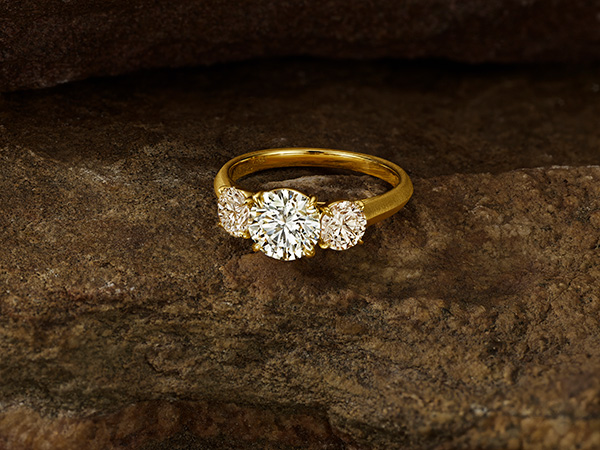
- According to The Knot, six out of 10 brides in 2025 chose lab diamonds for the center stones of their engagement rings.
- Elsewhere in the diamond category, the mania for antique diamonds continues. It’s the Taylor Swift Effect. In August, she and Travis Kelce—who just married—got engaged with an antique 8- to 10-carat old mine–cut diamond set in an 18k yellow gold band.
- As a result, dealers have been scrambling to source antique diamonds, or re-cut modern stones to look antique. Elongated shapes are popular. Anything that has an antique old mine cut is gaining attention and further demand.
- Last but not least, we’ve seen growing interest in “warmer” diamonds, largely as a reaction to the same-same look of lab diamonds. De Beers seized on that distinction last fall when it introduced its latest “beacon.”
- Unlike past beacons—like right-hand rings and three-stone rings—this beacon isn’t a specific style, it’s a palette: “Desert Diamonds.”
- But even before De Beers introduced its campaign, we heard retailers talking about warmer colors. In February 2025, a natural diamond retailer in L.A. told us: “We’re seeing clients wanting our ‘warmer’ diamonds—they’re not shying away from Q and R color stones. Again, it’s about wanting to be different. For a while, all the engagement rings really looked the same. And that’s not the case anymore. Bigger is still what they’re going for, but if they’re going to sacrifice, they’re okay sacrificing on the color of their stone.”
Trends From JCK Las Vegas (#1): Designers have started to embrace alternative materials.
- During the Luxury show in 2025, gold traded around $3,200 and by and large designers leaned in. I distinctly remember Brecken Farnsworth at Parlé telling me that gold was the new flex.
- This year, designers started to give in, acknowledging that with the metal’s volatility, they had to offer more accessible options.
- Retailers are saying: “The sweet spot customer wants something for $2,500, and that’s really difficult.”
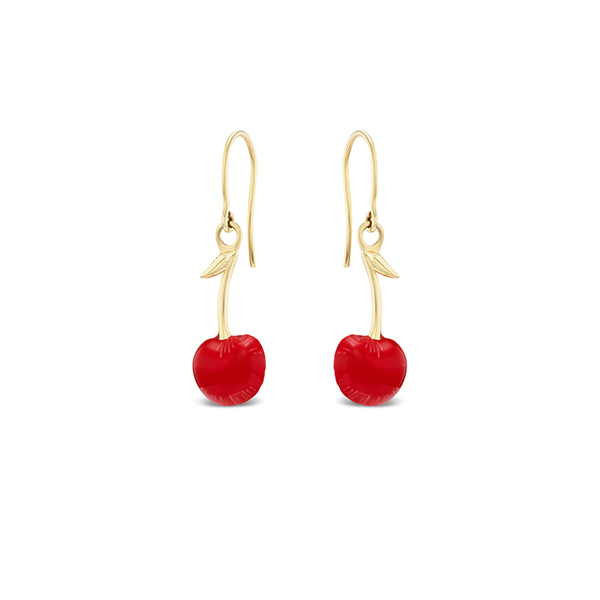
- To hit that target, designers have started to incorporate a slew of chic alternative materials into their collections, including black-coated stainless steel, white ceramic, colorful ceramic-coated silver, and even wood.
- Unlike the aftermath of the Great Recession, designers haven’t flocked to silver or demi-fine. They’re still very much committed to yellow gold, just in more sparing quantities.
Trends From JCK Las Vegas (#2): Minimalist torque necklaces are a reaction to the #neckmess trend of recent years.
- A decade ago, a jewelry designer named Jessica Kagan Cushman coined the hashtag #neckmess to describe her own necklace layering style. It was all about piling it on, things getting tangled, to create a one-of-a-kind, highly personalized look.
- By 2022, we had reached peak layering.
- Now, we’re seeing an equal and opposite reaction: Single bold statement pieces as opposed to layers of small delicate chains.
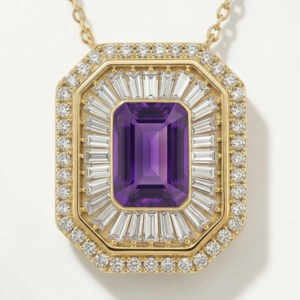
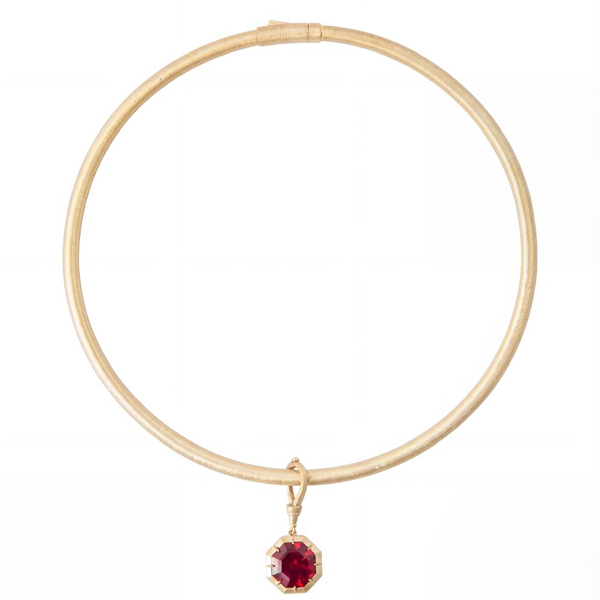
- Enter the torque: a hard rigid collar or neck ring, often paired with a gemstone pendant.
- These minimal styles were everywhere in Vegas.
Trends From JCK Las Vegas (#3): Cord necklaces are having a moment.
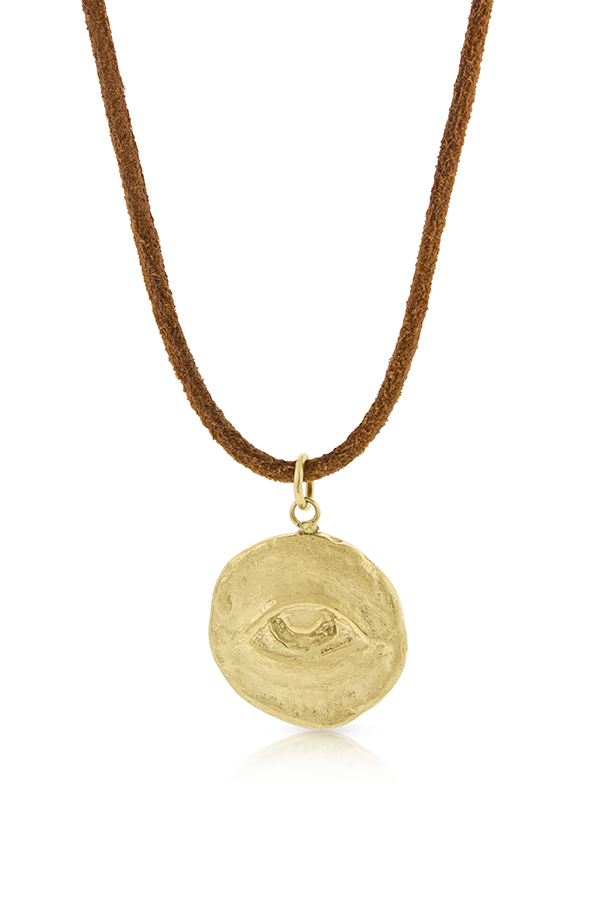
- On its face, the cord trend seems obvious: In order to offer clients more affordable styles, jewelers are placing their gold pendants on cords of leather, silk, rubber, or velvet instead of pricey gold chains.
- Ask jewelers and some will say that they’re choosing cords for aesthetic reasons over and above cost savings.
- Cords add a casual quality to what might otherwise feel very showy. One designer described the silk cord of a necklace in its collection as allowing the piece “to breathe.”
- We’ve seen them in bracelet styles, too, featuring gold and gem-set clasps. But the necklace look is dominant.
Trends From JCK Las Vegas (#4): The Wild West rides again.
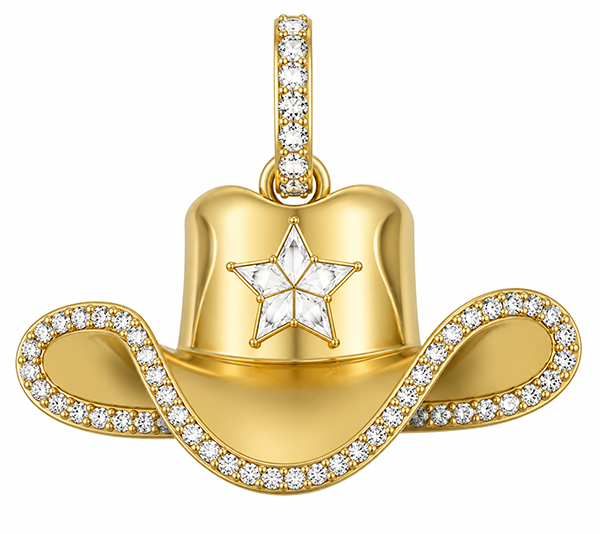
- We started seeing horse motifs proliferate towards the end of last year in anticipation of 2026 being the Chinese zodiac’s Year of the Horse (the Fire Horse, specifically).
- But cowboy culture and Americana had begun trending at least a couple years ago.
- Think back to the launch of Beyoncé’s Cowboy Carter album in 2024, when she appeared wearing a cowboy hat.
- This year, jewelers doubled down on cowboy culture. In addition to horse pendants, we’ve seen loads of horseshoes, cowboy hats, and buckles in gold. One designer in Vegas even showed gold “lasso” earrings.
- In an overlap with the cord trend, we’ve also seen a lot of great bolo ties.
- With this year’s American semiquincentennial, or 250th anniversary, Americana feels more relevant than ever.
- Look to the Italian designer Francesca Villa’s “On the Road” capsule—she was inspired by vintage truck pins, “small pop-culture objects that captured the spirit of speed, freedom, and the mythology of the American road trip.”
Trends From JCK Las Vegas (#5): Boho beads are back.
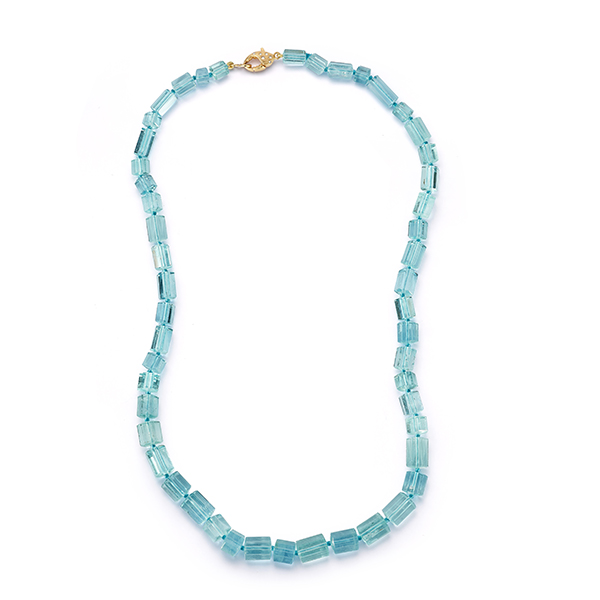
- Colorful beads, whether stone, glass, or pearl, are a summertime staple.
- They evoke a bohemian style that perennially cycles in and out of fashion.
- This year, however, chunky gemstone beads—be they aquamarine, Guatemalan jade, or pearls—served another important purpose, much like cord necklaces.
- They offer a big yet budget-conscious look.
Trends From JCK Las Vegas (#6): Charms offer buyers a mini gold flex.
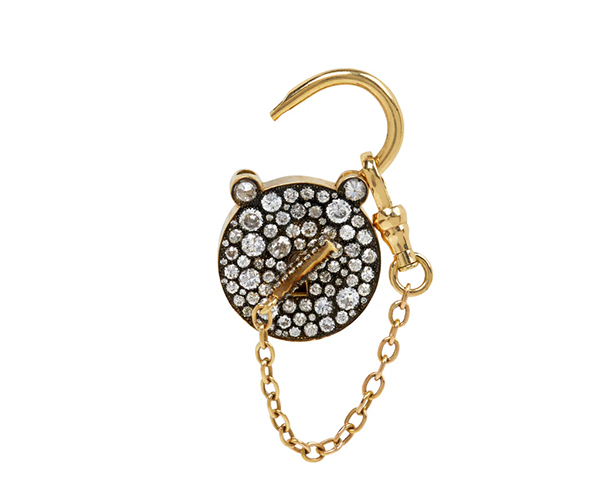
- I just wrote an article for JCK with a headline that sums up this trend: “Charms Are Jewelry’s Answer to $4,000-Plus Gold.”
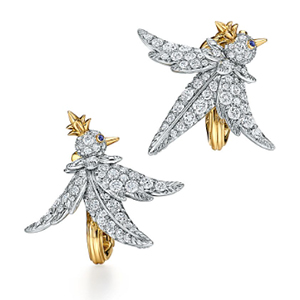
- Instead of embracing silver, or scaling back to 14k or even 10k gold, designers went all in on charms—mostly miniature styles in 18k gold, set with diamonds or colored stones.
- The charm-as-affordable-gold flex is merely the latest personality shift for one of jewelry’s most enduring styles.
- Considered talismans by the ancient Egyptians, charms became sentimental keepsakes during the Victorian era when Queen Victoria popularized gold bracelets strung with miniature portraits and charms to commemorate loved ones.
- In the boom years following World War II, trinkets and souvenir charms representing everything from favorite vacation destinations (think palm trees) to hobbies (golf clubs) gave women a way to convey their personal affiliations—and jewelers a seemingly limitless revenue stream.
- The fact that charms allow people to tell their personal stories remains their number one draw.
Macro Trends (#1): The appeal of one-of-a-kind jewelry
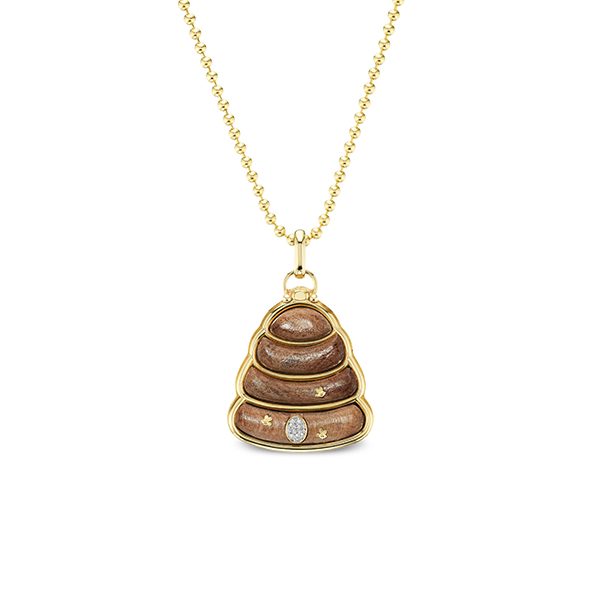
- Consumers, especially those at the top end of the K, are seeking fewer, better things.
- One-of-a-kind designs can’t be price-shopped.
- They come with great storytelling potential.
- And they represent the opposite of something mass-produced.
- As AI becomes even more ubiquitous and omnipresent in our lives, the appeal of unique, handmade items that reflect the artistry of a human will continue to grow in appeal.
- As Randi Molofsky, JCK’s longtime trend guru, told us earlier this year: “People are very interested in things that convey their personality and feel unique. They’re building their own jewelry wardrobe that’s a reflection of who they are rather than a reflection of the zeitgeist. That’s a real thing happening right now, where people are less interested in the piece that everybody has and more interested in creating their own personal moment.”
- Interestingly, something we hear from designers is that when they go to trunk shows, it’s the unique and often most expensive designs that sell first. Yet retailers tend to decline those pieces.
Macro Trends (#2): Vintage jewelry is essential to your mix.
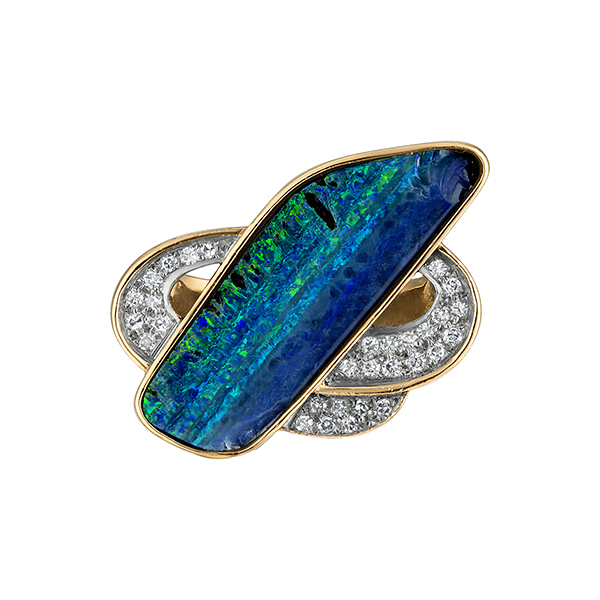
- Gen Z is driving a powerful shift toward secondhand style.
- Not only is buying vintage jewelry the sustainable option, it also gives consumers access to pieces that are, for all intents and purposes, one of a kind.
- Signed jewels—by the likes of Cartier, Tiffany & Co., and Van Cleef & Arpels—fetch top dollar but unsigned pieces offer retailers incredible value.
- They are priced at yesteryear’s gold!
- In the watch category, vintage style is all the rage.
- I wrote a story for The New York Times last fall about how to buy a vintage watch. In it, Sydney Stanback, the global trends and insights lead at Pinterest, told me the platform had seen searches for “vintage luxury watch” grow by more than 80% year-over-year among male Gen Z users.
- “Vintage is no longer just about affordability and quirk; it’s become a shorthand for individuality and discernment,” Stanback said.
- I’ll quote Randi Molofsky again: “Vintage in general is a younger customer who’s aspirational and understands it. They’ve grown up with vintage. It’s not a dirty word. It’s actually cool.”
Macro Trends (#3): The Victorian Revival is on.
- After decades of deco dominance, the vibe among contemporary jewelers has turned decidedly Victorian.
- From the insect jewels swarming retail showcases to the popularity of jewelry featuring hidden messages, the trends dominating the jewelry marketplace have their roots in the 1800s: the period that coincides with Queen Victoria’s reign from 1837 to 1901, as well as the stylistically similar Georgian era that preceded it.
- Victorians’ penchant for festooning their jewels with flowers, insects, swallows, serpents, crescent moons, and other symbols rich with meaning first struck a chord with contemporary designers about 20 years ago when more women began buying jewelry for themselves and embraced designs that reflected their beliefs and dreams.
- That tendency got stronger during the pandemic as people looked to jewelry for meaning, protection, and love.
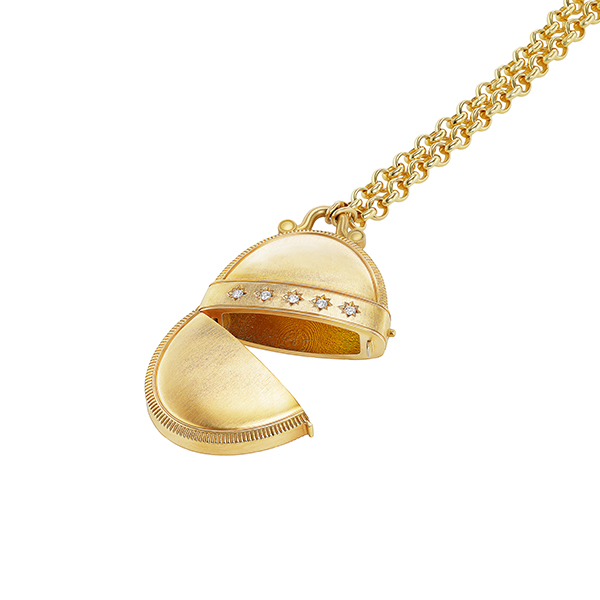
- You can see the impact of the Victorians in the locket styles that contemporary jewelers have reimagined. In Vegas, we saw so many cool hinged pendants and lockets that opened to reveal hidden messages or engraved gold letters.
- Side note: In the 18th and 19th centuries, pieces that had a hinge and opened and did something were called “mechanicals.” That might suggest a motor to a modern ear, but in past, it was a society or nobility pursuit. It makes sense: Jewelry was a form of entertainment.
- In Vegas, these transformable jewels were everywhere.
- Let’s not forget: The Victorian period was a time of travel and scientific discovery—explorers were venturing to faraway lands and bringing back plants and animals. Those discoveries were reflected in the jewelry of the time.
- Of all their contributions to the jewelry canon, however, the Victorians’ most lasting legacy may be the way they used jewelry as a vehicle for storytelling.
Macro Trends (#4): You must incorporate storytelling in your sales process.
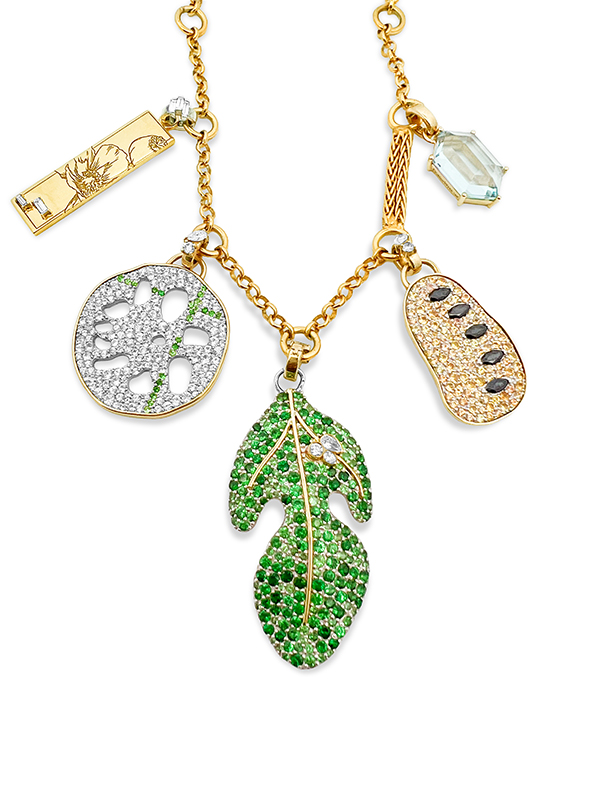
- That brings us to perhaps our most important overarching trend: the power of jewelry to tell stories. We’ve heard it so much this year that we are convinced it’s what makes the difference at the counter.
- One of my regular sources, Marion Fasel, a jewelry historian, author and founder of the Substack The Adventurine, said it perfectly when I interviewed her a few weeks ago: “People don’t just want a bracelet, they want something with a story, some narrative tale written into the jewels. It’s moved so far past trend and become something that’s baked into jewelry at this point.”
- Thirty years ago, people didn’t shop like that. They said, ‘This is a beautiful necklace and this is a beautiful bracelet.’ Now people have these incredibly sophisticated narratives.
- Fasel is a passionate Swiftie: “It’s the Taylor Swiftification of everything: Everything has a meaning, everything is narrative. And if it doesn’t come with a narrative, then give it one.”
- We all want storytelling. We need things that comfort us and make us feel secure. And jewelry at its best does that.
The holiday 2026 outlook is bright.

- Business at JCK and Luxury this year was very strong. I spoke to dozens of exhibitors and the takeaway is that they all had a great show.
- Fine jewelry has been outperforming other luxury categories.
- Look to the recent earnings report from Richemont, the luxury group that owns Cartier, Van Cleef & Arpels, Buccellati, and Vhernier. Jewelry was up 24% for the quarter ended June 30, driving 20% total growth in sales for the company.
- It was jewelry’s seventh consecutive quarter of double-digit growth.
- Demand is being driven by two things: One, buyers’ wish for intrinsic value—that’s where gold’s rising price plays a part. Consumers understand they are buying an enduring asset. And two, the AI investment boom.
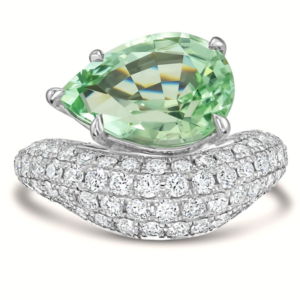
- Colored stones are one way to sidestep the diamond chaos. They are available in all price points, often come in one-of-a-kind examples, and speak to the desire for individuality. discover some of the latest jewels from entry-level to investment-grade, celebrating me!
(Top photo: Getty Images)
- Subscribe to the JCK News Daily
- Subscribe to the JCK Special Report
- Follow JCK on Instagram: @jckmagazine
- Follow JCK on X: @jckmagazine
- Follow JCK on Facebook: @jckmagazine