Young brand Talismania, founded in 2023 by Elizabeth Graham, may have arrived at just the right time. Based in Montana, the fine jewelry brand specializes in the increasingly sought-after Montana sapphire, incorporating the locally sourced gem alongside other colored stones in its modern, talisman-inspired designs.
And with September—and its sapphire birthstone—upon us, there may be no better time to get acquainted.
Graham’s own introduction to Montana sapphire came three years ago, a few years after she’d relocated from New York to Montana. The encounter proved life-changing.
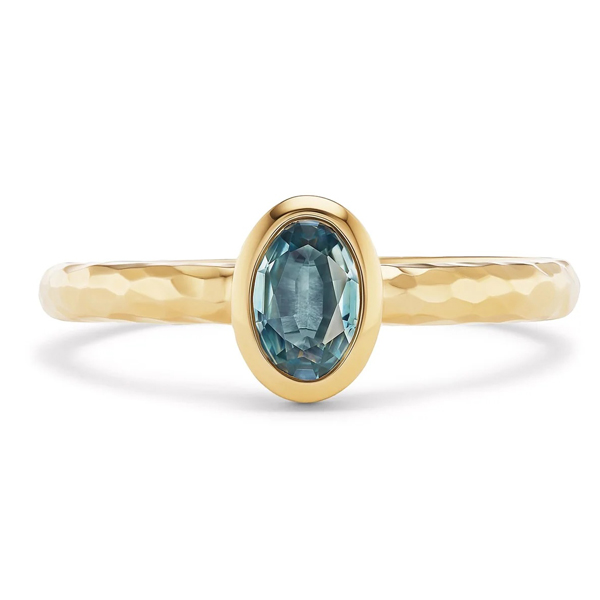
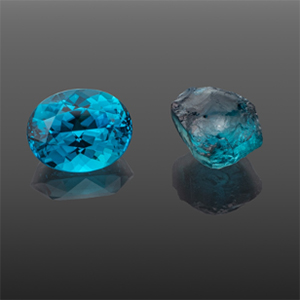
“I fell in love with them immediately,” she says. “They carry small worlds inside them, a whole range of blue to teal to green, and even pinks, many pulled straight from the rivers here. The same echo carries across a landscape, a stone, and a finished piece.”
How convinced was she? “I converted my life savings into Montana sapphires and started designing.”
It’s easy to understand the appeal. Graham says shoppers who know the Montana variety often associate it with Yogo sapphires, prized for their consistent cornflower blue color. Talismania, however, tends to favor the less expected.
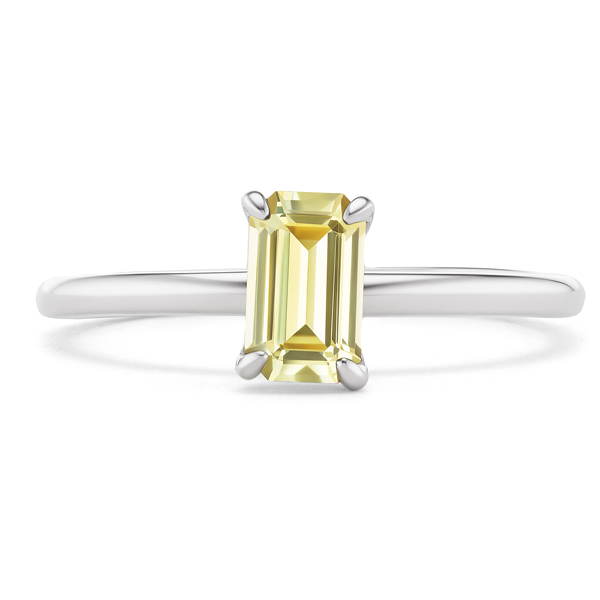
“I can’t resist the green and teal stones,” Graham says. “Because I work with the less well-known colors, people are often caught off-guard.” The brand’s Calyx ring, for example, features an emerald-cut yellow Montana sapphire that Graham says customers are routinely surprised to learn is a sapphire at all.
For retailers, that element of discovery presents an opportunity to expand the sapphire conversation—particularly during the September birthstone selling season.
“The provenance story is unique, and it lets retailers speak to the place, the process, and the practices very clearly,” Graham says. “The American West is having a really incredible moment right now, and Montana sapphires are the perfect way to embrace modern Americana while also highlighting that these stones are genuinely rare, sourced through a small-scale supply chain that carries the legacy of prospecting in the West.”
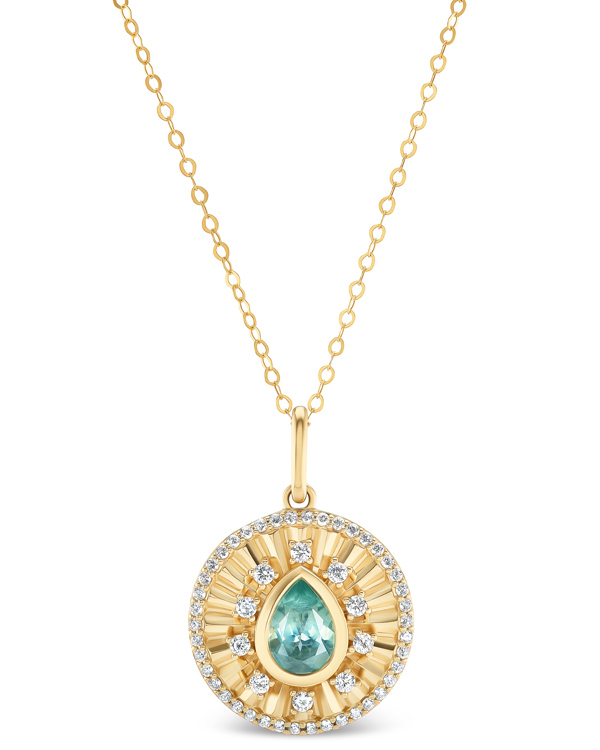
For Talismania’s one-of-a-kind pieces, that supply chain is especially close to home. Graham sources stones directly from a local purveyor who can identify the mine each came from. Their buying appointments take place around a kitchen table.
Stones larger than 1 ct. used in those pieces are cut in Montana and set in the United States, Graham says, meaning the stones never leave the country between rough and finished jewel. Talismania is also a member of 1% for the Planet, through which it gives back to environmental causes.
Growing demand for Montana sapphires has resulted in gradually rising prices, Graham says, but hasn’t significantly affected what she can source. The gems tend to occur in smaller sizes than some other sapphires, naturally limiting the availability of larger stones. Being local, however, gives Graham an advantage.
“Montanans look out for one another,” she says. “If I were not local, I believe accessing the stones would be more challenging, so I am grateful that the place I call home, that inspires my work, is also one with strong relationships.”
Those relationships extend into Talismania’s designs. Rather than relying solely on the beauty or provenance of a Montana sapphire to tell a piece’s story, Graham uses the stones as part of a larger symbolic vocabulary.
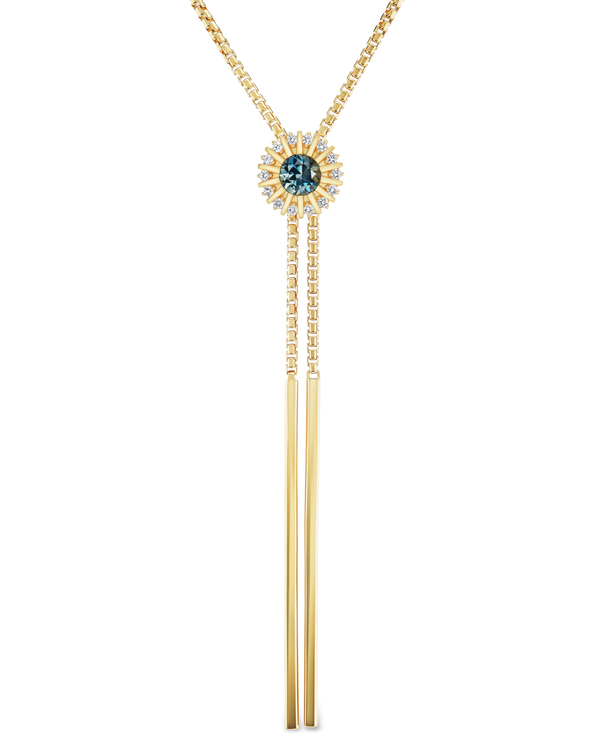
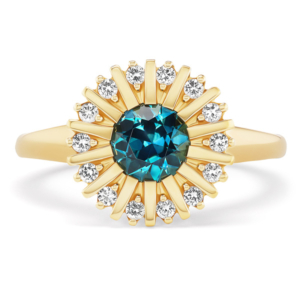
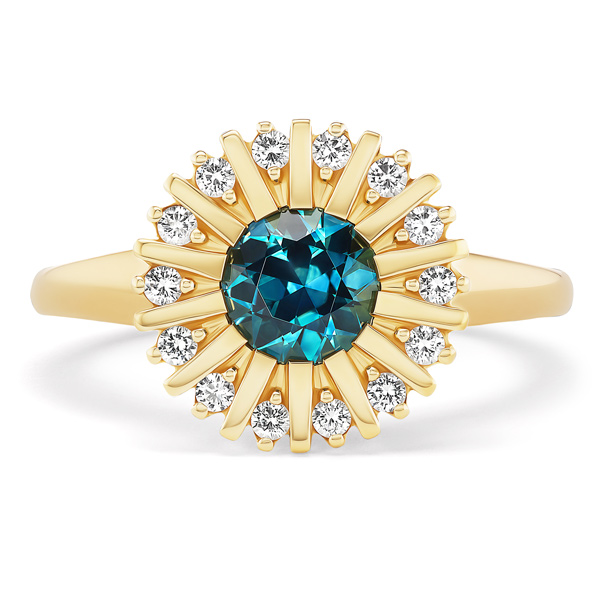
The brand’s Headwaters design, for example, pairs silvery blue Montana sapphires with gold spokes and diamond melee to evoke the origin of rivers in the mountains—and, more abstractly, the moment of deciding to begin a journey.
“My work is inspired by peak experience, breath work, meditation, trail running, moments where the veil between the inner and outer world is thin,” Graham says. “That threshold is where duality lives for me—double meanings, symbolism, the way a small detail can echo the whole.”
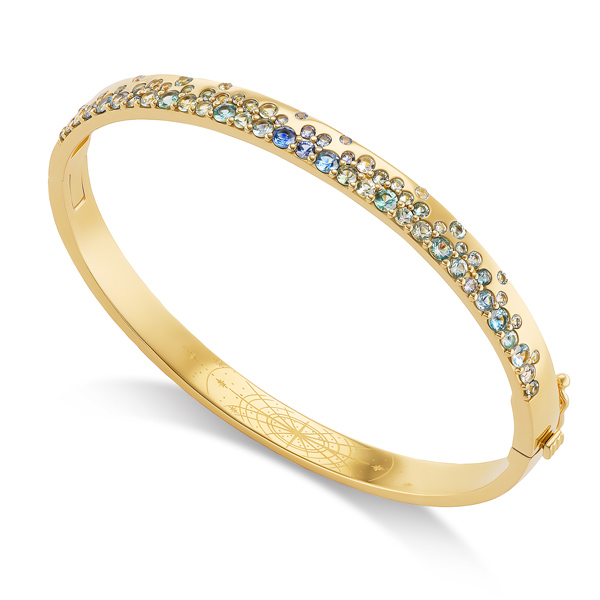
The Lupine collection similarly plays with duality. Its name refers both to the mountain flower that signals early summer in Montana’s Beartooth Mountains and, through the word’s origins, the wolf. Graham calls the resulting jewelry a “modern talisman”—an object whose original symbolism can ultimately give way to whatever meaning its wearer attaches to it.
That distinction also informs how Talismania approaches storytelling with its retail partners.
“Storytelling matters, but the piece has to hold up in the hand first,” Graham says. “The story deepens it from there.”
Retailers receive information about the materials, production, collection names, heat treatment, traceability, and Montana sapphires’ unusual color range, but Graham deliberately stops short of prescribing a sales script.
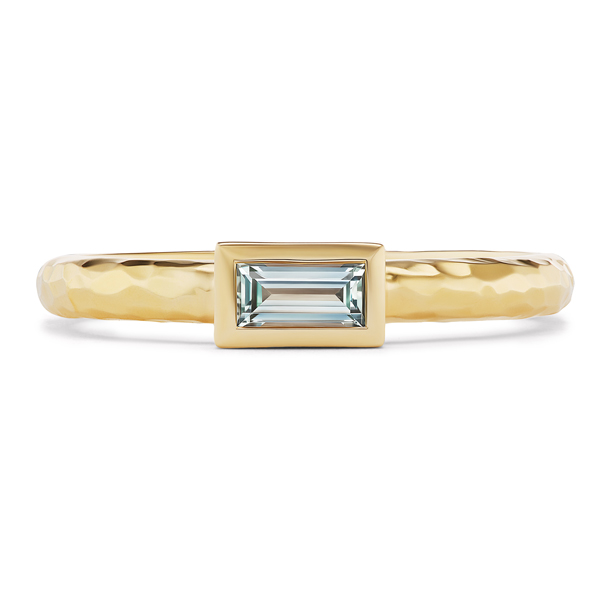
“The associate drives,” she says. “They know their customer far better than I do, and my job is to make sure they have what they need. We name a symbol and let it sit, and the customer brings her own meaning to it.”
For retailers considering the young brand, earrings have proved a particularly effective introduction. Talismania designs across several price tiers, with its subtler Big Sky collection composing much of its entry-level offering, while the Lupine collection tends to initially draw shoppers’ attention.
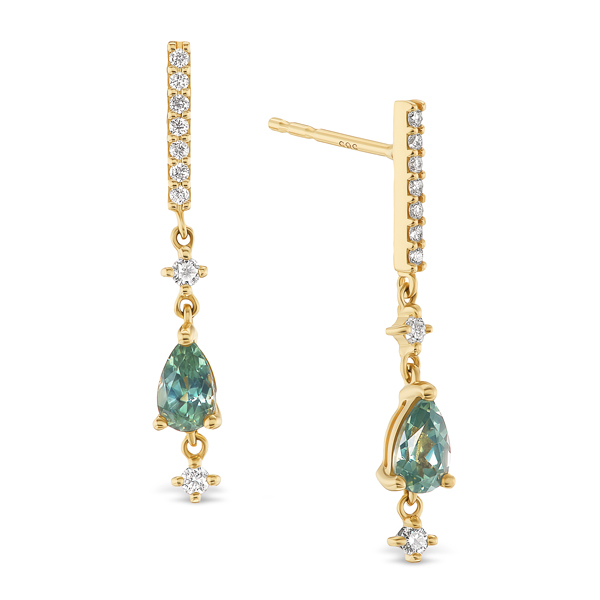
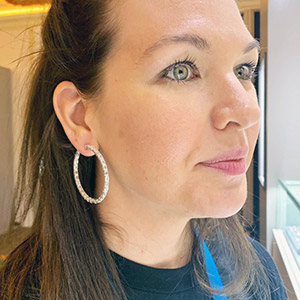
“Earrings are consistently where people start with us,” Graham says. “They are the easiest way into a brand someone has only just found, and they tend to bring a customer back for something larger later.”
It’s an appropriately gradual relationship for a brand whose founder doesn’t necessarily view jewelry as the trophy at the end of a story.
“Our customers are looking for a companion versus a capstone,” Graham says.
For Graham herself, jewelry became just that. After leaving a career in data and strategy that she says had depleted her, she was searching for something tactile and creative when she encountered Montana’s sapphires.
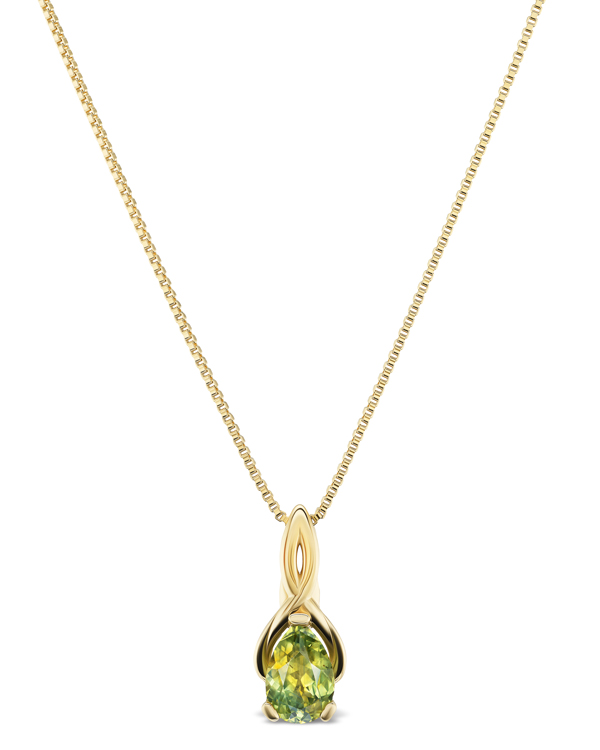
Three years later, her former career still informs nearly every decision she makes at Talismania. Graham builds the larger strategy first, then allows decisions around sourcing, design, pricing, and distribution to follow. She also continually tests ideas and uses the resulting data to guide her next move.
“That is what has let us move quickly without getting ahead of ourselves,” she says.
Perhaps converting your life savings into a cache of Montana sapphires isn’t quite as data-driven a decision. But given the gemstone’s current moment, Graham’s bet is looking increasingly prophetic.
Top: Headwaters ring in 14k yellow gold with Montana sapphire and 0.2 ct. t.w. diamonds, $6,280; Talismania
- Subscribe to the JCK News Daily
- Subscribe to the JCK Special Report
- Follow JCK on Instagram: @jckmagazine
- Follow JCK on X: @jckmagazine
- Follow JCK on Facebook: @jckmagazine