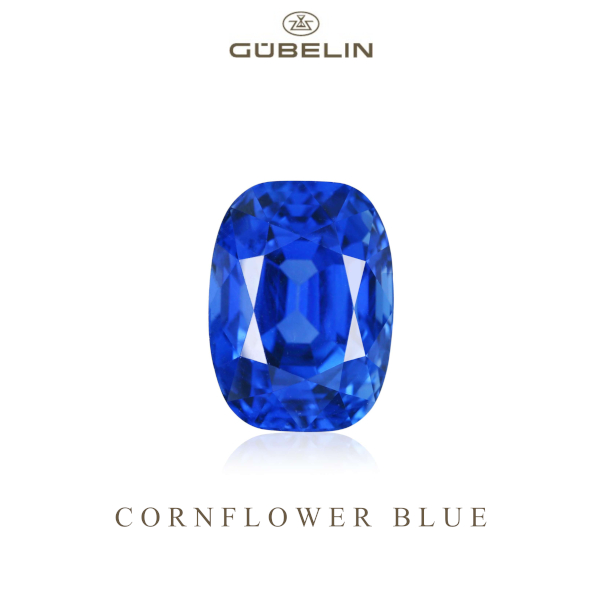
For generations, dealers of sapphires around the world have used cornflower blue to describe a particular color of highly coveted blue sapphires, from the velvety stones mined high in the Himalayas of Kashmir to some of the brightest Sri Lanka has to offer.
Starting Jan. 1, 2027, Gübelin Gem Lab will award a small percentage of exceptional sapphires the designation cornflower blue on its lab reports, regardless of sapphire origin. But first, the Swiss lab had to decide exactly which stones would qualify for a term that the trade has long interpreted in different ways.
A term revisited
Gübelin considered offering it on certificates once before. In 2004, Gübelin surveyed Asian, European, and American trade professionals on how they defined three different well-known trade terms assigned to gem-quality corundum, the mineral that comprises both ruby and sapphire.
Those terms were: pigeon’s blood red, royal blue, and cornflower blue.
The first only can be assigned to top-notch rubies, while the latter two apply to certain sapphires. (Of course, sapphire can account for any color of corundum other than shades of red.)
The words themselves matter to the trade because they can carry an enormous amount of weight among gemstone aficionados. Though not universally agreed upon, trade terms such as these can become heavily consequential in high-stakes, million-dollar auctions, where catalogs routinely cite labs’ color calls.
Daniel Nyfeler, managing director of Gübelin Gem Lab, says the lab’s survey back then showed a narrow common denominator for the quality and color for each of those trade terms. On the subject of origin, and each term’s greater context, Gübelin’s survey detected only partial agreement.
“While there was a kind of consensus for pigeon’s blood red and royal blue, the origin and context was quite ambiguous for cornflower blue,” Nyfeler says. “For parts of the trade, cornflower was coined by Kashmiri sapphires with dust bands inducing a typical velvety appearance, while for others, it was perceived as referencing high-quality Sri Lankan sapphires. Based on that, we decided back then to not issue cornflower blue.”
More than 20 years have passed, and now Gübelin has had a change of heart about cornflowers. The lab kept seeing stones that made the case for reconsidering.
“Over the years, we saw many extraordinarily beautiful blue sapphires, often with an attractive velvety appearance, showing a color slightly too light for royal blue,” Nyfeler says. The lab also studied descriptions and photographs of stones that Eduard Gübelin (1913–2005), the pioneering gemologist who led the lab for decades, had called cornflower blue.
Gübelin’s royal blue standard takes Burmese sapphires from what is present-day Mogok, Myanmar, as its historical reference.
“Top-quality stones from other highly ranked provenances, such as Kashmir and Sri Lanka, are known for a more open color than those from Burma,” Nyfeler says. “Hence, we wanted to revise our decision from 2004.”
Both designations are open to sapphires from any origin; the reference stones simply set where each color range sits.
He says neither client demand nor competition drove the move. “Only rarely did clients suggest to us to introduce the term.”
The intended audience, he adds, is the end consumer: Trade colors are meant to help buyers “easily spot the top qualities with the most famous, coveted colors, without having to be an expert.”
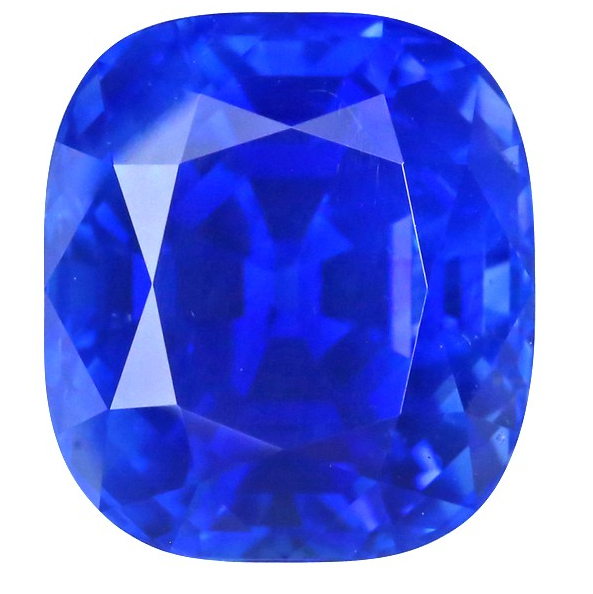
Compared with royal blue, Nyfeler says, cornflower stones are “a bit lighter in tone,” can be slightly less saturated and can carry a little more violet. The lab grades against master stones, and the two ranges sit side by side.
“The range of royal blue and cornflower blue are adjacent, but do not overlap,” he says. “This should minimize the risk of ambiguity.”
How to get a Gübelin-certified ‘Cornflower Blue’
The lab itself says only a small proportion of sapphires will make the cut.
The only attribute that’s open is the stone’s origin. Gübelin is strict with all the other attributes required to earn the designation on a report.
Obviously, the stone must be blue. But its color should be saturated with a light to moderate tone, possibly with a gentle hint of violet. The gem also must have homogeneous color distribution.
When it comes to clarity, the lab expects a high degree of transparency. The stone also must be eye-clean and contain no dark inclusions. A velvety appearance is welcome, says Gübelin, but not required.
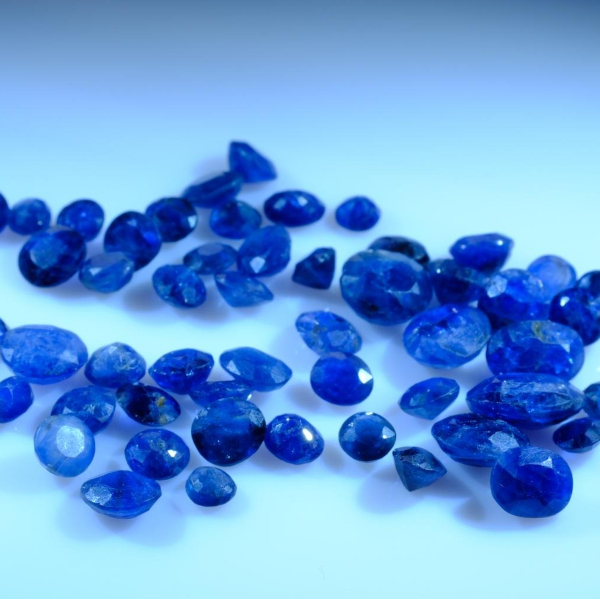
When faceted, there should be no windowing—i.e., a section of the stone where light passes straight through, usually the bottom, because of a shallow cut. A cornflower blue also ought to exhibit lively color reflections.
The quality bar matches Gübelin’s other corundum trade colors. “We believe that a trade color is more than only the color,” Nyfeler says. “It implies an exceptional quality, and, for rubies and blue sapphires, the absence of treatment.” Only about 1% of the stones the lab sees qualify for a trade color, he says.
Handling a “velvety” sapphire in a gem lab
The hardest call to make about cornflower blue, Nyfeler says, was the velvet, which gemologists also call turbidity or milkiness.

In Kashmir sapphires, that soft, velvety look comes from bands of microscopic particles that scatter light; it is a large part of why the stones are prized.
“Provided it is sufficiently subtle, such turbidity is a well-wanted and coveted feature in cornflower blue stones. However, when it starts to significantly affect the transparency of the stone, it penalizes the stone,” Nyfeler says.
Turbidity can only be judged by eye, which makes it hard to assess consistently, Nyfeler says. As a result, the lab made its presence optional.

“We also aim to be highly consistent with our trade color calls, knowing that there is no such thing as perfect consistency, to protect the value of the investment that comes with such terms.”
One term, different labs
Gem labs offer opinions, and opinions among experts sometimes vary. So do the reports they issue for colored stones.
Adolf Peretti, founder of GRS GemResearch Swisslab, first published its pigeon’s blood, royal blue, and cornflower blue color concepts in 1996. GRS awards pigeon’s blood to heated rubies, while Gübelin cannot.
The Swiss Gemmological Institute (SSEF), by contrast, applies only one trade name to blue sapphires: royal blue. In its 2013 study, it also said it did not support Kashmir-type on reports, arguing the label mixes a stone’s geographic origin with its subjective appearance.
New York’s American Gemological Laboratories (AGL) takes a middle path. It keeps trade color terms off its main Prestige Report but may cite pigeon blood, royal blue, and cornflower blue in a supplementary appendix letter for stones that qualify. It also offers its own AGL Classic designation, which it says it prefers to historic color terms that have been commercialized to the point that their original meaning is virtually lost.
Gübelin has a track record of sometimes aligning with peers. In 2015, it and SSEF harmonized their criteria for pigeon’s blood red and royal blue. Cornflower blue, for now, is Gübelin’s alone, which the lab signals by calling it Cornflower Blue for Gübelin.
While headquartered in Lucerne, Switzerland, Gübelin has continued to operate a gemological laboratory in New York City since 2017.
Top: Accompanying documentation to Cornflower Blue for Gübelin gemological lab reports expected to be issued to some stones in 2027 (Photo courtesy of Gübelin)
- Subscribe to the JCK News Daily
- Subscribe to the JCK Special Report
- Follow JCK on Instagram: @jckmagazine
- Follow JCK on X: @jckmagazine
- Follow JCK on Facebook: @jckmagazine