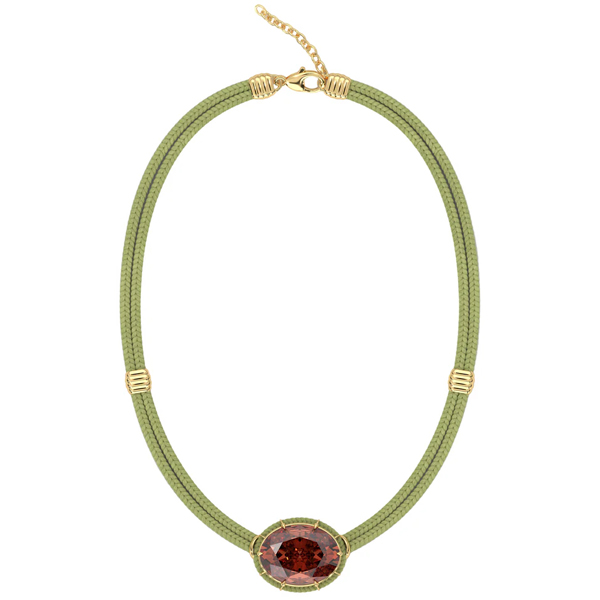
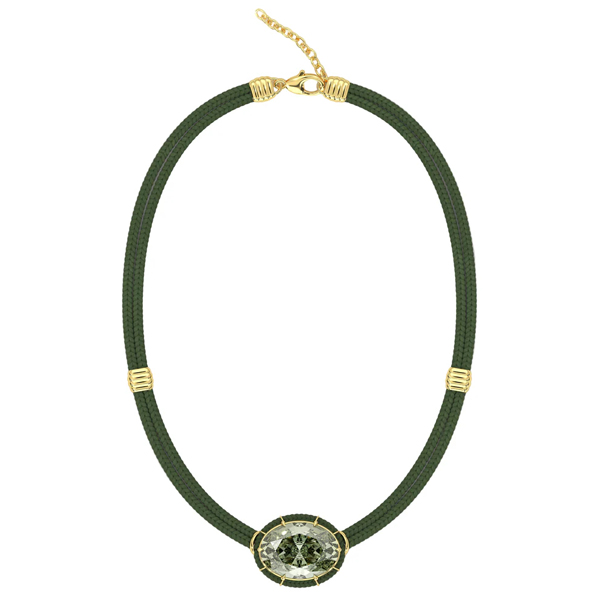
Palm Beach–based jeweler Courtney Leidy is launching her new website at exactly the right moment, with designs that tap into what today’s consumer is looking for. Her signature silk cord necklaces—pairing fine gemstones with an unexpectedly casual medium—offer a fresh take on everyday luxury.
The juxtaposition of high-value stones and silk reframes traditional notions of fine jewelry. As the market shifts away from overly polished pieces, there’s growing demand for styles that feel relaxed without sacrificing impact. Necklaces like Leidy’s strike that balance: wearable yet visually striking.
Below, the designer answers questions for JCK on the inspiration behind her silk cord pendants, how to style and care for them, and what she believes retailers may be missing right now.
What made you choose silk as a primary material, and how did you approach elevating it to sit alongside precious gems?
Silk came from wanting to make pieces that felt easy and natural to live with. Gold and stone already carry weight and permanence, so introducing something softer created a balance that felt more complete. I’ve always viewed silk as a luxurious material in its own right—it’s a different kind of luxury than gold, but it never felt high-low to me, just distinct materials, each with their own presence, working together.
It also gives me more room to work with color. The cord broadens the palette and shifts the focus to how colors relate to one another, exploring how they build, balance, or offset. Some combinations lean toward contrast, others toward something more restrained, and I like working through that process with clients so it feels personal to them.
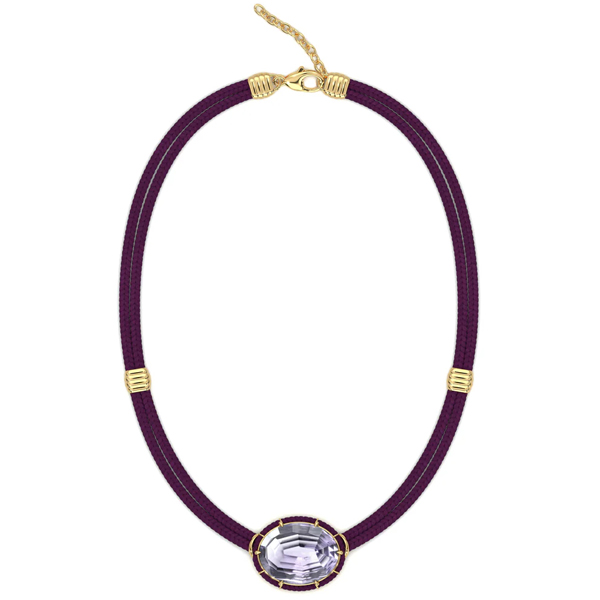
The silhouette of these pendants feels very intentional. How did you land on that specific shape?
The form came from thinking about the piece structurally rather than decoratively. I wanted the setting and the cord to feel fully integrated, not like separate elements brought together at the end. I’ve always been drawn to the nostalgia of antique settings, but I didn’t want the piece to feel too specific to a particular time period. The goal was to arrive at something clean and refined, without reading as distinctly antique or overly modern.
I think what we ended up with is a silhouette that allows the stone to hold presence without feeling overworked. The cord is part of the construction itself, so the piece reads as a complete object rather than a pendant placed on something else.
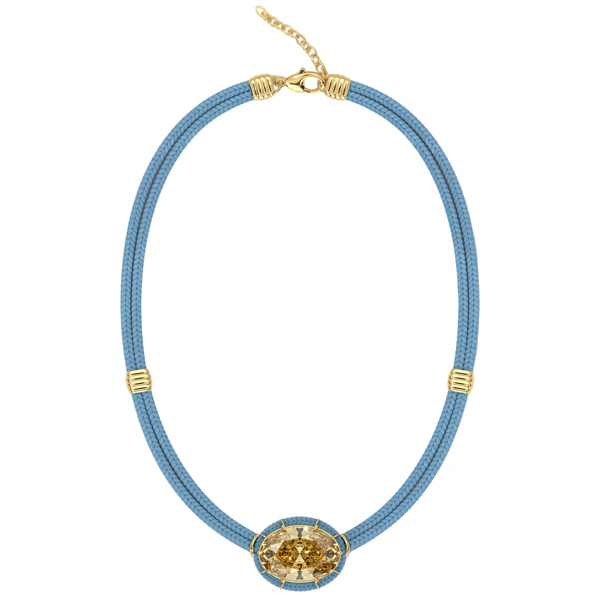
How do you balance the softness of the cord with the presence of the stone so neither feels secondary?
It comes down to making sure each element is doing its job. The stone brings weight and presence, while the cord introduces a sense of ease and wearability. Neither is there to compete; rather, they support each other.
A stone, no matter how beautiful, doesn’t fully reveal itself on its own. Like anything, it needs context. The cord, and especially the color pairing, changes how the stone is perceived. It can deepen it, soften it, or create contrast that wasn’t obvious before. Often it’s the cord color that makes even the most eye-catching stone truly come alive.
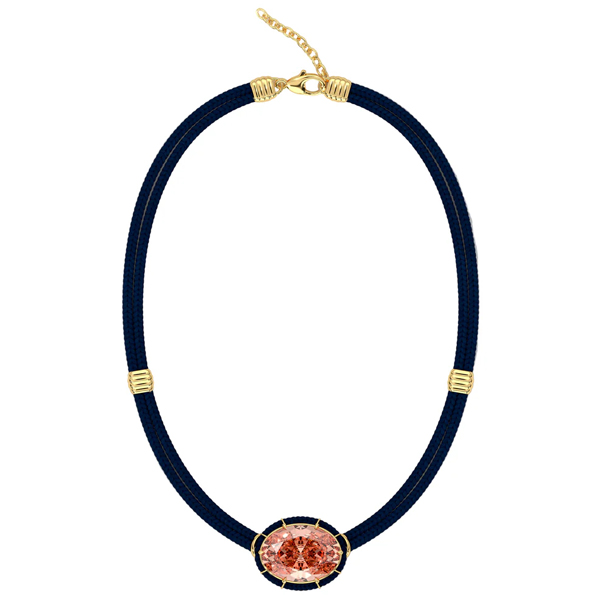
Where do you see these pieces sitting in the market—fine jewelry, casual luxury, or something in between?
I see them firmly within fine jewelry, but approaching it from a slightly different angle. They’re made with the same level of intention and material integrity, but they don’t rely on traditional visual codes of preciousness. The use of color is definitely fun, but the pairing is always deliberate. Arriving at the right combination is less about novelty and more about composition and what works best on someone.
They’re not designed to follow trends or read as seasonal. I really want them to feel considered and lasting, even if they don’t fit neatly into familiar categories.
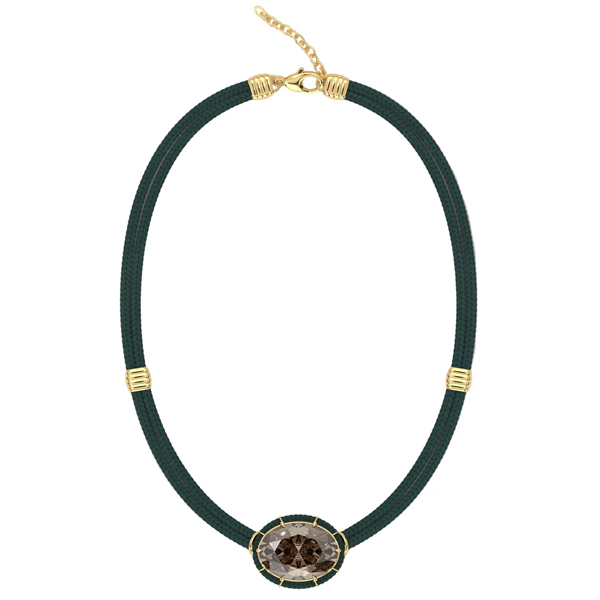
How do you encourage styling—are these meant to be layered or worn as stand-alone pieces?
I’ve always admired and loved designing jewelry, but I’ve never been someone who wears a lot of it. I tend to gravitate toward one or two pieces at a time—a necklace, a watch—which is probably why I’m drawn to pieces that have a bit more presence. When designing, I want each piece to be able to stand on its own. That doesn’t mean it has to be big or loud, but it should feel complete and considered, something you can put on without needing anything else.
At the same time, the collection is conceived as a personal language—something that can evolve, be collected, and worn differently over time. Everyone approaches jewelry differently, which is part of what makes it interesting. Some people will layer, and that can work, but the intention is that each piece holds its own. It’s less about building a look and more about choosing something that feels right in the moment.
What should retailers communicate to customers regarding care and longevity of these necklaces?
Durability and wearability were both important considerations from the start. Silk is a strong material, but it is still natural, so it needs to be treated with a certain level of care. We explored synthetic alternatives, but they didn’t have the same drape or movement. There’s something very fluid and beautiful about the way silk sits on the body that felt essential to the piece.
I wear my necklaces regularly in Florida, where the heat, humidity, and salt are challenging, and they’ve held up well. That said, I wouldn’t recommend exposing them to water frequently, as the silk will naturally degrade over time.
They’re also relatively easy to maintain. I’m often asked about makeup, and while it can leave some residue, it can be gently cleaned with a mild soap and water. I’ve done this myself, carefully drying it afterward, and the cord looks brand new.
More broadly, I think of these pieces as something to be worn and lived with. I used to work with an interior designer who used silk extensively, and his perspective was that even the most luxurious materials are meant to be lived in, enjoyed, not preserved in perfect condition. That’s always in the back of my mind when experimenting with different materials.
Over time, the silk will soften, which I think adds character to the piece. And if needed, the cord can be replaced, so the life of the piece extends well beyond the original material.
What might retailers be missing in their inventory that your line provides? How does your work align with current demand without feeling trend-driven?
I think contemporary assortments tend to sit either in very classic fine jewelry or more trend-driven designs. There’s a lot of beautiful work being made. I personally am drawn to pieces with a clear point of view that are immediately recognizable, and I’d love to see more of that. With certain designers, there’s no question who made the piece—you recognize it immediately. That level of clarity is something I think is important, and what I try to bring into my own work. Each piece is meant to feel complete on its own, which tends to resonate with clients looking for something personal and lasting, but not predictable. It aligns with a desire for individuality, without being driven by what’s currently on trend.
I live in Palm Beach and love to pop into the jewelry stores on Worth Avenue—they’re full of incredible vintage pieces that feel substantial with real presence. There’s a weight and confidence to those pieces that immediately stands out.
Top: Lime green silk cord necklace with 18k yellow gold and Madeira citrine, $5,900; Courtney Leidy
- Subscribe to the JCK News Daily
- Subscribe to the JCK Special Report
- Follow JCK on Instagram: @jckmagazine
- Follow JCK on X: @jckmagazine
- Follow JCK on Facebook: @jckmagazine