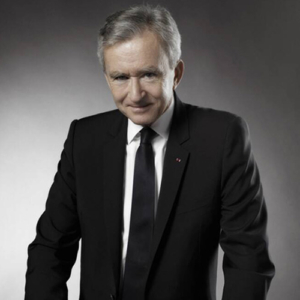
LVMH chairman Bernard Arnault used the company’s annual general meeting Thursday to deliver a blunt warning about geopolitical risk, while simultaneously reinforcing his long-term confidence in luxury—particularly high jewelry—and putting his five children more visibly in front of investors.
Arnault, who’s also chief executive officer of the luxury conglomerate, told shareholders in Paris that the Middle East conflict could become a “world catastrophe with very serious and very negative economic impact,” CNBC reported. The crisis had a 1% negative impact on LVMH’s organic sales growth in the first quarter, according to WWD, and is making near-term forecasting “quite unpredictable,” said Arnault.
He outlined two scenarios: either a prolonged crisis that drags down 2026 results or a faster resolution that would allow business to “gradually return to normal.” LVMH has often emerged from past crises with greater market share, Arnault noted.
For luxury jewelry businesses, the war represents a serious threat because the Middle East market tends to deliver outsize profitability, relative to its portion of global luxury sales (the region accounts for only about a mid-single-digit percentage of sales).
Despite the macro uncertainty, Arnault repeatedly pointed to jewelry as one of the most resilient luxury categories, as seen during the broader luxury slowdown, since its core customers are typically wealthier and less price-sensitive.
LVMH’s strategy for its jewelry business—which includes Tiffany & Co., Bulgari, and Chaumet—centers on making Tiffany the world’s leading jewelry brand within five years, surpassing Cartier (owned by Richemont). “We’re not far, but we’re not there yet,” WWD quoted Arnault as saying.
This investment push suggests intensified competition in luxury jewelry, alongside higher consumer awareness driven by global marketing, flagship events such as the Tiffany Blue Book gala, and sustained product development.
For the first time in LVMH’s history, Arnault gave all five of his children the opportunity to address the annual meeting—an unusual move that prompted speculation about eventual succession within the company. “The attempt to elevate their profiles was seen to reflect Arnault’s desire to put his children in front of shareholders rather than loyal non-family executives,” Bloomberg wrote.
Each of Arnault’s five children spoke about their respective divisions: Alexandre, on wines and spirits; Frédéric, on Loro Piana cashmere brand; Jean, Louis Vuitton watches; Delphine, Christian Dior Couture; and Antoine Arnault, on sustainability.
The younger Arnaults’ visibility fueled renewed investor curiosity about the family’s long-term plans, particularly as LVMH shares are down roughly 27% year to date. But Bernard, 77, deflected those questions. He reminded shareholders they had approved raising the CEO age cap to 85, quipping, “We’ll talk about this again in seven or eight years.”
While the LVMH chair expressed confidence that China will remain a key long-term growth engine, he acknowledged that recovery there has been uneven, adding to the complexity of planning for 2026. Still, he contended that LVMH’s scale, brand portfolio, and growing jewelry focus position it to navigate volatility better than most of its peers.
Arnault’s confidence in Tiffany and belief that jewelry will outperform other luxury categories reinforce the sector’s importance within the global luxury ecosystem, while also signaling a scrappier landscape ahead at the top end of the jewelry market.
The JCK News Desk uses AI to help research and produce the first draft of articles. This story was then reviewed by staff writer David Blomquist.
- Subscribe to the JCK News Daily
- Subscribe to the JCK Special Report
- Follow JCK on Instagram: @jckmagazine
- Follow JCK on X: @jckmagazine
- Follow JCK on Facebook: @jckmagazine