Shares of LVMH fell on Tuesday after the French luxury products released disappointing first-quarter results, attributing its sales decline to the Iran war as well as slower spending in key Middle East markets such as Dubai.
In the quarterly results released on Monday, LVMH had revenue of €19.1 billion or $22.5 billion in U.S. dollars. It reported 1% organic growth (meaning without exchange-rate fluctuations) but a 6% decrease in revenue overall. These numbers did not meet analyst expectations of around a 1.5% sales increase, according to Reuters.
LVMH shares were down 1.26% in early trading Tuesday on the Euronext Paris exchange. The company’s stock has dropped 27% since the start of the year, Reuters reported.
In a statement accompany the results, LVMH said its U.S. business “experienced a good start to the year,” especially in jewelry and watches (led by Tiffany & Co.’s HardWear collection). Organic growth for the jewelry and watches division was 7%—making it LVMH’s top-performing segment—but revenue fell 2% overall.
That downward trend is likely to continue for other LVMH divisions, says brand strategy consultant Fernando Barrenechea, if they do not follow Tiffany & Co.’s playbook of leaning on its history and exceptional craftsmanship to separate itself from the pack, rather than going for scale and volume.
“Jewelry and fine watchmaking carry an intrinsic symbolic power that other divisions cannot replicate through scale or operational efficiency alone,” Barrenechea says. “Their strength lies in attributes that are native to luxury itself: craftsmanship, heritage, scarcity, emotional resonance, and the capacity to function as stores of meaning across generations.”
This rarity and meaning are nearly impossible to create just through elevated packaging or aspirational advertising, he adds.
“The symbolic capital simply cannot be manufactured from the outside,” Barrenechea says. “Tiffany’s exceptional performance this quarter illustrates the point well. Its growth comes not from commercial diversification but from doubling down on what makes the brand irreplaceable: iconic design, craftsmanship storytelling, and an emotional territory that no competitor can simply purchase or replicate.”
In its April 13 press release, LVMH attributed Tiffany’s “excellent performance” to store renovations, the strength of HardWear and certain other product lines, and the debut of its marketing campaign with actress Natalie Portman as global brand ambassador.
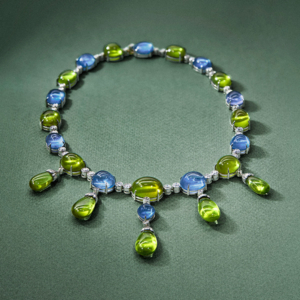
For another LVMH jewelry maison, Bulgari, the company reported strong performances by the new Eclettica high jewelry collection and Bulgari’s iconic Serpenti and Tubogas lines. Meanwhile, Chaumet was boosted by the expansion of its Bee de Chaumet collection, said LVMH.
It also noted that watch brands TAG Heuer, Hublot, and Zenith gained attention with their presence at LVMH Watch Week in Milan in January.
As for other segments, LVMH said fashion and leather goods saw sales decline 2% organically and 9% overall; wine and spirits had 5% organic growth but total sales fell 2%; and perfumes and cosmetics were flat organically but down 6% overall.
“Amid a geopolitical and economic environment particularly disrupted by the conflict in the Middle East, LVMH remains vigilant yet confident at the start of the year. The group remains focused on the development of its brands, driven by a sustained policy of innovation and investment as well as by a constant quest for quality in its designs, their desirability and their selective distribution,” the statement said.
“LVMH will rely on the talent and motivation of its teams, the diversity of its businesses, and the good geographic balance of its revenue to further strengthen its global leadership position in high-quality products in 2026.”
- Subscribe to the JCK News Daily
- Subscribe to the JCK Special Report
- Follow JCK on Instagram: @jckmagazine
- Follow JCK on X: @jckmagazine
- Follow JCK on Facebook: @jckmagazine