A burglary. Misplaced heirlooms. Favorite rings or pendants left on a beach or an airplane. Every jeweler has a story of how a client, friend, or family member has lost a precious piece—and those stories can inform how they buy, sell, and create jewelry.
JCK interviewed five industry members about how they handle what is lost in terms of the financial and also the emotional ramifications.
Lost jewelry is a business in and of itself in some ways. After all, that’s what jewelry insurance companies are all about. There are groups like The Ring Finders, a directory of people who work with customers who need help tracking down a misplaced item, like a ring lost in the lake or park. And many brands create travel jewelry or recreate special heirlooms as part of their custom work.
Here are five stories of how a lost piece of jewelry showed up again, either physically or metaphorically.
Chris Ploof
The designer based in Leominster, Mass., best known for his work in hand-forged fine jewelry and materials such as mokume gane and Modern Electrum says one of his biggest losses came several years ago.
“I was pretty established in my career and had been at work as a jeweler for nearly a decade. Many of the pieces I had made early on—mind you, they weren’t amazing to anyone other than me and my family—I had given to my mom. She called me one day to tell me her home had been broken into, and the police were there writing a report,” Ploof recalls.
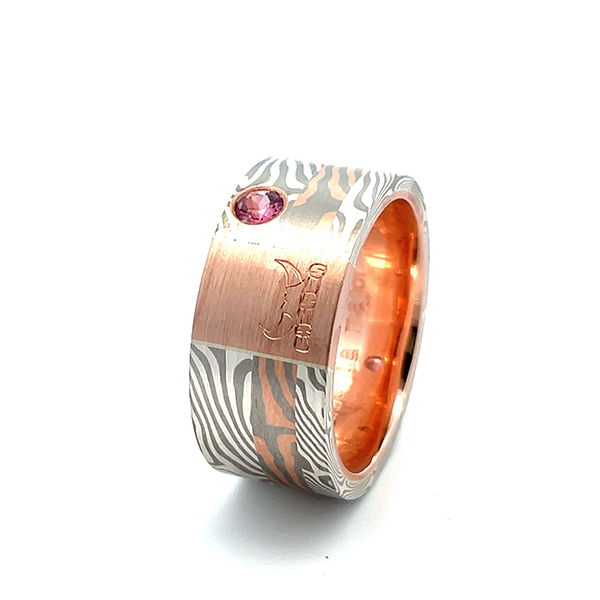
“Sadly, as they inventoried the house, I realized all of her jewelry had been stolen, including the earliest pieces I had made when I was in school and apprenticing as a jeweler. Nothing can replace these—I hate that this history is gone. Sadly, she was unable to claim the total loss on her insurance since she hadn’t scheduled her jewelry. I’ve since made a few pieces for here that were arguably much better, but, the original earliest pieces are gone.”
Kate Price
The designer and founder of Santa Monica-based Kate Rose Fine Jewelry says when her clients lose their jewelry, she believes her job is to replace it while adding value—both to their jewelry box and their lives.
“It happens constantly: they’ve inherited half a set of earrings from their mom or their grandmother and the matching one is just gone. That one’s always hard, because at that point the jewelry isn’t really about the jewelry. It’s about the person they’re missing,” Price says.
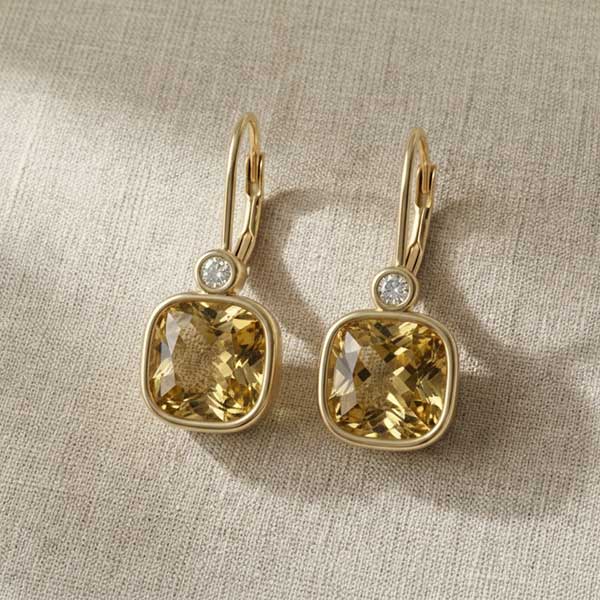
“Here’s the thing. Recreating a lost piece is never just about copying what the client had. It’s actually a chance to fix whatever let it disappear in the first place. I had a client who lost one of a pair of dangling earrings, and when we looked at how it happened it was obvious—it was a plain wire hook that had worked its way out of her ear. So instead of building the same problem all over again, we reworked the pair with a secure lever-back. She got her earrings back, but, honestly, she got something better, because now she doesn’t have to worry about it.”
Erez Braverman
The CEO of Braverman Oren is the third-generation owner of Braverman Jewelry, and family history is paramount to who he is. That is why the loss of his grandfather’s ring hit him so completely. However, he says he is lucky enough to wear HALF of that ring today.
“I cut it in half myself, on purpose,” he says. “Avraham was a carpenter. The signet was carved with two Hebrew alephs—the first letter in our alphabet—his initial and, by coincidence, mine. He’d worn it since he was a boy, and he left it to me because I’d spent years telling him how well it suited him. It came with a note: that you can become what you want, and that you are not bound to be who you think you already are.
“It never fit. Carpenter’s hands, and I have thin fingers and the thing swam on me, so it lived in a box. The day I finally decided to put it on a chain and wear it properly, I couldn’t find it. Months went by. I tore apart every corner of the house. It eventually turned up in the inner pocket of a jacket which was the one I’d worn the single time I tried wearing the ring out. I must have slipped it in there when it started sliding off my finger, and then forgotten I’d ever taken it off.
“When it came back, I did what most people who lose a piece like this can’t: I’m the third generation at our bench so I got right to work. I sawed the signet face off the shank and set it as a pendant. His initials and mine now sit against my chest every day, with no band left to slip off a finger.”
Luke Stafford
The head of retail and brand experience at Charles Fish specializes in pre-owned watches and fine jewelry. The family-owned business founded in 1830 has had its share of lost valuables over the years. His story is one of dealer’s remorse.
“We received a vintage timepiece once that I decided to keep for my personal collection. But a long-time client came in, desperately searching for the same watch reference. I decided then and there that client service came first and I sold it to them,” Stafford shares. “This small incident taught me the need to build higher operational standards, serial logging, archive tracking, and better educational resources to educate clients about the pre-owned jewelry market.
“My decision to sell a highly valuable item at first seemed like a sacrifice, but I realized that because of that one sale, I made that client’s year. Eventually, I did source the same reference and completed my collection. In pre-owned jewelry, a simple replacement for a lost cherished item isn’t enough.
“Old heirlooms don’t only have their value, but the memories attached to them, which are priceless. That’s why when clients ask me if I can recreate an item they lost, I always explain to them that no matter how exact the replacement is, it’s still not the same thing.”
Ali Galgano
The founder and head jeweler at Serpentine Jewels says lost jewelry is emotional because the pieces people love become markers of our lives. She tells the story of a client who lost her original cushion-cut engagement ring on an airplane and felt devastated.
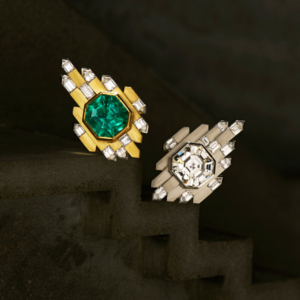
“When we started talking about recreating it, though, she realized something interesting: She didn’t actually want the exact same ring. Her taste in stones had changed over the years, and if she were choosing an engagement ring today, she would choose something different. Instead of recreating the cushion cut ring she’d had before, we made her a new ring with an Asscher-cut center stone,” Galgano explains.
“She tells me all the time how much joy the new ring brings her, and there was another layer to it that I hadn’t initially considered: She hadn’t been involved in choosing her original engagement ring. This time, she got to be part of every decision and tailor the ring exactly to what she wanted. The process itself became part of the meaning of the new piece.
That’s generally my philosophy when clients come to us after losing something they love. We don’t always need to make an exact replica. Instead, I want to understand what the client loved about the original piece,” she says. “From there, we can recreate the piece faithfully or reinterpret it, preserving the emotional DNA of the original while making something that belongs to the client’s life now. Sometimes the new piece becomes even more meaningful because it contains both stories: the memory of what was lost and the story of what came next.”
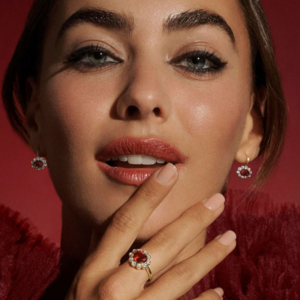
Top: Kate Price of Kate Rose Fine Jewelry says she made these earrings for client who had lost a special piece because of how it was constructed. (Photo courtesy of Kate Rose Fine Jewelry)
- Subscribe to the JCK News Daily
- Subscribe to the JCK Special Report
- Follow JCK on Instagram: @jckmagazine
- Follow JCK on X: @jckmagazine
- Follow JCK on Facebook: @jckmagazine