It was the Tuesday after Memorial Day weekend in 2025 when Manail Bidrussian arrived outside his family’s jewelry shop in Glendale, Calif.
All he had to do was glance at the storefront. Something was seriously wrong. He knew it.
Getting out of the car, he saw the lights were on. They were never left on. The door between his showroom and the back office was closed, and that door was never closed.
“Those were the two signs of—it’s game over, my life is ruined,” he says.
As he approached the store, Bidrussian saw that the showroom up front was untouched. No surprise—the inventory consisting of precious metals and gems was under lock and key in the back room.
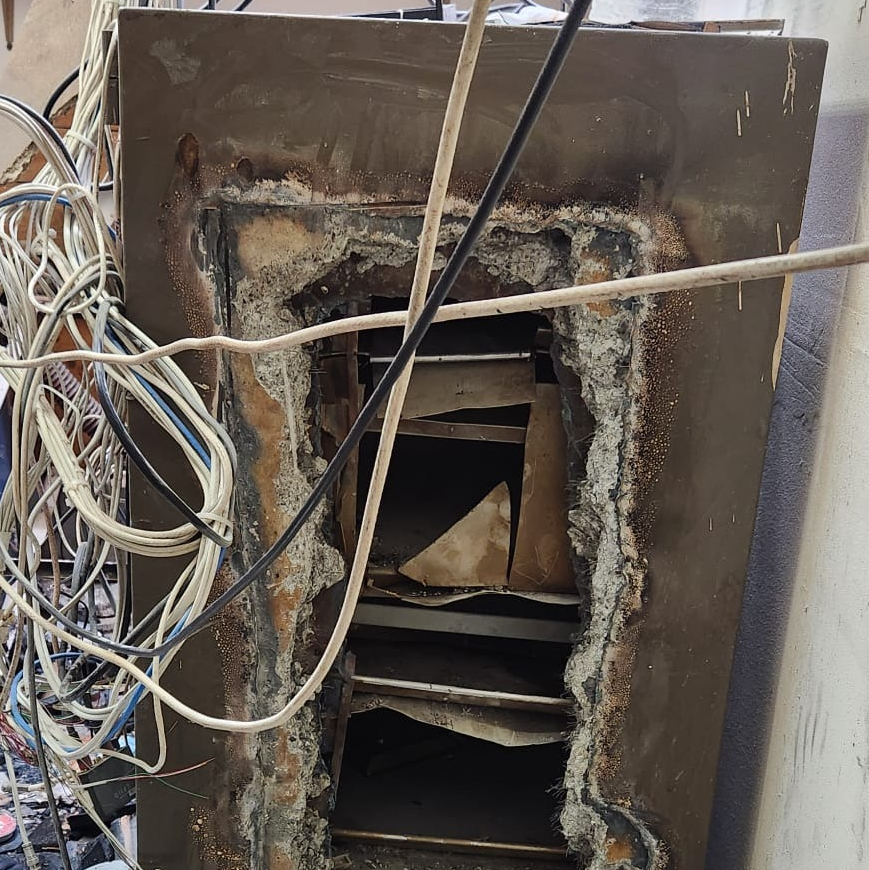
A gang of South American burglars came in through the roof, torched Bidrussian’s safes, and stole more than $1 million in company inventory. The business had been in the family for more than 40 years, and Bidrussian had run it himself for 23 years. It has not reopened.
He carried no business insurance.
“That was my mistake—thinking my store is safe, my safes are safe, my alarm is safe,” he says.
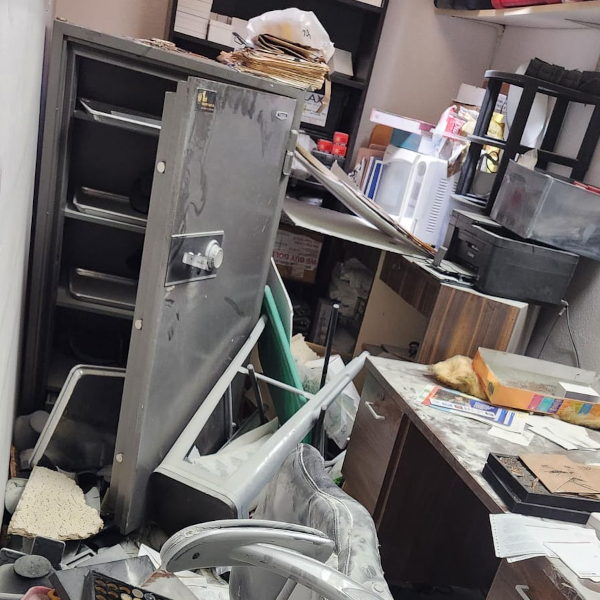
Puzzlingly, his alarm system was still online once he arrived to survey the wreckage. No alerts or 911 calls had been triggered.
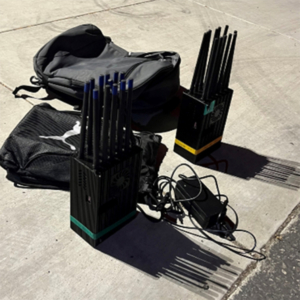
Later, investigators found cellular jammers—technology that is increasingly being used by sophisticated gangs of criminals targeting high-value targets such as jewelry shops.
Bidrussian says his alarm company declined any responsibility afterward.
“They said it happens,” he says.
The tactics of jamming
Cellular jammers work in a variety of ways, but the most common method used by high-level jewel thieves is a portable device tuned to temporarily cut communication for a targeted alarm system.
If one of these devices is positioned close enough, a security panel can remain armed. It may sense something is awry, but it can’t notify anyone due to the interference.
“All that a jammer does is flood the frequencies with so much noise that it prevents communication from getting through,” says Mark Hillenburg, vice president of industry relations at Digital Monitoring Products (DMP) in Springfield, Mo.
While jamming devices are cheap and widely available for purchase online, they’re actually illegal. Jammers are battery-operated; they carry multiple antennas—between six to eight of them—covering different radio bands.
It’s something ProNet Security CEO Christopher Geymuller calls “a shotgun approach to trying to jam whatever they’re using.”
Some crews will even leave a device running once it’s time to hit the road, so they can keep the system offline while fleeing the scene.
How common is it?
Geymuller’s security firm serves 400 to 500 jewelers across Texas, Oklahoma, and Arkansas. He calls the Glendale pattern familiar.
“It’s very typical: rooftop entry, they’re using a cell jammer, they’re sophisticated,” he says. “This is not a kid who’s breaking the glass and needs drug money.”
Jammers are a trend also tracked by insurers dealing with the aftermath of these heists. In an email exchange, Howard Stone, vice president of global asset protection and claims at Jewelers Mutual, told JCK that use of cellular jammers among criminals is “the fastest growing tactic seen in thefts at retail jewelers” this year.
Jewelers’ Security Alliance executive vice president Scott Guginsky is a 24-year veteran of the New York City Police Department who spent much of his career as a detective solving jewelry crime cases. He says burglars spend a lot of time studying the behavior patterns of stores and their staff long before anything is stolen.
Sophisticated thieves study the inventory they intend to snatch, because they prefer more easily fenced goods.
“They do their homework. Whatever’s in the showcase is what’s in your safe. You’re going to get cased before,” he says, adding that use of jammers is on the rise.
The tactic has also reached the courts. The Los Angeles County district attorney charged an international burglary ring in July 2025 over a series of jewelry store heists, alleging the crew used signal jammers. Bidrussian’s store was one of them.
The countermeasure to jammers
Jamming detection existed for years in government and counterterrorism markets before it reached retail.
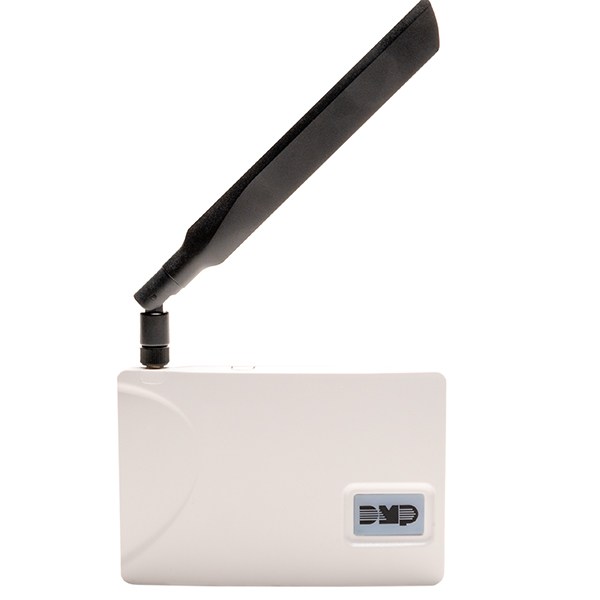
In June 2025, DMP launched Jam Alert, which works like a glass-break sensor, Hillenburg says. A glass-break detector listens for the frequencies of breaking glass and trips a zone on the intrusion panel; many jewelers already have them. Jam Alert listens for the signature of cellular jamming and trips a relay the same way.
Because of that design, it attaches to systems already in place and would be a useful upgrade, suggested the security insiders contacted for this story.
DMP sells the Jam Alert through dealers; pricing with installation varies. The unit itself runs a few hundred dollars plus programming.
Geymuller cautions that coverage is not one size fits all. A 350-square-foot shop may need a single detector; a 100,000-square-foot store may need several.
He puts something else first, and it is older and cheaper.
“It’s imperative that jewelers have multiple paths of communication—not just cellular,” he says, citing internet, radio, or a landline where one still exists. A jammer that takes out one path does not take out three. Jewelers Mutual ranks alarm redundancy and line security as “the highest-return investment a jeweler can make right now,” with jamming detection second.
False positives: A detection “alert” is not a break-in
Detection introduces a problem jewelers should understand before they buy.
“If somebody is in proximity of the store and a jam device is detected, that is not necessarily a sign of forced entry or an intrusion,” Geymuller says. “That can actually happen when the store is open for business. As they’re probing—checking your security level.”
It happened recently in Dallas. A high-value store served by three alarm companies had detectors from two of them, including ProNet’s. Both alerted during business hours. Nothing was stolen, but the detector alerts heavily suggest an individual was nearby—perhaps visible from surveillance cameras—getting information about the signals used by the shop.
Police response to that kind of call is uneven. Larger cities may take hours. Some may not respond at all. Geymuller tells clients to act themselves: Go to the store; meet police there; pull video to identify who was outside and what they were driving.
Beyond the alarm system…
Both JSA’s Guginsky and ProNet’s Geymuller emphasize owning a safe with a rating of TRTL-30×6. (TR = torch resistant; TL = tool resistant; 30 = 30 minutes; x6 = all six sides.) Anything less means that the safe is more vulnerable to forced entry.
Guginsky also recommends vibration sensors on the store walls and roof, laminated glass on showcases and front windows, and buzzer entry.
Regarding cameras, he and Geymuller agree that most stores aim them at the wrong height. Overhead isn’t an ideal position, even if it seems most natural. Eye-level is best, because, Guginsky says, “you need to see the face” of anyone entering. And don’t forget about exterior cameras under any awnings, since offenders in masks might remove them before reaching their cars.
Geymuller adds another point: Check that your system is actually recording.
“A lot of times the hard drive will not tell you it’s not recording,” he says.
Check the archive weekly at minimum, and keep your recordings 60 or 90 days rather than the standard 30. (This also can be helpful in resolving shipping and repair disputes, which often surface weeks after the fact.)
Jewelers Mutual makes a parallel case for cloud-backed video, typically costing $1,000 to $2,000 annually, since a burglar who cuts power probably will take the local footage with him.
December risks
Guginsky raises two seasonal exposures for 2026 that gizmos alone won’t touch.
The first: staffing. “These are staff hired without the experience, who don’t understand what to do in the commission of a crime,” he says. “You have to properly train your seasonal help.”
The second is the calendar. “It’s an extended weekend. People don’t respond to their store. They get back on Tuesday, and their entire inventory’s gone.” That is precisely what happened to Bidrussian.
JSA issues holiday precaution alerts for that reason, and Guginsky recommends retaining a guard—ideally an off-duty cop—through the season.
If a crime is underway, his instruction as a former policeman remains the same: Don’t resist. The data supports it. Jewelry crimes involving violence rose from 16.9% in 2024 to 27.1% in 2025.
“The only time jewelers are killed or hurt is when they resist or pull firearms,” Guginsky says.
Do not hit the panic button mid-robbery, he adds, or a theft becomes a hostage situation.
As for Bidrussian, his family’s fortune was looted more than a year ago and it took him out of the business.
“When you don’t have insurance and you lose $3 million of merchandise,” he says, “it is devastating.” Bidrussian now works as an advance planner at Forest Lawn Memorial-Parks & Mortuaries, selling cemetery property and preplanned funeral services in Southern California.
Top: Cellular jammers used by alleged jewel thieves apprehended by Glendale, Calif., police (photo courtesy of Glendale Police)
- Subscribe to the JCK News Daily
- Subscribe to the JCK Special Report
- Follow JCK on Instagram: @jckmagazine
- Follow JCK on X: @jckmagazine
- Follow JCK on Facebook: @jckmagazine