Seated at his table at the Diamond Dealers Club in New York City, 11 stories above the city’s Diamond District, Farshid Roshanravan says that lab-grown diamonds don’t carry the weight they once did.
“I don’t focus on lab-grown diamonds, unless in specific scenarios, and I’m not alone,” says Roshanravan, CEO of Rayan Gems Inc.
He gestures at a dealer to his left: “He used to do lab-grown.” Then at another to his right. “So did he…we’ll probably see some lab-growns come across this table now that we’re talking about it, though.”
Roshanravan’s indifference to the subject of lab-grown diamonds is precipitated by a complete price collapse that’s been building over the past several years.
According to diamond industry analyst Edahn Golan’s Q1 2026 wholesale price list, midstream prices for loose lab-grown diamonds fell another 14% year over year in the first quarter. The price for a three-carat VVS D color round in that period? A mere $126 per carat—30% cheaper than in 2025.
Golan’s Q2 numbers, published in July, show the slide continuing—but slowing. Wholesale lab-grown prices fell an average of 13% year over year in the second quarter, a milder drop than the 14% recorded in the first quarter and the 26% decline Golan logged for all of 2025. His wholesale index is now down 96% since he began tracking prices in 2018. The declines are also no longer landing evenly. Golan attributes the steepest drops to bigger sizes, which historically carried the biggest wholesale margins and were therefore the most exposed when retailers and consumers pushed back on price.
This continued depreciation has stratified the entire supply chain: New consumers are getting more (and better) lab diamonds for their money than ever before, while many retailers continue to enjoy impressive margins. Meanwhile, growers, manufacturers, and wholesalers are absorbing the losses.
Golan’s companion analysis, published this spring through Tenoris, a retail analytics platform, warned of another troubling trend: The ratio of lab-grown inventory to sales at U.S. jewelry retailers has climbed from the high single digits in 2020 to nearly 50%. Inventory is piling up.
In a place like the Diamond District, and certainly in the bourse, almost nobody has trouble getting lab-growns on memo. Many dealers say they simply send back unsold stock and re-order newly consigned goods for less money.
Golan tells JCK the pattern is consistent globally. The real risk, he says, is the overall slowdown of purchases causing a bullwhip effect in the market. “This time…a massive offloading of memo goods will be shoved back into the midstream, a disturbing scenario,” according to the report.
Considering that many retailers may be sitting on overpriced lab-grown stones, all but the most disciplined of retailers may soon feel the biting effects of this structural imbalance.
How the steep decline in wholesale lab prices will affect consumers is an open question. Roshanravan says consumers are aware that lab-grown diamonds are cheaper, but early buyers were the first to feel the effects. Not long ago, he saw a client who purchased a 5-carat lab-grown diamond ring for $25,000 in the early 2020s from a major retailer.
“All that I could explain was that the resale value only exists for the mounting,” says Roshanravan, adding that a few years ago, this wasn’t so clear. “There is no resale value for lab-grown diamonds.”
For the time being, however, retailers are still enjoying large retail margins on labs, says independent diamond industry analyst Paul Zimnisky.
In May, Zimnisky updated his retail margin analysis for 2026, which suggests that retailers have continued to capture the lion’s share of benefits afforded to this structural decline. His data shows retailers are managing to capture a markup of more than 80% above wholesale, a figure that has barely moved, with only a 1-2% delta, between 2025 and 2026. In other words, it’s still business as usual for some well-positioned retailers who avoided being overleveraged with what’s increasingly becoming a distressed asset.
Zimnisky, who is based in New Jersey, tells JCK it’s not unusual for wider margins to exist for a manufactured gemstone. “I still think current levels are too high, which is in part supported by the novelty of the product, which will not last forever.”
He says retailers will want to offer something unique to remain competitive in the long term: a proprietary band, cut, color, or jewelry design.
Back at the Diamond Dealers Club, as the bourse begins to swell with more dealers, Roshanravan pulls out a pair of custom designer gold earrings shaped like a frog and covered in natural rubies and diamonds.
When asked what would happen if the gems weren’t natural, Roshanravan is nonchalant. “It doesn’t matter. A good designer puts in their effort, their time, and people buy it.”
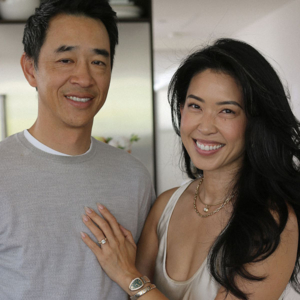
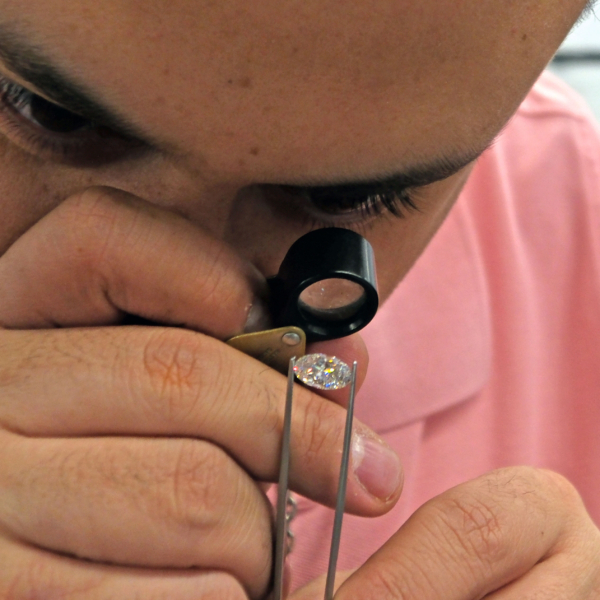
Top: Farshid Roshanravan loupes a lab-grown diamond as he talks about the manmade gems’ price collapse (photo by Sam Cooley).
- Subscribe to the JCK News Daily
- Subscribe to the JCK Special Report
- Follow JCK on Instagram: @jckmagazine
- Follow JCK on X: @jckmagazine
- Follow JCK on Facebook: @jckmagazine