The synthetic diamond market is moving toward higher-quality—and not just bigger—diamonds, industry sources say.
“We have seen the wholesale price of lab-growns declining,” Viral Mehta, Grown Diamond Corp.’s CEO, tells JCK. “One of the most important questions for the retailer is, How do you maintain your average selling prices in lab?
“Nobody wants to go around with a 6 or 7 ct. diamond on their hand. The demand has shifted toward higher colors and clarities.”
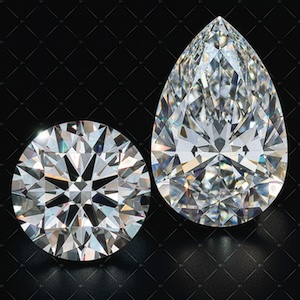
As a result, Grown Diamond has introduced the D-Flawless GCAL 8X Collection, a line of stones that not only get the top color and clarity ratings possible on the 4C’s scale but GCAL’s highest cut grade.
Mehta’s company has been producing lab-grown D-flawless stones for the past two years, originally for Brilliant Earth. He says that D-flawlesses still make up a small percentage of lab diamond output and that some currently on the market have reports from “lenient” labs.
Will other growers follow his lead and start cranking out top-quality goods? Mehta contends it may not be possible to create D-Flawless diamonds using chemical vapor deposition (CVD), as that usually produces stones in stops and starts, causing inclusions that prevent diamonds from being deemed “flawless.” (Grown Diamond produces diamonds using the high-pressure, high-temperature method, better known as HPHT.)
“CVD as a technology cannot produce flawless diamonds,” he says. “If it could, the market would be flooded with them.”
In any case, both CVD and HPHT have advanced to a point where there are fewer lower-quality lab-growns on the market.
Industry analyst Edahn Golan said that he stopped including low clarities on his lab diamond wholesale price list, as they’re no longer being sold on the market.
“It used to be that the price list used to run all the way down to I1s,” he said. “This quarter, there’s no data for SIs. I killed the I1 column a while ago, and now I’m killing the SIs, because there’s so little transactions.”
He said the current SIs on the market “are almost accidental results that were not caught in time.
“During the process of growth, there’s a lot of QA [quality assurance] stages,” he said. “If halfway through, [growers] see that something went wrong with a batch, they’ll throw it out. It’s not worth the energy cost to try and sell it.”
Ironically, as the lab-grown industry races toward perfection, the natural diamond business is moving in the opposite direction, openly touting its products as “imperfect” and therefore distinctive. De Beers natural diamond lead Sally Morrison recently told industry analyst Avi Krawitz that focus group participants repeatedly have said they’re looking for something unique.
“A lot of consumers were saying, ‘All my friends have this 3 carat, white stone, and everybody has the same. Everyone is going to know it’s lab across the room.’
“There was interest in something a little different that will show a little color across the room—something natural, maybe a flex.”
Morrison pointed to Taylor Swift’s engagement ring as a sign that buyers today want unique pieces that don’t have to be perfect.
“This is a couple who could have anything in the world they wanted,” she said. “Money and budget was unlimited. They choose something idiosyncratic, special, against the flow of what you expect someone in that situation would purchase.”
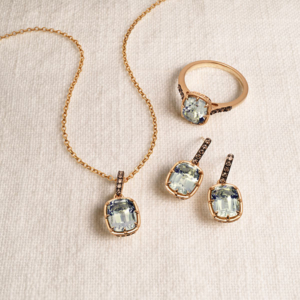
(Photo courtesy of GCAL)
- Subscribe to the JCK News Daily
- Subscribe to the JCK Special Report
- Follow JCK on Instagram: @jckmagazine
- Follow JCK on X: @jckmagazine
- Follow JCK on Facebook: @jckmagazine