Lab-grown diamond prices continued to decline in the second quarter, but the market is showing signs of stabilization, according to a wholesale price report published yesterday by industry analyst Edahn Golan.
Golan found that in the second quarter, wholesale LGD prices fell an average of 13% year-over-year. He said lab-growns have been defying traditional supply-and-demand expectations: Prices have fallen even though consumer demand has remained strong.
The overall index is now down 96% since Golan began tracking prices in 2018. His latest report said that after years of steep erosion, price declines began to slow in 2024. The drop seems to be leveling off more recently as well: Golan previously reported year-over-year price decreases of 14% for the first quarter and 26% for all of 2025.
During the second quarter of 2026, the largest price declines were concentrated in bigger stones, according to Golan’s report. Year-over-year, prices fell 11% for diamonds weighing 1.50 to 1.99 cts., and 20% for 2 ct. stones fell 20%. Meanwhile, the wholesale price of 1 ct. rounds increased 1% in the quarter.
Larger diamonds have historically carried higher wholesale margins, making them more vulnerable to pressure from customers seeking lower prices, said Golan.
“Demand for 1 ct. stones has slowed as 2 and 3 ct. diamonds have become more affordable,” he explained. “Normally, weaker demand would put further downward pressure on prices. Instead, wholesale prices for 1 ct. stones are firming.”
While wholesale prices for many polished lab-growns are still dropping, prices for rough stones have recently moved higher, according to Golan’s report. Some Chinese producers have raised prices by at least 30%, and U.S.-based Diamond Foundry appears to have increased prices by about 25% “in the last few weeks,” it said.
“Given growers’ very low production costs, these increases are widely viewed as opportunistic moves in a consolidating market rather than a response to consumer demand,” said Golan. “This is particularly notable against the backdrop of declining retail polished lab-grown diamond prices and elevated retail inventory levels.”
At retail, demand for lab-grown diamond jewelry remains healthy. Citing data from the Tenoris analytics firm, Golan said total sales of lab-grown diamond jewelry at U.S. specialty retailers increased 24% during the second quarter, with growth driven by higher unit sales.
Consumers do appear reluctant to increase spending, with average expenditures per unit of lab-grown diamond jewelry remaining within a relatively narrow range for roughly the past 18 months.
These trends suggest the lab-grown industry’s future success “will depend on establishing products within the price ranges consumers have already shown they are comfortable with, neither too expensive nor too inexpensive,” Golan said.
The JCK News Desk uses AI to help research and produce the first draft of articles. This story was then reviewed by staff writer David Blomquist.
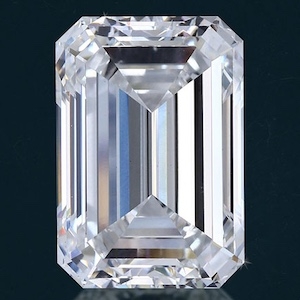
Top: A 50 ct. lab-grown diamond (JCK file photo)
- Subscribe to the JCK News Daily
- Subscribe to the JCK Special Report
- Follow JCK on Instagram: @jckmagazine
- Follow JCK on X: @jckmagazine
- Follow JCK on Facebook: @jckmagazine