Huddled among a group of Sri Lankan gem dealers at the GJX show in Tucson in February, the Bangkok-based dealer Lambert Vissot pulled a handful of baggies from his pocket and handed them to this reporter.
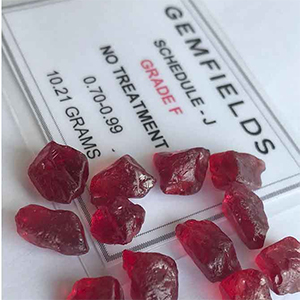
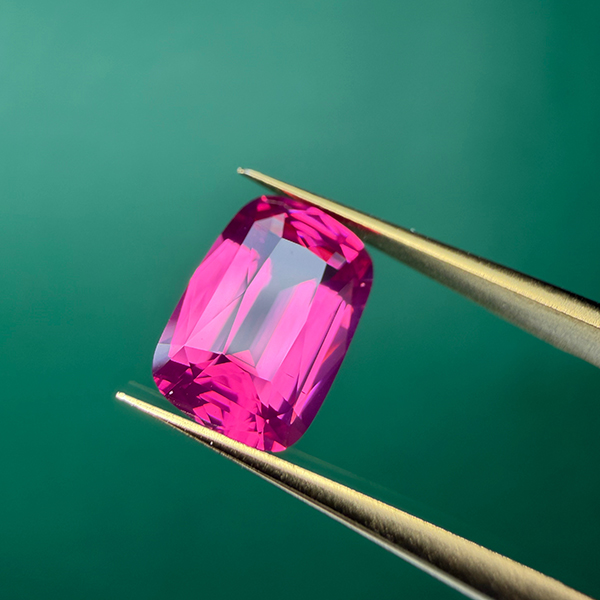
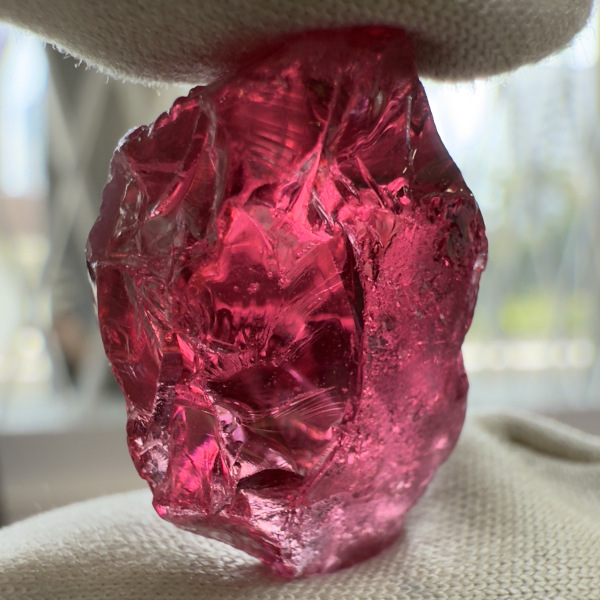
Inside was an assortment of large, eye-clean neon pink spinels ranging in size from 8 to more than 10 carats.
“They’re Mahenge,” he said, referring to the southern region of Tanzania where the gems are mined.
Mahenge is arguably the source of the world’s most saturated pink spinel. The region is not supposed to produce much of it—and it is certainly rare to see them in such big sizes. But Vissot’s parcel was not entirely an outlier. Over the course of the week, more dealers produced Mahenge specimens above 5 carats. None of them matched his for size, color, and clarity, but the material was there, in a size class the deposit was widely assumed to have stopped producing.
What sets Mahenge spinels apart
At the onset of the pandemic in 2020, Vissot flew to Tanzania with a completely different objective. His first stop was the city of Arusha, in the northeast of the country.
“The main goal in the beginning was tsavorite,” he says. “And then tanzanites.”
But something happened to Vissot while in Arusha. He became enchanted by “this bubblegum, hot-pink…reddish-orange, or even completely orange stone—completely amazing. When I found them in Arusha, I had to know: Where is Mahenge? So I traveled there, and I discovered this gem.”
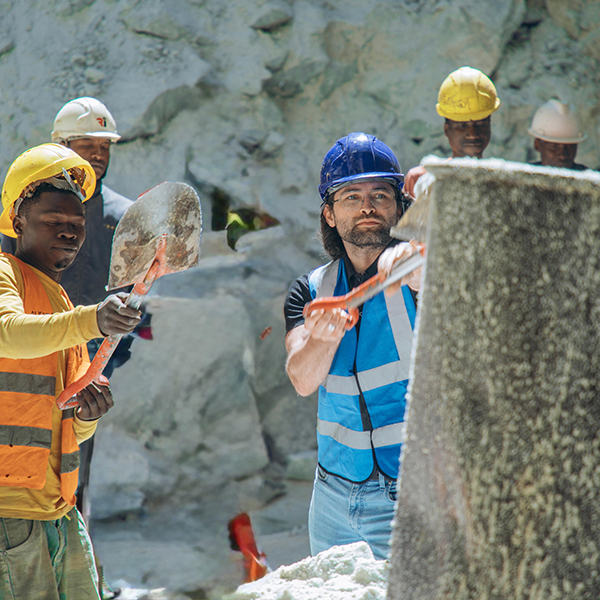
Since that time, Vissot has spent more than five years building a supply position in the deposit. He has visited the mines, networked with the local population, and continues to remain in contact from his office in Bangkok.
Vissot sees less of the material every year. He also had the best parcel on the floor at the GJX show. And Tucson is where American jewelers do their buying, which makes what turns up there a reasonable proxy for what will reach an American showcase.
Trained as a gemologist and widely known on Instagram as @iamgemhunter, Vissot is unusually precise about what distinguishes vivid pink spinels from other varieties of the stone. He says it comes down to trace chemistry.
Christopher Smith, president of American Gemological Laboratories in New York, has a similar take. Three chromophores govern the color of pink and red spinel: chromium, vanadium, and iron, in that order. What matters is their relative concentrations and how they complement one another. Iron and vanadium, says Smith, can shift the hue.
That is where Mahenge differs from Burmese material. Mahenge spinels are very rich in chromium, like their Burmese counterparts, but unlike Burmese pink spinels, they tend to carry a little iron. High chromium with a little iron produces a hot pink neon color—not, Vissot is careful to add, the electric “jedi” neon seen in fine Burmese material. Studies on the neon spinels of Man Sin, Myanmar, published in Minerals, found iron notably low in that material.
The trade already has a word for what that absence produces. Jedi was coined between 2002 and 2004 by field gemologist Vincent Pardieu alongside colleagues at the Asian Institute of Gemological Sciences (AIGS) in Bangkok, to describe saturated Burmese pink spinels with strong fluorescence and no dark tone. But it is a word without a universally accepted definition.
“Jedi spinel is a trade term,” says Smith.
AIGS has made some effort to discipline its usage, but there is no industry-wide standardization for jedi-color designations, and the word has been applied to Tanzanian goods that were never Burmese to begin with.
Vissot, who sells these stones, didn’t use the term when discussing Mahenge spinels with JCK. Not every seller is that careful.
The word also flattens what the deposit actually produces. Mahenge yields milky and translucent material, purplish stones, pastel pink, hot pink, and reddish-orange. Pardieu has written that many Mahenge spinels are of the pinkish, sleepy type.
America proves its appetite for Tanzania’s pink gem
In December 2024, Christie’s New York sold a pair of Harry Winston earrings set with 22.42 ct. and 21.87 ct. reddish-pink spinels for $2.23 million, more than three times the high estimate. The stones were reported by Smith’s laboratory as Tanzanian, with no evidence of heat.
Large-sized (5 ct.–9.99 ct.) fine quality pink spinels can range wildly in price, with GemGuide’s latest edition pegging the cost at $4,500 per carat, though they often sell for much higher. Vissot says he sold an 8.18 ct. vivid pink Mahenge Spinel for about $9,000 per carat this year.
Demand at the top of the American market, in other words, is not at question. Supply is.
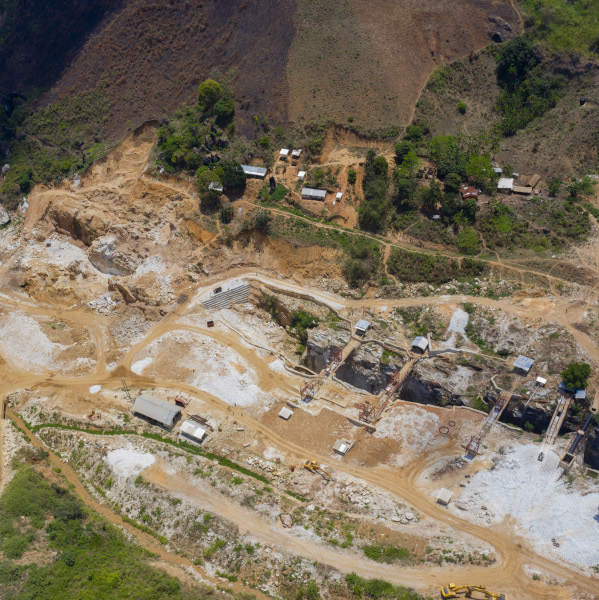
Tanzanian spinel entered the world’s consciousness in August 2007, when miners at Ipanko, south of Mahenge town, struck four enormous crystals. Only a fraction of the rough was gem quality, but it yielded stones in sizes and colors the trade had never seen from spinel.
“They hit a big pocket,” Vissot says. “That’s when the world first heard about it. I think 54 kilograms.”
Smith places that strike in a longer arc. Mahenge was recognized as a source of ruby and spinel as far back as the mid-1970s, producing periodically before turning active again around 2000. The 2007 find, he says, arrived at the right moment: Appreciation for spinel was growing, and supply from other sources was limited.
It also set the assumption of scarcity that has held ever since.
The dealer Rahul Jain says that assumption may be out of date—at least for now. About a year ago, the director of Caram was approached by Sri Lankan intermediaries carrying fresh stock of the pink gem, in large sizes and good quality.
Jain, who splits his time between Hong Kong and Germany, moved quickly on the new Tanzanian goods at the Bangkok shows in late 2025.
“I accelerated my buying,” he tells JCK. “I just noticed there’s a lot more nicer material available now.”
His contacts credited the fresh supply to improved mining—a new deposit, they claimed, and miners with a better sense of where to dig. Jain says they were no more specific than that, which is not surprising. In the gem trade, dealers routinely stay vague about upstream sources they still intend to patronize.
His reasoning for why this is fresh production rather than old stock has more to do with where the stones are coming from.
“If it was a secondary supply, you’d see it from dealers in other cities like New York,” he says.
Smith offers a third possibility. Much of the material from the deposit’s peak years, which he places around 2007 to 2010, was acquired by a select few German dealers who had strong enough connections to secure mining rights.
“It’s largely controlled by a select number of Idar-Oberstein dealers who are very active in mining, very active in east Africa,” says Smith.
“Sometimes they let material out, they hold material back,” Smith says. How much reaches the market, and over what period, is influenced by their decision-making.
Vissot’s account of the mine, which he’s visited, does not support a new abundance. “It’s a very tiny region, Mahenge,” he says. “There’s a small vein.” The pockets, he adds, are “really random.”
Smith’s own vantage explains why this is hard to settle from any one perspective. A Bangkok gem lab, he says, sees what is in that market at that moment: new production, or goods that have sat in someone’s safe. A New York lab sees material entering the American market: newly mined, newly cut, long-held local stock, or pieces coming back from consumers.
Spinel submissions have risen every year since around 2007, he says, across Tanzanian, Burmese, Sri Lankan, and Vietnamese material alike. This is a trend he ties to spinel’s own rising status.
No one selling Mahenge spinels can really say whether this is a lasting supply, or one good pocket working its way through the market. What Tucson showed is that the stones are here. Whether they stay is another matter.
Top: A vivid pink 8.18 ct. Mahenge spinel (all photos courtesy of Lambert Vissot)
- Subscribe to the JCK News Daily
- Subscribe to the JCK Special Report
- Follow JCK on Instagram: @jckmagazine
- Follow JCK on X: @jckmagazine
- Follow JCK on Facebook: @jckmagazine