Tim McClelland, a classically trained jeweler based in the Berkshires, is convinced that the most effective way to sell natural diamonds begins and ends with one factor: beauty.
“At the end of the day, people buy something because they think it’s beautiful and interesting,” McClelland tells JCK. “I’ve been in arguments with diamond cutters who think it’s silly of me to want to cut material to get a certain look because they think you’re just grinding away diamond, but I say, ‘Grind!’ Because it’s going to be more beautiful.”
McClelland has come by his conviction over the course of decades selling engagement rings to some of the world’s most discerning jewelry buyers. Together with his daughters, Sadie and Emma, he runs TW McClelland & Daughters, a small but well-regarded jewelry boutique in Great Barrington, Mass.
The brand’s Wildflower collection of wedding rings is the embodiment of his design philosophy. The line, which features mountings that start around $4,000 and reach the $10,000 range for more elaborate styles, has its roots in the late 1990s, when McClelland was the design director of McTeigue & McClelland, a boutique fine jewelry brand beloved by editors, tastemakers, and clients for its high-end mix of rare gemstones and unique handmade designs. That’s when he decided he wanted to create an original engagement ring style that honored both the mounting and the stone—and stood out in a sea of simple solitaire rings patterned after Tiffany & Co.’s signature six-prong setting.
“The Tiffany ring was a perfect vehicle to sell a solitaire diamond,” McClelland says. “After it came out, the emphasis was all about the stone and that carried through more than 100 years and defined what an engagement ring was supposed to look like. Everybody had done variations on that with halos and baguettes so those classic styles had been around for a long time, but nobody had really looked at the whole ring in relation to the stone in a long time and I wanted to do that.”
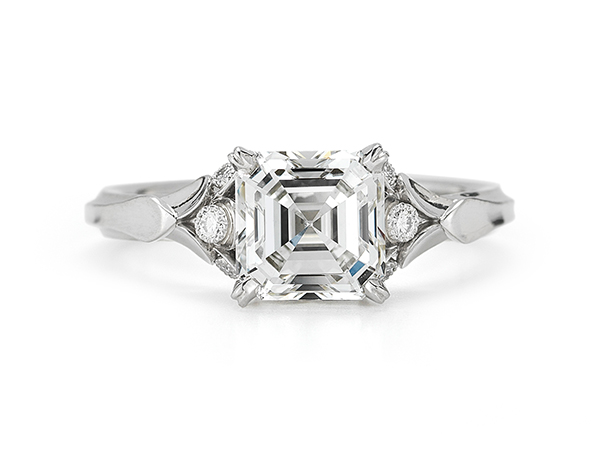
McClelland knew he was working with a limited amount of real estate in an engagement ring, but he believed a natural motif focused on the area around the diamond (“the shoulders of the ring,” he says) could work well as interesting, original design.
“I started making these rings with larger stones—5 to 10 carats—because I had a little more room to develop a design,” he says. “And it worked. I sold some very important stones.”
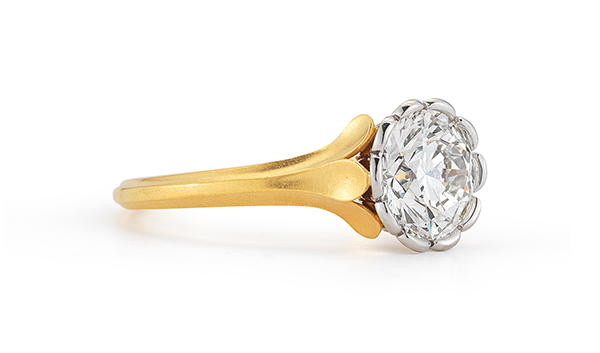
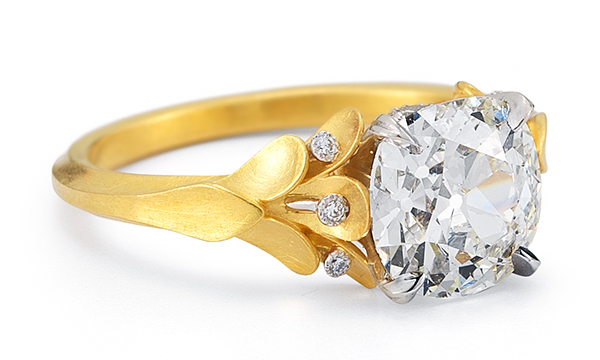
The process of perfecting the Wildflower collection took about a decade, culminating in the 2000s, when he settled on a design motif distinguished by floral petal-like elements that could be arranged symmetrically to create a segue from the shank to the center stone. “Getting that configuration just right so it looked beautiful sculpturally took a long time, and I did it one ring at a time,” McClelland says. “Every ring had to be made by hand. It still is—I don’t use molds. Every one of those tiny petals are handmade and hand placed in a very careful way to get it perfect.”
In 2015, McClelland obtained design patents and copyrights on all the designs in order to protect them from copycats, even though “the rings themselves were so difficult to make and required so much skill that people couldn’t knock them off even if they wanted to,” he says.
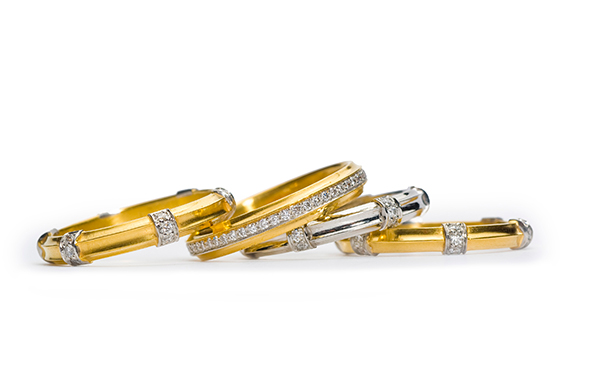
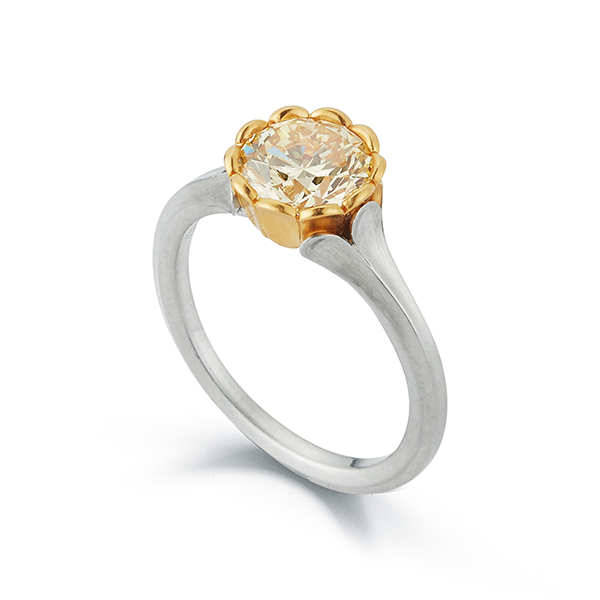
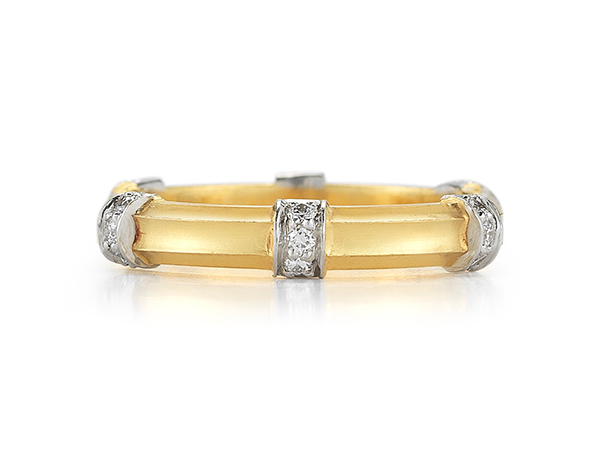
Eventually, he came up with designs that could accommodate smaller stones, down to 50 points, and developed a line of wedding bands to go with them. Using a special 18k alloy called Bloomed gold, achieved through a Victorian technique that lends the metal a silky, burnished patina, and platinum settings for the center stones, McClelland offered clients old-cut stones long before Taylor Swift made them de rigueur.
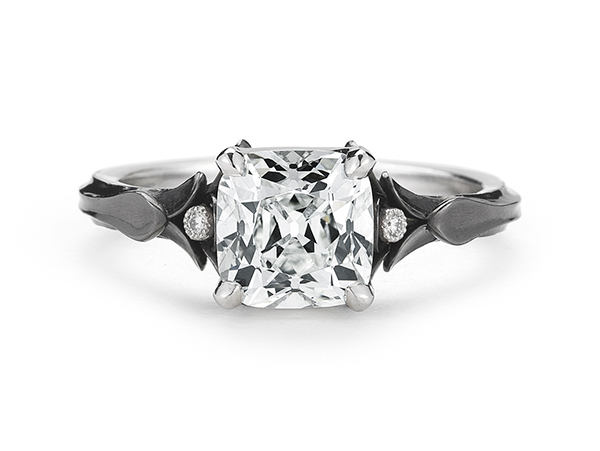
“I developed some of my own cuts of diamonds that looked particularly good in my mountings,” McClelland says. “I used a lot of old European cuts, old miners, and still do. I preferred them. It’s not just a stone in a stone-holder—that’s not what I do. An old antique cushion in J color looks fabulous in my settings.
“I always encourage my customers to look at it as buying a jewel,” he adds. “Not a diamond, not a mounting, but a jewel. More than ever, buyers are looking for anything that is differentiated in terms of sculptural beauty and handwork.”
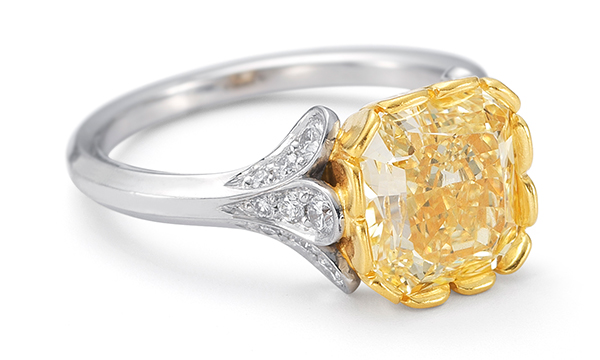
The proof that McClelland’s approach is working is the number of couples who continue to seek out his work. “It’s still astonishing that people come to my little store in Great Barrington from all over the world,” he says. “I don’t know how to explain it except to say that people will do anything they need to do to buy an engagement ring, so the appetite for that kind of purchase is there. Some people just want to get the job done and will buy a stone from their local jeweler or even online. But certainly, some percentage of people really want something special and that’s what I can do for them.
“They’ll usually have a preference for whether it’s an oval, cushion, or round stone, but usually people who like these mountings are not as focused on the 4Cs, so I help them find the right stone. It’s working a little backwards and takes a bit of hand holding but ultimately, people really get what they want.”
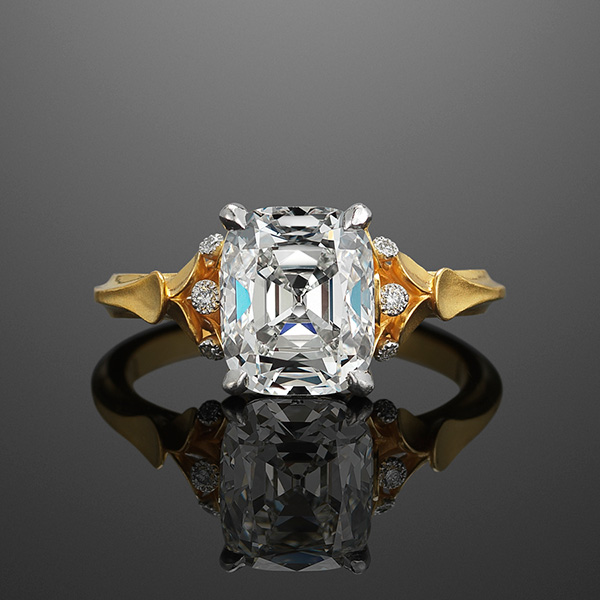
Top: Classic Flora ring in 18k Bloomed gold with 4.47 ct. cushion-cut diamond, price on request; TW McClelland & Daughters
- Subscribe to the JCK News Daily
- Subscribe to the JCK Special Report
- Follow JCK on Instagram: @jckmagazine
- Follow JCK on X: @jckmagazine
- Follow JCK on Facebook: @jckmagazine