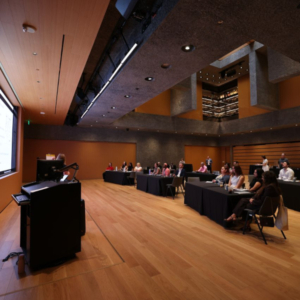
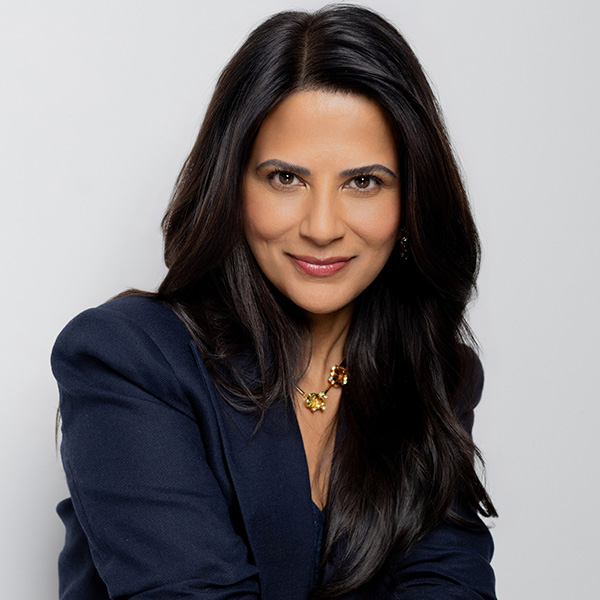
Sindhu Culas (pictured), who became Swarovski’s North American president in January, says if you want to know where the brand is headed, look at three celebrities: Madonna, Demi Moore, and Ariana Grande.
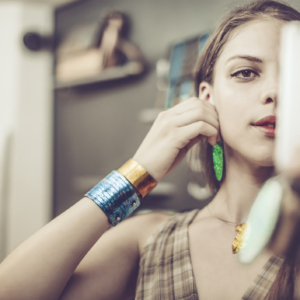
Madonna wore a fuchsia Millenia necklace, hoop earrings, and crystal-covered, fingerless goalkeeper gloves—all by Swarovski—during her performance in the historic FIFA World Cup Finals halftime show on July 19.
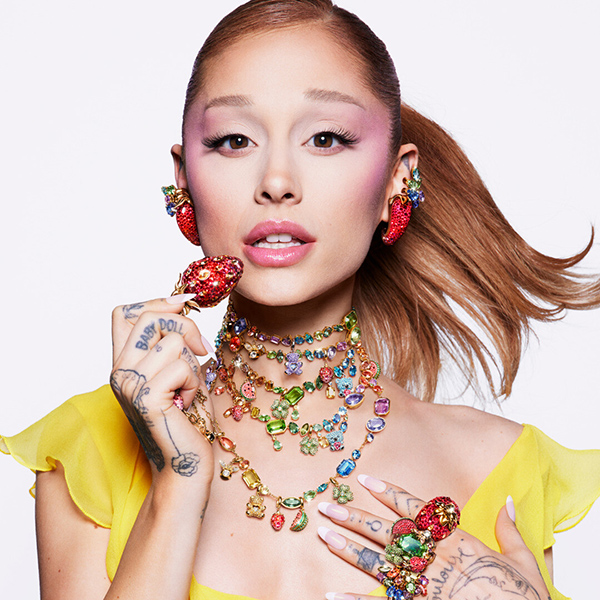
A couple of months earlier, Moore had donned a Swarovski Galaxy necklace, featuring 150 cts. lab-created diamonds, at the Cannes Film Festival. And Grande? The pop princess is the brand’s juiciest ambassador, sporting crystal-covered summer fruit, flowers, and butterflies aimed at that all-important Gen Z and younger audience.
These three women and the jewelry they’ve worn represent three things to Culas: They’re classic. They’re powerful. And they have cultural relevance. Culas wants all the other “queens” who wear Swarovski to describe themselves in such terms—and she wants the industry to think of those qualities when they see what the brand is doing.
“We can do anything from fun to whimsical to the super high-end, highly designed piece of diamond magic,” Culas says. The carat total in Moore’s necklace, for example, “would be unheard of back in the day,” she says. “For us, it is what Swarovski should be known for: We can transform 150 carats into this real piece of art.”
Culas’ job responsibilities at Swarovski include maximizing the brand’s physical and digital retail presence and expanding brand loyalty throughout the United States. She joined the company with extensive experience in the retail industry, having served as CEO of denim fashion brand G-Star, senior VP of e-commerce and strategy for Calvin Klein, senior vendor manager at Amazon, and a buyer and planner at Macy’s.
She says she adores the jewelry industry and is excited to grow Swarovski to new heights. And she plans to do it with a singular focus on her queens and the ways they wish to wear jewelry.
“Today’s consumer has shopping behavior that is completely nonlinear. The shopping journey is almost chaotic, and the onus is on the brand to show up seamlessly and consistently at every single touchpoint that she chooses to transact in and browse at,” Culas says. “At the end of the day, my view is it doesn’t matter where she purchases Swarovski. It is most important to me that she has a piece of Swarovski.”
Culas tells JCK more about Swarovski’s possible next steps, as well as her ideas about lab-grown diamonds and how her career prepared her for her current role, in this interview (which has been minimally edited for space).
How did you find your way to Swarovski?
I’ve worked a long time in many, many different capacities and industries. If you had to bucket my background, I would say it’s three important positions: I had traditional retail, so that was Lord & Taylor and Macy’s, and then I had pure-play digital, like at Amazon. That was back in 2015, when there was this sort of disruptive agent of change redefining retail—I packed my bags and moved to Seattle and said, “I need to figure this out.”
And then the last piece of my experience is finance, where I worked at a hedge fund for five years as an investment analyst and at UBS as a sell site analyst for two years. As you look at the three maybe very different-on-paper experiences, I would say there’s this common thread through all of them…customer and brand. In my consumer and investment experience, it was all about evaluating the brand, really assessing the capability of financial discipline and execution. And most importantly, does the consumer care about what you’re doing? What is the consumer’s sentiment currently in the macro? Putting all those pieces together to make the investment decision.
Obviously at Macy’s, I did more planning, product development, brand management. Then at Amazon, I got to peek under the hood and really see how digital is done. And honestly I feel like Amazon, they put consumer at the center. They made table stakes. So I put all of these sort of different pieces of my experience together [at Swarovski].
Why did this job at Swarovski feel like the right opportunity?
When Swarovski came up, if I tell you it was a dream, I would be underplaying it for several reasons. Number one, it is a brand that I have personal love for. Everywhere else I’ve worked, it’s been [either] I love the brand, I love the consumer, I like the product, but it’s never been this perfect trifecta of all of it coming together.
The added bonus here is the people. This is a tenured organization, a brand that’s been around for 130 years. And when you see this team and the way they love the brand and the way they innovate, I promise you, every day is day one. That’s the excitement of being here: It feels like I’ve been here forever because it’s been so exhilarating, so easy.
Also, the reason Swarovski was so interesting is this “pop luxury” concept. Pop luxury is this intersection of heritage, craftsmanship, and cultural relevance. And the proof is in the pudding because of the brand heat, the relevance, and the numbers.
How were your first six months at Swarovski?
I’ve been talking to my stores team. We have about 300 stores across North America, and they’ve been doing such an amazing job bringing to life the store experience, the product experience to our consumer. What I’ve said to them during my visits is “Sure, the product is king and our customer is queen. But each one of them on their own doesn’t mean much. Even the most enthusiastic customer doesn’t mean everything. You are the connecting force that brings our king and queen together.” Without them explaining the story, luxuriating, giving that importance of what it is that we are bringing to the table, it’s in its own little silo. Marketing is the other piece, the connecting piece of all of this.
How do you feel about the possibilities of moving Swarovski further into the luxury space?
[Consumers] come to jewelry because of its life span. This heirloom piece could be $2 or $2,000, but it brings real sentimental value. And, quite frankly, joy. You never buy a piece of jewelry when you’re angry. It’s a real emotional connection.
I think that’s what Swarovski does really well: We make beautiful product, but the product by itself isn’t meaningful alone. It’s that connection, that emotional piece that really connects the consumer.… And most recently, the lab-grown piece of it gives us permission to play in yet more categories.
What is your approach to Swarovski-made diamonds?
I was actually in the diamond business category at Amazon in 2015, and lab-grown was just emerging. Today the consumer is so much more educated about it. They are so much more comfortable with it, and they truly know what it is…a diamond that has been sourced differently, but it’s a diamond.
Now we have permission to play in the fine jewelry space, which we didn’t before. We have permission to play more aggressively in the bridal space. As I think about this category, it’s yet another foundational pillar that we will start really amplifying. You see that in that younger consumer…Gen Z and younger. They really, really are interested. They want to try it, they want to experiment. I love that idea that you’re seeing that same energy in what you can do.
At the heart of what Swarovski and Daniel Swarovski did was crystal-cutting technology. That same precision cutting we now do with our lab-grown diamonds—a Swarovski created diamond. As we think about the progression of this category, the point of differentiation is not about a 2 ct. that looks exactly the same in mined and lab-grown. The point of differentiation is in the beauty and the faceting. And fun and fashion—the design that comes from it—and, by the way, the brand linkage and love and emotion tied to it. That’s truly where I think our competitive advantage will continue to accelerate as this space becomes even more democratized.
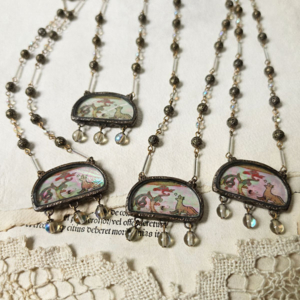
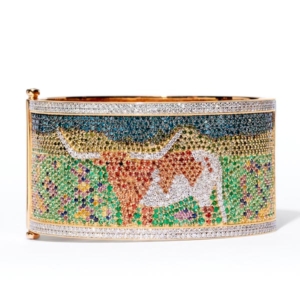
(Photos courtesy of Swarovski)
- Subscribe to the JCK News Daily
- Subscribe to the JCK Special Report
- Follow JCK on Instagram: @jckmagazine
- Follow JCK on X: @jckmagazine
- Follow JCK on Facebook: @jckmagazine