It’s natural that sapphire takes most of the September spotlight given the popularity of the birthstone. But blue doesn’t have to get all the attention this month.
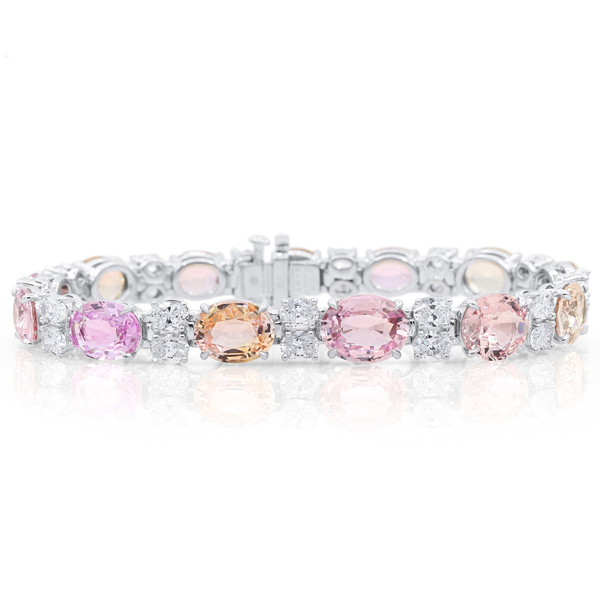
For shoppers who want gemstones with a little more personality—and perhaps a story their friends already haven’t heard—there’s padparadscha, sapphire’s elusive meeting of pink and orange. Its color has been compared to sunsets, salmon, and, most famously, the lotus blossom from which its unusual name derives.
And if your customers haven’t heard of it yet, that might be part of the appeal.
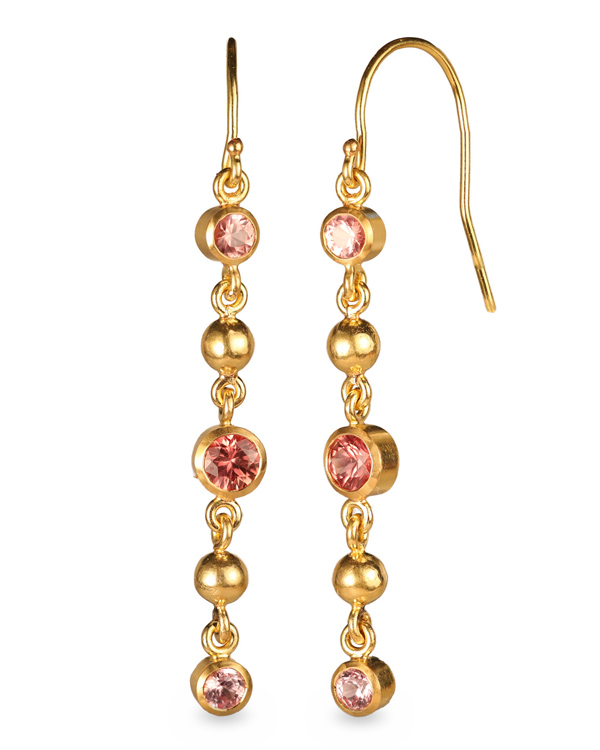
While vastly different in color, this unusual gem is chemically the same as the better-known blue sapphire, with the same Mohs hardness of 9. But padparadscha isn’t the obvious, easy-to-love classic blue, and that’s precisely what makes it special. A blue sapphire announces itself from across the room; a padparadscha is harder to pin down. While pink on its own traditionally might be feminine, and orange alone can feel bold or even challenging, a stone that merges both as artfully as a pad does is warmer, softer, more nuanced.
Each padparadscha is beautifully individual. Some lean more orange, some pink, so a customer isn’t necessarily shopping for the stone—they’re shopping for their stone. And given the gem’s rarity and collectibility, that sales proposition gets even sweeter.
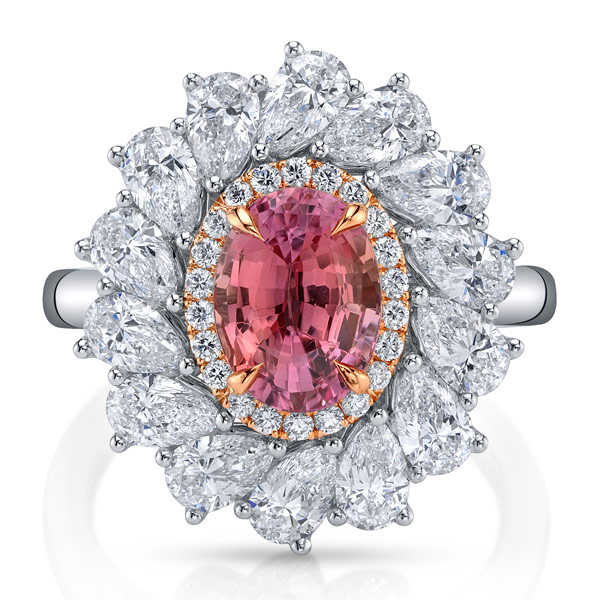
Everyone recognizes a blue sapphire. Padparadscha gives the consumer the pleasure of knowing something others might not. It gives them the chance to say, “Actually, it’s a sapphire!”
Of course, that raises another question: What, exactly, makes a sapphire a padparadscha?
The answer is more complicated than its dreamy color might suggest. Even within the gem trade, the precise definition of padparadscha has long been debated. Generally, the term is reserved for sapphires occupying a relatively narrow range from pinkish-orange to orangey-pink. Stray too far toward either color—or introduce certain additional color modifiers—and you’re back in the broader world of fancy sapphire.
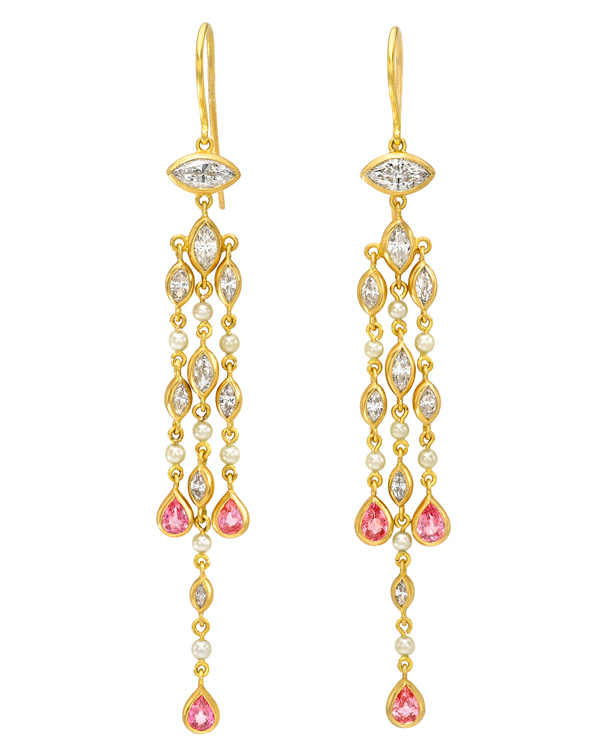
Historically, padparadscha has been closely associated with Sri Lanka, where the gem takes its name from a word referring to the lotus flower. Today, however, qualifying stones can come from other sources as well. What matters for the designation is that elusive balance of pink and orange.
And because that designation carries both rarity and value, retailers should know exactly what they’re selling.
Treatments are particularly important here. Heating is common and accepted within the sapphire market, but other treatments can create padparadscha-like color. Beryllium diffusion, for example, can introduce orange or yellow color into sapphires, producing stones that resemble natural-color padparadscha. Color stability can also be an issue: Some sapphires can temporarily gain or lose an orange component depending on their exposure to light.
For an important padparadscha, then, an independent laboratory report can be an especially useful part of the sale, helping establish whether the sapphire is natural or lab-grown, disclose detectable treatments, and determine whether the stone meets that lab’s criteria for the padparadscha designation. It’s admittedly more complicated than pointing to a blue stone and saying “sapphire”—but perhaps that’s exactly the point.
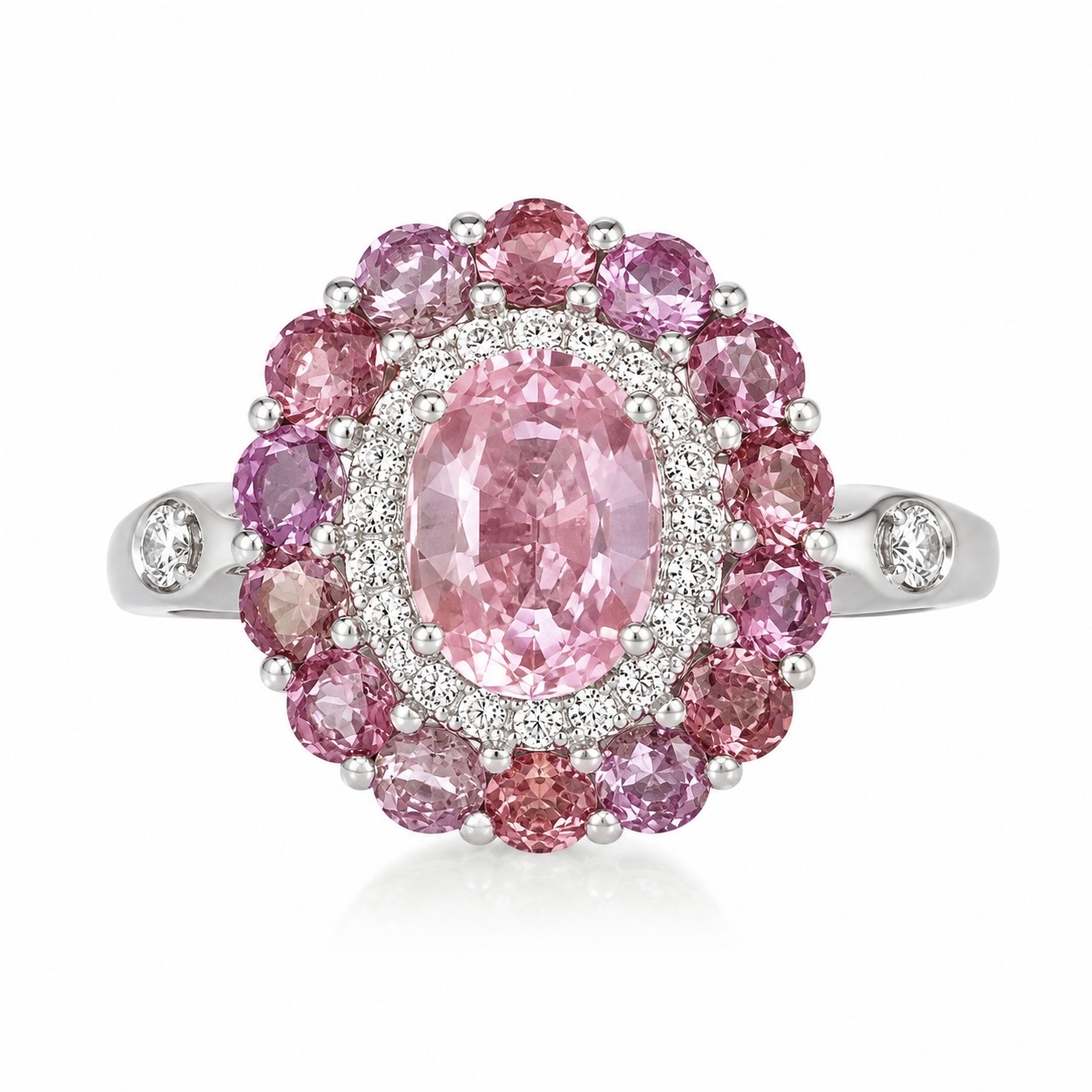
For retailers, September offers an annual opportunity to remind customers that sapphire encompasses much more than a single color. Padparadscha takes that idea to its most compelling extreme: It has the durability and familiarity of sapphire, coupled with the rarity, individuality, and discovery of something that feels entirely different.
Blue sapphire will always have September. But for the customer who wants the sapphire no one else in the room is wearing, there is padparadscha.
Top: Bracelet in platinum with 26.86 cts. t.w. padparadscha sapphires (unheated) and 5.01 cts. t.w. diamonds, price on request; Oscar Heyman
- Subscribe to the JCK News Daily
- Subscribe to the JCK Special Report
- Follow JCK on Instagram: @jckmagazine
- Follow JCK on X: @jckmagazine
- Follow JCK on Facebook: @jckmagazine