Opals and I have a complicated relationship. I love looking at them. I love writing about them. Put a great opal in front of me and I will happily lose several minutes watching the colors move around inside. But actually wear one? That is where my deeply superstitious side starts whispering things I know are probably ridiculous.
I know—you’re rolling your eyes. But the opal superstition is a very real one, and could be costing a sale among your most cautious customers. It may be an old wives’ tale, but opal’s old reputation for bad luck—particularly if it isn’t your birthstone—has managed to hold onto its staying power.
The superstition, however, is basically literary gossip. According to GIA, opal’s bad reputation often is traced to Sir Walter Scott’s 1829 novel Anne of Geierstein. Earlier beliefs were considerably kinder. Ancient Romans associated opal with love and hope; Greek tradition credited the stone with powers of prophecy; and other legends gave the gem positively supernatural origins, including the belief that opals fell from the heavens in flashes of lightning.
On the other hand, there’s something to be said about leaning into the spookiness of opal in October. It’s mysterious. It contains flashes of unexpected colors. It holds centuries of magical lore. If any gemstone belongs alongside pumpkins, ghosts, and our annual willingness to entertain the supernatural, surely it’s this one.
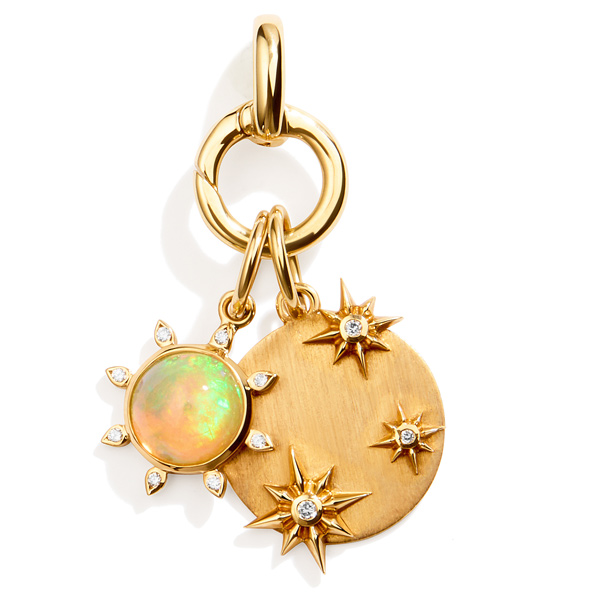
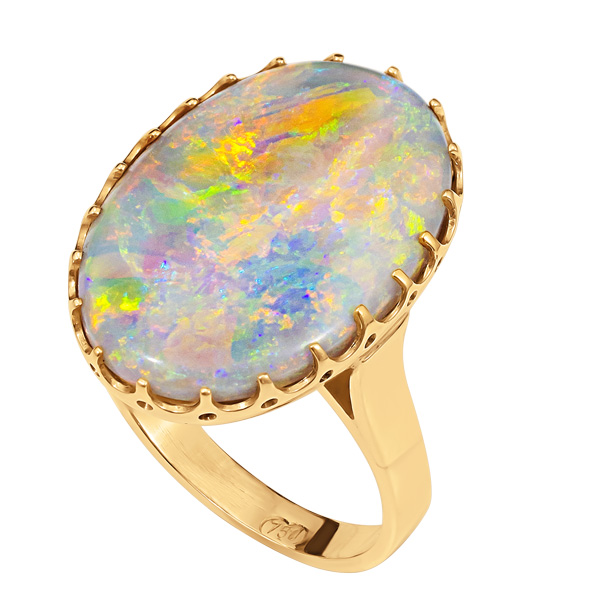
There’s real science behind some of that magic, too. Opal’s color play comes from light diffracting through orderly arrangements of microscopic silica spheres; the gem is hydrated silica and can contain up to 20% water. No two display color in quite the same way.
That history gives retailers a useful response for customers who share my hesitation: The “bad luck” thing isn’t some ancient warning handed down through the ages. In fact, much of opal’s history casts it as exactly the opposite—lucky, hopeful, and magical.
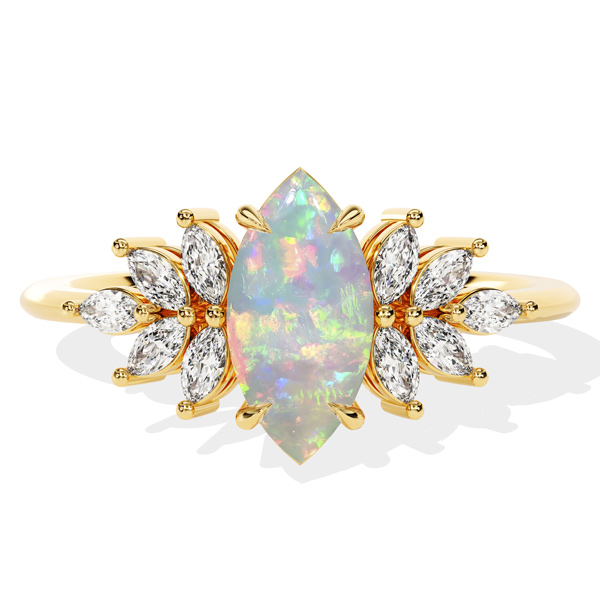
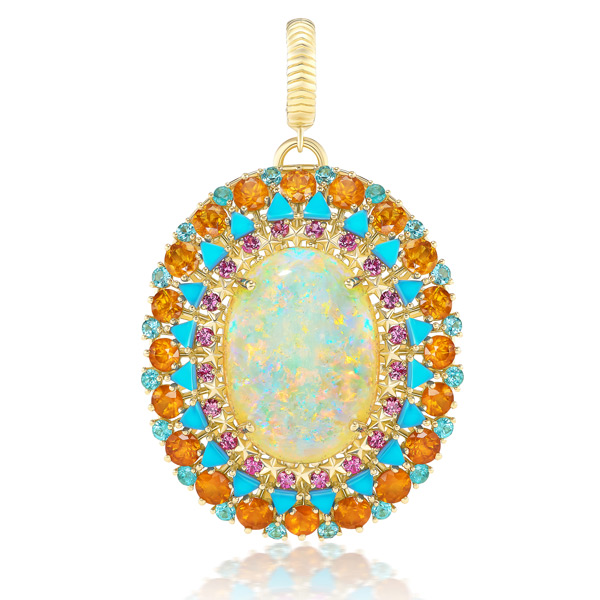
But during spooky season? Let it be the bold choice that tempts fate, and dare only the bravest customers to don them. People love a good challenge—and when it comes in the form of a gorgeous opal, certainly plenty will accept.
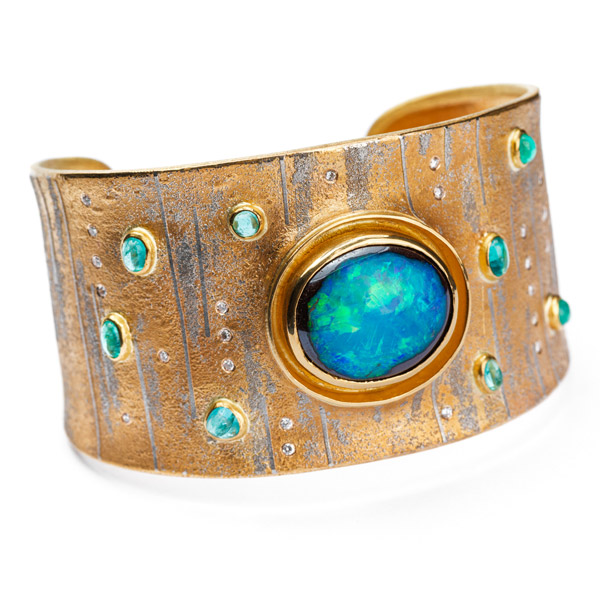
Top: Cuff bracelet in 18k and 22k yellow gold and platinum with Yowah nut opal, Paraiba tourmalines, and 0.23 ct. t.w. diamonds, price on request; Atelier Zobel
- Subscribe to the JCK News Daily
- Subscribe to the JCK Special Report
- Follow JCK on Instagram: @jckmagazine
- Follow JCK on X: @jckmagazine
- Follow JCK on Facebook: @jckmagazine