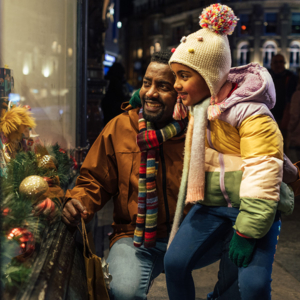
Retail sales during the 2026 winter holiday season are projected to reach $1.013 trillion, marking the first time spending will cross the trillion-dollar threshold, according to the National Retail Federation (NRF).
This is the second consecutive year the NRF has made the trillion-dollar prediction, but 2025 did not live up to that expectation (not that the $972.3 billion result is anything to sneeze at!). The forecast represents a 4.2% increase over 2025 spending during November and December, excluding purchases from car dealers, gas stations, and restaurants.
The NRF reports that 91% of U.S. consumers plan to celebrate winter holidays such as Christmas, Hanukkah, and Kwanzaa. However, economic concerns continue to weigh on shoppers’ minds, with 56% saying the state of the economy will affect their spending plans this year.
To help ease those budget worries, 82% are taking steps to keep holiday costs in check, including buying less expensive gifts (25%), finding other areas to cut back (24%), paring down on the number of people they buy for (20%), and waiting until Thanksgiving weekend to do their shopping (20%).
Still, many other consumers started their holiday shopping early—43% planned to make purchases before November. The Thanksgiving holiday weekend is expected to draw the largest concentration of shoppers, with 182.7 million consumers planning to shop during that period.
Black Friday is predicted to be the most popular day to shop, with 69% (126 million shoppers) planning on hitting the stores. “Of those, 67% are likely to shop in stores and 89% online,” NRF said in a statement. Cyber Monday comes in second, with 36% (66.1 million people) planning to check gifts off their lists.
During that peak Thanksgiving weekend, 59% of shoppers plan to use AI to get recommendations, gift ideas, find the best prices, and track their budgets. “AI has become another tool consumers use to make holiday shopping easier, whether they’re researching products or looking for the best deals,” said Prosper Insights & Analytics executive vice president of strategy Phil Rist in a statement. “Holiday shopping represents one of the many ways they are putting AI to use.”
Gift cards remain the most desired item among holiday shoppers, with 47% listing them as preferred gifts. Clothing follows at 44%, while books and other media appeal to 25% of shoppers, and personal care or beauty items to 24%. Jewelry came in at 20% (up 1 percent from 2025).
The trillion-dollar milestone caps more than a decade of steady growth in holiday retail. Sales have nearly doubled since 2010, when spending totaled $517.5 billion. The projected 4.2% increase for 2026 continues a pattern of recent growth, following a 3% increase in 2025 and a 2.5% increase in 2024.
The National Retail Federation based its findings on two consumer surveys conducted with Prosper Insights & Analytics. The October survey polled 8,094 consumers Oct. 1–7, while the November survey reached 7,956 consumers between Oct. 30 and Nov. 9. Both surveys have a margin of error of plus or minus 1.1%.
The JCK News Desk uses AI to help research and produce the first draft of articles. This story was then reviewed and edited by staff writer Natalie Chomet.
(Top photo: Getty Images)
- Subscribe to the JCK News Daily
- Subscribe to the JCK Special Report
- Follow JCK on Instagram: @jckmagazine
- Follow JCK on X: @jckmagazine
- Follow JCK on Facebook: @jckmagazine