During the recent JCK Las Vegas show, De Beers announced that GIA had taken a 30% equity stake in Tracr, its diamond provenance platform.
GIA president and CEO Pritesh Patel tells JCK he hopes GIA’s investment will lead more companies to adopt the stone-tracking technology. Up until now, the platform has been owned solely by De Beers, leading some to wonder if the company has access to proprietary data.
“The whole objective of this is to make Tracr an independent entity, so there is no [perceived] conflict of interest,” Patel says. “The way we understand the technology today, the data is independent in the systems and stored separately. As we go forward, we want to ensure that integrity of information remains independent for the industry so that a broader adoption can happen.
“Today, GIA owns shares, and De Beers owns shares. Our goal is to bring more access to the entity so it can represent the broader industry.”
Jillian Wolk, the former GIA exec who became Tracr CEO in May, tells JCK that the newly independent company is now looking for other investors.
“The goal was to get GIA on board and then open it up to other potential shareholders,” she says. “This just brings independence to the platform, so we can bring more people on and the De Beers stake will reduce.”
Wolk stresses that Tracr “data is not available to De Beers. Even when it was 100% owned by them, they didn’t have access to the data that Tracr has. They are two separate organizations.”
GIA and Tracr will work together on Prov T, or “Provenance powered by Tracr,” which puts Tracr information on GIA reports. Users can scan a bar code on the report and learn where their stone was mined and cut.
Wolk says other labs will eventually be able to include Tracr data on their reports, and it wants to start tracking goods from non–De Beers mines.
“That is one of the primary goals I have, to bring on another producer,” says Wolk. “The goal was always to make Tracr an independent platform by bringing on additional producers and additional shareholders.”
Tracr records a stone’s provenance on a blockchain ledger. Critics argue that makes it dependent on the user’s submission of data. But Wolk says the platform is built on more than that.
“There’s a lot that’s gone into building Tracr,” says Wolk. “It’s a really robust tool. Nothing is perfect, but there’s a lot that happens as far as scanning at the rough stage, scanning it split, scanning it again, then scanning it at GIA. There’s a real thorough process.”
The program’s advocates note that while United States and G7 sanctions against Russian diamonds haven’t received much attention lately, they are still in place, and Tracr will help provide backup for any attestations.
It’s also possible shoppers will want this kind of info, too, though Patel admits that not all of them will be interested.
“You hear both sides,” Patel says. “Some say consumers want more transparency and information, and some say they don’t ask for it.
“That said, if you look at the general trend, there’s more transparency in every industry. There’s origin information for coffee. Why wouldn’t we have it in a diamond? This trend will continue until it becomes a standard.”
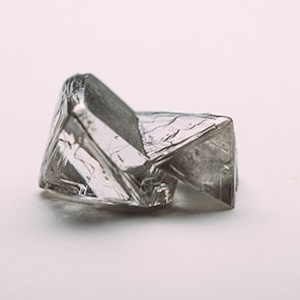
(Photo courtesy of De Beers)
- Subscribe to the JCK News Daily
- Subscribe to the JCK Special Report
- Follow JCK on Instagram: @jckmagazine
- Follow JCK on X: @jckmagazine
- Follow JCK on Facebook: @jckmagazine