
The upcoming 2026 congress of the World Jewellery Confederation (CIBJO) in Vicenza, Italy, promises to be one of jewelry’s most significant gatherings with an industry-shaking opening speaker, changes around lab-grown terminology, and celebration of its 100th year as an organization.
The CIBJO Centenary Congress starts Friday, Sept. 4, with a talk from former De Beers Group CEO Gareth Penny and continues through Sept. 7 when the congress is slated to discuss its elimination of the terms laboratory-grown and laboratory-created from its Gemstone Blue Book in favor of the term synthetic.
CIBJO issued 10 pre-congress special reports on topics including lab-grown gemstones, the role of technology such as AI in jewelry design, and the integrity of gem lab reports. The one that sparked the most conversation was CIBJO’s decision, after a year of discussion, to use synthetic as its preferred term.
That shift to synthetic also got a boost this past week as the Dallas-based American Gem Trade Association (AGTA) released the 17th edition of its “Gemstone Information Manual” and updated its code of ethics to require members to use the words synthetic or man-made when describing a manufactured material.
“Clear and consistent language is essential to consumer confidence,” AGTA president Bruce Bridges said in a statement. “This policy gives AGTA members a straightforward standard for describing synthetic gemstones while reinforcing the association’s commitment to natural colored gemstones.”
Over the past year, other organizations, including the African Diamond Producers Association and the Bureau of Indian Standards, have updated their wording around lab-grown diamonds to mark synthetics as separate from mined or natural diamonds. The French trade association UFBJOP also encouraged CIBJO and other groups to use synthetic, as its government mandated the word since 2002.
Interestingly, the United States Gemological Institute on Friday sent an email encouraging the jewelry industry “to consult the actual FTC Jewelry Guides when establishing terminology and disclosure policies rather than relying upon terminology preferences established by individual industry organizations.” The FTC recognizes both laboratory-created and laboratory-grown.
The Blue Books, as well as these kinds of important conversations, are why CIBJO congress gatherings are key to the jewelry industry, CIBJO director of communications Steven Benson says.
“CIBJO is the parliament of the world jewelry industry, or in other words is the single forum where all participants are represented,” Benson says. “This is true from a geographic perspective, true from the perspective of the full-length of every chain of distribution, and true from the perspective of every component sector—diamonds, colored gemstones, pearls, coral, and precious metals.
“It is why CIBJO represents the jewelry industry in the United Nations Economic and Social Council, and why it is the industry’s premier standard-setting organization. And it is at its annual congresses that the CIBJO membership meets,” Benson adds.
This year is particularly special because CIBJO will be celebrating its centenary, having been established as a Pan-European body in 1926, becoming an international confederation in 1961.
“With between 400 and 500 people expected to attend over its three and half days, this year’s CIBJO Congress in Vicenza will almost certainly be one of the largest and most diverse gatherings of global industry leadership ever to have taken place,” Benson says.
As for the word synthetic, that is the only term from September 2026 that the industry can use to describe “artificial products having essentially the same chemical composition, physical properties, and structure as that of their naturally occurring counterparts,” the confederation said in its report.
“In making this move, it is hoped that the situation in the market will become clearer and the consumer will be properly informed,” CIBJO Coloured Stone Commission head Charles Abouchar wrote in the July report.
CIBJO’s talks, including Penny’s remarks, also feature AGTA panelists including Bridges, as well as diamond experts. Penny’s is a must-see, given that he and a consortium are considered the front-runners to purchase De Beers Group from its parent company, Anglo American. (Anglo American, which put the diamond and mining company up for sale in 2024, owns 85% of De Beers; the Botswana government owns the remaining 15%.)
Based in Milan and Bern, Switzerland, CIBJO began in 1926 as BIBOA, or the Bureau International des Associations de la Bijouterie, de l’Orfèvrerie et de l’Argenterie, which was founded in Paris to represent and advance the interests of the European jewelry trade. It became CIBJO—the Confédération Internationale de la Bijouterie, Joaillerie, Orfèvrerie des Diamants, Perles et Pierres—in 1961.
The venue for the 2026 congress is the Fiera di Vicenza exhibition center, alongside the VicenzaOro jewelry show. It will be hosted by the Italian Exhibition Group, the organizer of the January and September VicenzaOro shows, as well as the T Gold and Oroarezzo shows in Italy and Jewellery Gem & Technology in Dubai.
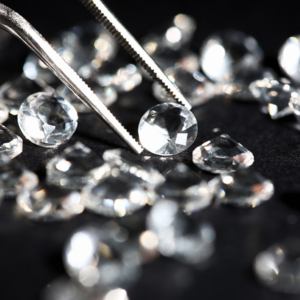
(Top image courtesy of CIBJO)
- Subscribe to the JCK News Daily
- Subscribe to the JCK Special Report
- Follow JCK on Instagram: @jckmagazine
- Follow JCK on X: @jckmagazine
- Follow JCK on Facebook: @jckmagazine