Charles & Colvard, best known as the company that first gave the world created moissanite, expects to continue operating despite filing for Chapter 11 last month, board chair Michael Levin tells JCK.
“People see Chapter 11 and get all skittish and think that’s it,” says Levin, who has headed the publicly traded company’s board since November. “We’re taking full advantage of the [bankruptcy] process to reorganize.
“The whole lab-grown sector is a very hot sector, and our direct-to-consumer business seems to work. We just have to figure out what to do with it.
“There are some decent assets; the intellectual property is worth something. We’re open to all suggestions. The bankruptcy process requires us to look at a wide range of options. If there are industry people who want to talk, we’re open to those conversations. But we’re pressing forward, either on our own or with someone else.”
The Morrisville, N.C.–based company just received up to $1 million in debtor-in-possession financing from Van Lang Jewelry, which is owned by jewelry designer Duk Pham. Pham has also been an investor and director of Charles & Colvard, but he stepped down from the board after providing the loan.
“Duk is someone we know and trust,” says Levin. “Sometimes you get a DIP [debtor-in-possession] lender, and they are just a funder. Having a guy like Duk who understands jewelry is very helpful.”
Last year, Charles & Colvard announced plans to team up with Ethara—which is associated with Indian diamond producer Bhanderi Lab-Grown—to sell lab-grown diamonds. In response, Ethara gave the company a $2 million loan. The move came after C&C severed its longstanding agreement to buy moissanite from its former sister company, Wolfspeed (originally Cree).
At the same time, a group of activist investors, led by Levin, began targeting Charles & Colvard. After a series of court battles, they won full control of its board.
The dissident slate eventually replaced all the legacy directors, including Ethara’s chosen representative, Ruten Bhanderi. Ethara then called in its loan and declared the company in default. Four months later, Charles & Colvard filed for bankruptcy.
Ironically, even as Charles & Colvard has struggled, a market has developed around moissanite, its former signature gemstone. Designer Charles Winston (the grand-nephew of jewelry icon Harry), who pitches moissanite on JTV, says the home-shopping channel has sold around $250 million in moissanite jewelry over the last decade. But it is not sourced from Charles & Colvard. (Cree’s exclusive patent to manufacture the product ran out in 2015.)
“TV shopping is the only place where you can educate people to buy moissanite,” Winston says. “I’m spending on average about 100 hours a month explaining what it is.
“For a jewelry store to sell it, it’s a tough sell. You need a salesperson to take the time to explain what it is. Some of them can’t even spell it.”
Levin seems to agree that the company’s future lies more in lab-grown diamonds than in the gem that put the company on the map.
“We owned the best substitute for mined diamonds for a long time. We had patents on it. And then things started to happen. The patent expired. Then lab-grown took off.
“Once lab-grown diamonds took over, the demand for moissanite kind of fell apart,” he says. “Lab-grown diamonds have the word diamond in them. Moissanite is this weird word. There are aficionados who like moissanite, but that’s a narrow slice of the marketplace.”
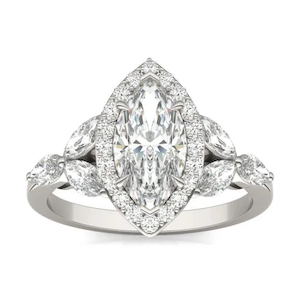
Top: A Charles & Colvard moissanite ring (photo courtesy of Charles & Colvard)
- Subscribe to the JCK News Daily
- Subscribe to the JCK Special Report
- Follow JCK on Instagram: @jckmagazine
- Follow JCK on X: @jckmagazine
- Follow JCK on Facebook: @jckmagazine