Before a jeweler ever sets a diamond, someone has to know how to move metal. Future Jewelers Academy is betting the best time to learn is high school.
This month, the New York nonprofit’s students get a bigger stage. When the annual NYC Jewelry Week opens with craftsmanship as its theme, their work will be on view Nov. 18–21 at the Jewelers Mutual Studio in SoHo, and the academy will premiere a short film about its program.
According to an estimate published by Jewelers Mutual, the trade will require 4,000 new bench jewelers each year just to hold its ground. Retirements across the country are outpacing new entrants to the field. Future Jewelers is taking on that shortage at the source: putting teenagers at professional benches, with real tools and real metal.
An initiative of the Black in Jewelry Coalition’s education fund, Future Jewelers Academy opened in April 2024 at the Brooklyn STEAM Center in the Brooklyn Navy Yard, where about 25 students from 13 partner schools meet after school roughly two hours a day, three days a week. A second program runs at Baldwin High School at Shubert on Long Island, and a new branch in White Plains, N.Y., is a partnership with retired Fashion Institute of Technology (FIT) professor Frank Fraley.
The academy’s aim, says designer Malyia McNaughton, its executive director and cofounder, is to bring apprenticeship back to bench jewelry, so the craft is taught and respected as the skilled trade it is. The group formed, she says, because “there was a decline in workforce development around jewelry and bench jewelry.”
From brass to sterling
Brass is usually the first metal students encounter in hands-on workshops. They begin with a brass sheet, cutting out shapes—often motifs such as the outline of a country or state.
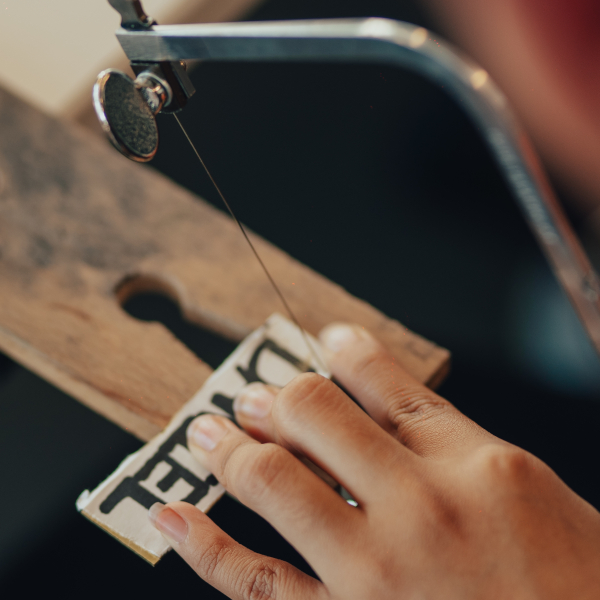
They then learn wax carving, working out their designs in three dimensions before the pieces are cast in metal.
“They’ve had exposure to multiple metals. They haven’t used gold yet, obviously, but they’ve used brass, silver, and mostly brass and silver,” McNaughton says.
At Baldwin, students pierce brooches from copper discs and etch beads from copper and brass, taking each piece from design concept to finished fabrication within the program.
A goldsmith’s lesson with metals
In late October, the academy brought goldsmith Joy Harvey, one of three artisans in the inaugural Metropolitan Museum of Art and Vacheron Constantin Artisan Residency, to work with students. In a two-hour session, Harvey showed them how to build chain from scratch.
“Silver is a malleable and forgiving material, and in my experience it’s ideal to help understand many techniques. In this instance, the single- and double-loop chains I taught needed flexibility and strength. So we thought silver would be an ideal metal,” Harvey tells JCK via email.
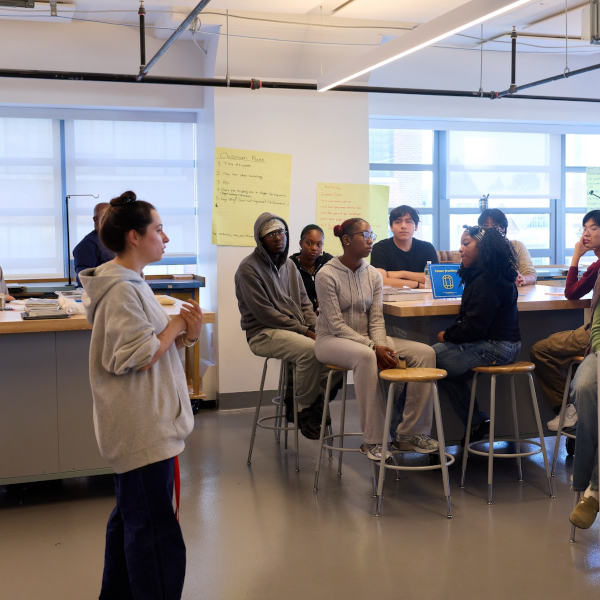
Interested students usually first arrive to Future Jewelers because of a previous interest in either arts or material sciences, says McNaughton. A combination of both typically is required, which isn’t all that unusual for goldsmithing and bench jewelry work.
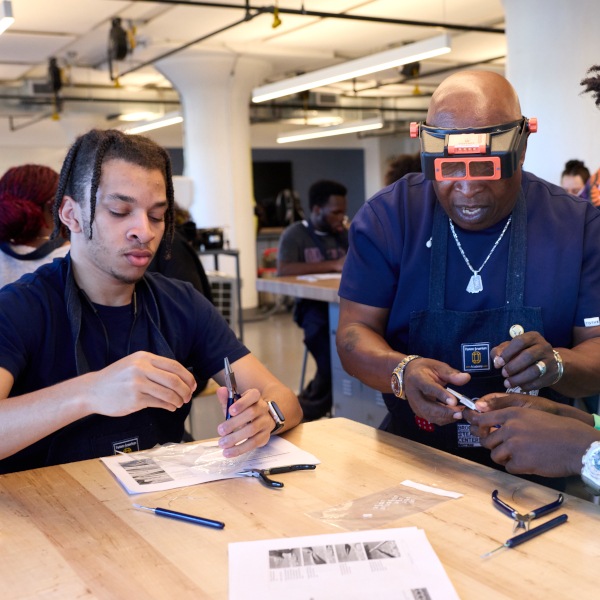
“As a chemistry graduate, understanding how metals work and their limits is something I adore,” Harvey continues. “I love to feel how hard, soft, gruff, clean, dry, or even doughy a metal can be; each one has its place and the techniques that work best for it. I believe it’s imperative for students to understand it so they can define which alloy they need for each part of an object.”
Funding the pipeline
The academy’s 2026 JCK Industry Fund grant has gone mostly toward marketing, McNaughton says—chiefly, videographers and photographers for the film—with the rest earmarked for materials, supplies, and instructor fees. Knowing the money was there also let the academy say yes to new programming, including placing 25 young people in New York’s Summer Youth Employment Program with the Brooklyn Navy Yard.
Jewelers Mutual, Jewelry Week’s presenting sponsor, will also host a talk at FIT on Nov. 17 about the future of the bench.
The industry’s backing, McNaughton says, is meant to be a first step, not the last.
“We needed to start with the industry to get their buy-in,” she says. “And then we could go out to government for funding around trade and kind of building back up that pipeline.”
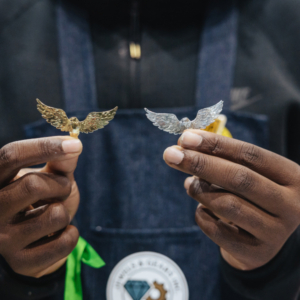
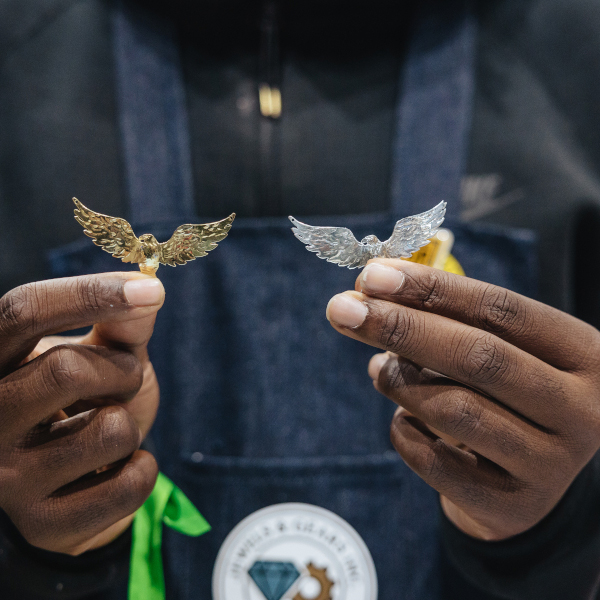
Top: Finished pieces of jewelry, in brass and silver, produced by a student at Future Jewelers. The pieces were sold at a holiday bazaar afterward, and the student is now attending Buffalo State University. (Photo courtesy of Future Jewelers)
- Subscribe to the JCK News Daily
- Subscribe to the JCK Special Report
- Follow JCK on Instagram: @jckmagazine
- Follow JCK on X: @jckmagazine
- Follow JCK on Facebook: @jckmagazine