Laurie Hudson has a simple theory about why Platinum Guild International (PGI) is closing the U.S. office she founded in 1992.
“It’s got to be funding,” says Hudson, who was president of PGI USA from its founding until 2003.
When PGI shuts its New York office on Dec. 31, it will leave behind a U.S. platinum market that is holding up better than much of the world. The producer-funded marketing group also is closing its offices in Japan, South Korea, and Hong Kong as part of a global restructuring. From 2027, PGI’s dedicated operations will continue only in China and India.
In a statement PGI USA president Jenny Luker shared with JCK last week, PGI said the move “reflects a change in operating structure, not a change in confidence in these markets.” The group said it would continue to support the industry through “education platforms, technical expertise, market intelligence, standards leadership, and industry partnerships.”
Following the Funding
For most of its history, PGI USA’s budget came from a consortium of South African platinum producers. In 2023, PGI USA announced it would be funded solely by Anglo American Platinum, which has since been spun off as Valterra Platinum. That left the U.S. office dependent on a single company’s marketing budget.
Hudson, who admits she’s an “armchair quarterback” decades removed from the producers’ thinking, believes the decision is more financial than strategic.
“It is a mindset of the platinum producers,” she says. “The platinum producers sometimes feel more comfortable with the mass market. And they believe that China and India apparently need continued support.”
PGI has not said whether funding played a role. The restructuring does concentrate the group’s resources in the world’s two most populous markets.
Hudson says she started PGI USA by taking a top-down approach: focusing on marketing the metal to high-end jewelers rather than the mass market. Initially, her funders in Africa questioned why she started this way.
“It’s going to be a trickle-down effect,” Hudson recalls telling them.
Platinum took hold in upscale stores first, then spread to the national chains. “And sure enough, that’s how it went,” she says.
She also stretched the producers’ budget by reaching out to prominent manufacturers to help with additional funding for national advertising.
“We were always getting money from the trade to make the budget even bigger,” she says.
Hudson credits Luker’s team with “satisfying the U.S. manufacturers and retail, and also satisfying her funders.”
A Market Holding Its Ground
In its June business review, PGI reported that North American platinum jewelry demand rose 6% in 2025 while gold jewelry fell 10%, helped by brands converting some white gold designs to platinum.
The World Platinum Investment Council (WPIC), in its September Platinum Quarterly, forecast global platinum jewelry demand to fall 15% this year, to 1.88 million ounces. But it singled out North America and Europe as comparatively resilient and placed the contraction largely in China, which happens to be one of two places in which PGI plans to operate going forward. Jewelry fabrication in that country fell 76% year over year in the second quarter, according to WPIC.
WPIC measures metal, not pieces, and American pieces are getting lighter, so platinum may be losing ounces without losing its place in the case.
PGI’s Retail Barometer, a January survey of 300 U.S. jewelers conducted by Leger, found that 76% planned to add platinum inventory in 2026. (PGI USA did not respond in time for publication regarding whether the survey will continue.)
What Goes Away
For the trade, PGI USA was more than a logo or a canned webinar about the metal.
Its training programs taught a generation of sales associates and bench jewelers how to sell and work with platinum. Since 2021, it has also awarded business development grants of up to $500,000 per three-year cycle. The first went to Helzberg Diamonds, Kwiat, and Mémoire. The current cycle, covering A. Jaffe, Frederick Goldman, Miosogno by the Jewelex Group, and Robbins Brothers, ends this year, just as the office closes.
PGI USA also helped put new products on the bench and in the case. In 2024, it introduced Inoveo Platinum, an alloy developed by Anglo American and Alloyed to work more like white gold, sold exclusively through Stuller. It also developed Platinum Born with PGI Japan, a line of everyday platinum jewelry made in Japan and distributed in the United States by Suna Bros. Suna tells JCK it’s too early to say what will happen to the line.
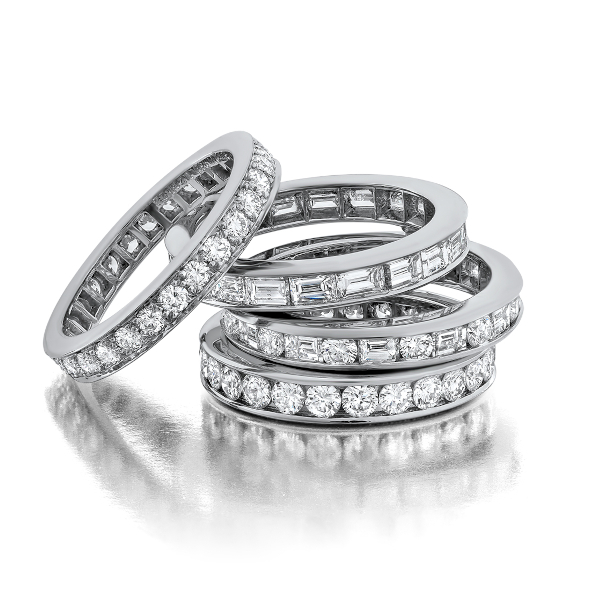
Suna itself has worked in platinum since the company’s founding in the first half of the 20th century, when it began making channel-set platinum and diamond wedding rings. “It’s a legacy metal for us,” says Danielle Barber, who handles creative and marketing for the company.
“We see [platinum] as a huge opportunity for them,” Barber says of retailers, given current prices. “It’s never been this competitive.”
What retailers stand to lose, in her view, is simple: “Education. That is a huge thing. We’ve worked with PGI for years and years. They’ve done a phenomenal job as far as educating. That’s going to be a huge disconnect, because people, I think, really do need that education.”
Jake Duneier, CEO of Clyde Duneier, is less convinced of platinum’s growth this year. He says consumer preference still is heavily tilted toward gold. “Despite the significant increase in gold prices, we’ve actually seen demand for gold jewelry grow, without any meaningful pickup in platinum,” he says.
Duneier, a fourth-generation manufacturer who works with both metals, sees an opening for platinum in bridal. But he cautions that platinum’s price advantage is less simple than it looks on a commodities ticker.
“Platinum is significantly denser than gold, so you’re using more metal by weight to produce a comparable piece,” he says. “Just because the economics make sense doesn’t necessarily mean the consumer will follow.”
Platinum on the Retail Floor in 2027
Retailers in PGI’s own survey named consumer awareness, not price, as the biggest barrier to selling more platinum, with gold still the default. Building that awareness is what PGI USA spent its money on.
After Dec. 31, more of that work may fall to stores and their suppliers: training sales associates to explain platinum versus white gold, and framing price around weight and durability.
PGI says its education and expertise will reach the U.S. trade from its remaining offices, half a world away.
“Nobody can really understand the United States market unless you’re here,” says Hudson, “living and breathing it for years and years and years.”
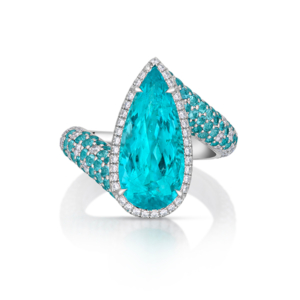
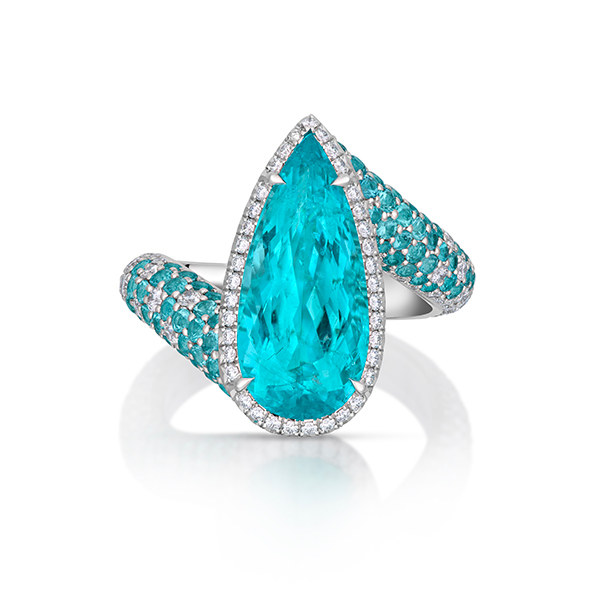
Top: Platinum and paraiba tourmaline ring by Omi Privé, which took first place in the Bridal Wear category of the 2026 AGTA Spectrum Awards (photo: Jeff Mason Photography/courtesy of AGTA)
- Subscribe to the JCK News Daily
- Subscribe to the JCK Special Report
- Follow JCK on Instagram: @jckmagazine
- Follow JCK on X: @jckmagazine
- Follow JCK on Facebook: @jckmagazine