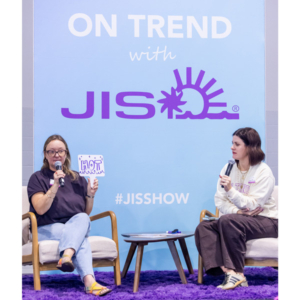
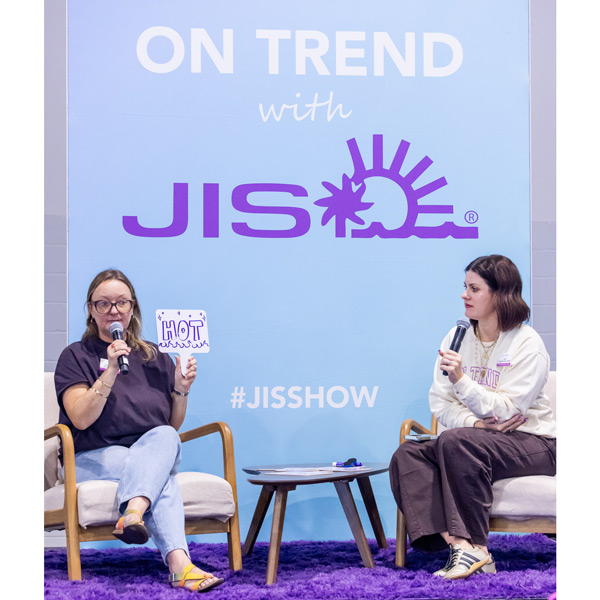
In a cozy corner on the show floor of the JIS Show in Miami, JCK‘s editor-in-chief, Victoria Gomelsky, sat down with moderator Jen Cullen Williams to discuss the trends she was seeing both on the show floor and during her travels around the world. And while plenty of familiar favorites are still going strong, a few things feel distinctly different right now.
For Gomelsky, one surprise at JIS, which ran Oct. 16–19 at the Miami Beach Convention Center, was the amount of high-end jewelry at a show traditionally known for accessible price points and cash-and-carry stocking. She pointed specifically to New York City–based Nigaam, which returned to JIS after several years away and was showing exceptional fine jewelry—including pieces featuring rare conch pearls. “I think if you’re any kind of retailer, there’s something here for you,” Gomelsky said of the show.
But perhaps the biggest force shaping what’s in the cases right now isn’t a particular gemstone or motif. It’s still very much the price of gold.
Call it the year of the charm. With gold prices making substantial chains, bracelets, and other traditionally approachable fine jewelry purchases significantly more expensive, charms have become one of the remaining ways shoppers can enter precious metal jewelry territory at a comparatively manageable price.
Even those prices can be startling, Gomelsky noted. During recent market appointments in Paris, designers spoke of entry price points around $6,000–$7,000, where $2,000–$2,500 might once have sufficed. “The things you get for the amount of money you were spending a decade ago—you could get a chunky chain and a big pendant—you’re getting something tiny today,” she said.
Yet many designers aren’t backing away. Their clients understand what has happened to gold and, in some cases, see the metal’s rising value as part of the reason to buy it.
For retailers looking for even lower entry points, that same pricing pressure is contributing to another very visible trend: beads.
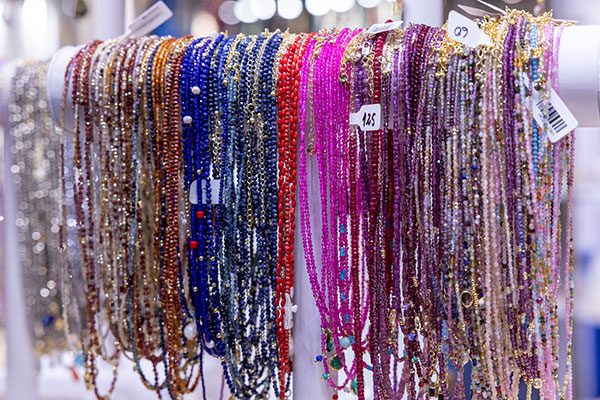
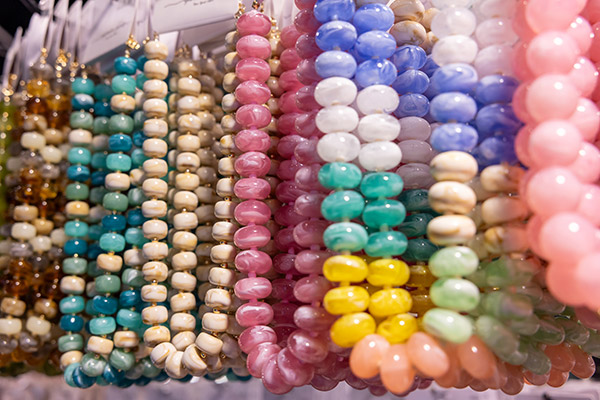
“You can’t even get a connector for $500,” Gomelsky recalled one jeweler telling her in Paris. The solution? Let colored stones do more of the visual heavy lifting. A substantial beaded necklace can offer scale, color, and presence, while small gold stations or hardware retain a precious component without requiring an entire necklace’s worth of gold. “This is the era to embrace color,” Gomelsky said.
She practiced what she preached at JIS, purchasing a strand of ruby beads with small gold stations for her mother after deciding the gold chains within her budget simply weren’t giving her enough look.
Retailers should also watch cords and leather as alternatives to traditional chains—especially as customers look for ways to wear pendants and charms without making the chain the most expensive part of the purchase.
The discussion then moved on to diamonds. If Taylor Swift’s engagement ring did anything for them, it was to pour more fuel on an already roaring interest in antique cuts. Anything old mine or antique-inspired has been, as Gomelsky put it, “Taylor Swiftified.”
True antique stones are finite, noted Gomelsky, prompting some companies to re-cut modern diamonds in antique styles to satisfy demand. More than a year into the broader antique-cut craze, she sees no indication that the appetite has disappeared. There’s also interest in less-common geometric shapes—triangles, hexagons, and other angular cuts—that stand apart from the endless parade of rounds, ovals, and cushions. An audience member confirmed this, citing the Dutch marquise (an elongated, hexagonal shape), as one with rising interest from his customers.
Some Gen Z shoppers seeking natural diamonds are embracing stones with warmer colors and visible character rather than chasing the colorless ideal, Cullen Williams noted, with J, K, and even lower colors providing both a more accessible natural diamond option and the individuality younger customers say they want. “In an increasingly AI-polished world, imperfection itself can feel personal,” she said. Whether or not every shopper would describe it that way, the larger desire is clear: Give me something that doesn’t look exactly like everybody else’s.
In the world of colored gems, no single gemstone dominated the JIS floor, which may say something about where jewelry is headed. Gomelsky pointed to moonstone, purple gems—including sapphire, amethyst, tourmaline, and grape garnet—emeralds, and opals among the stones she’s been noticing.
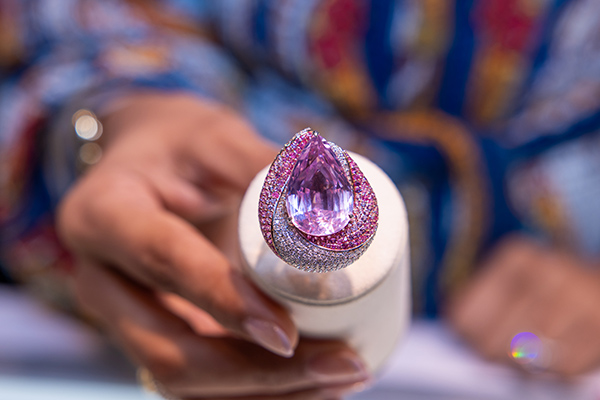
But gemstone trends don’t always work like fashion trends. “Sometimes color is interesting because it’s not always dictated by demand,” Gomelsky said. “It’s often dictated by supply.” What comes out of the earth, in what quantities and qualities, inevitably affects what designers can get their hands on—and therefore what eventually reaches retailers.
Opal remains particularly strong among designers, despite the occasional customer who still associates it with superstition or an older style of jewelry. Ethiopian opal can also deliver an impressively large look at a comparatively accessible price, with Gomelsky pointing to cocktail rings in 14k gold that can retail below $3,000.
She also addressed growing interest in Desert Diamonds—in pale yellow, brown, champagne, and related earthy hues that once might have been considered less desirable—though noted she didn’t see many marketed under the De Beers moniker on the floor. The marketing efforts, among other factors, have undoubtedly contributed to the renewed desire—and perceived value—of the off-color stones.
As for metals, titanium occupies two very different worlds. At one end are inexpensive, mass-produced men’s bands. At the other are intricate fine jewelry pieces requiring significant skill to fabricate—and commanding prices accordingly. The latter, Gomelsky noted, has become especially intriguing.
Black titanium offers a look difficult to reproduce in traditional precious metals, while anodized titanium can produce an iridescent rainbow effect Gomelsky compared with pigeon feathers or oil shimmering on pavement. And its light weight also lets designers go big: Oversize earrings and brooches that would be unwieldy in gold become wearable in titanium. “If they’re looking for art,” Gomelsky said of customers, “titanium gives them all kinds of possibilities that gold just couldn’t.”
At the crossroads of fashion and jewelry, Western style still seems to dominate the scene. Cowboy hats, boots, horseshoes, turquoise, big silver buckles—each prominent motifs in the complementary industries. But Gomelsky isn’t convinced trend is even the right word anymore. “In some ways, it’s a new staple,” she said.
Western iconography has a reach far beyond American buyers, she noted, with longstanding enthusiasm for turquoise, denim, and other elements of Western style in markets including Japan. Current fashion has only intensified the appeal, from luxury cowboy boots and hats to denim, belts, and the continued cultural influence of Beyoncé’s Cowboy Carter era. The imagery also comes preloaded with ideas of freedom, possibility, and open space—symbolism that can travel well beyond the literal American West.
For retailers still looking to shore up opening price points for Q4, one of the biggest pulls to the JIS Fall show, Gomelsky sees room for vermeil, gold-plated pieces, and fashion jewelry alongside fine. Her caveat: Pick it up first.
A lower price doesn’t have to look or feel cheap. Check the clasp. Feel the weight. Make sure the plating looks convincing and the construction feels solid. There are good options available; retailers simply need to scrutinize quality before putting them in the case.
And with that, the talk ended with a quick round of Hot or Not.
Beaded necklaces? Very hot.
Western jewelry? Hot.
Montana sapphires? Hot, hot, hot, thanks to their range of colors and U.S. provenance.
Mixed metals? Hot, particularly as silver provides another tool for addressing high gold prices without abandoning gold completely.
Butterflies? “Eternally hot,” Gomelsky said, simply because the motif means so much to people. Transformation and rebirth give the butterfly an emotional resonance that keeps customers coming back.
Rainbow gemstone jewelry? Still delightful, if perhaps not quite as ubiquitous as before.
Paper-clip chains? Cooling. Not dead, Gomelsky stressed—just sufficiently ubiquitous that they no longer feel particularly new.
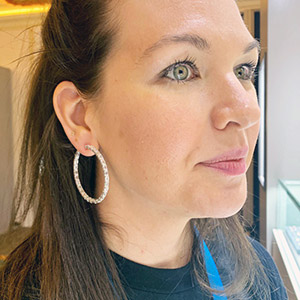
And tennis necklaces? “Not as hot as I have seen in the past,” she said—before quickly acknowledging Cullen Williams’ own layered tennis necklace and adding a qualification jewelry lovers everywhere can appreciate: In layers, anyone can do anything.
That might be as good a takeaway as any for the current jewelry market. Gold is expensive. Color is everywhere. Customers want personality. Old rules about metals, stones, scale, and styling are fading away.
And from what we’re seeing here in Miami (from what I can see from beneath my horrendously poofy humidity hair, that is), nobody appears particularly interested in bringing them back.
(Photos courtesy of JCK Events)
- Subscribe to the JCK News Daily
- Subscribe to the JCK Special Report
- Follow JCK on Instagram: @jckmagazine
- Follow JCK on X: @jckmagazine
- Follow JCK on Facebook: @jckmagazine