When LVMH reported third-quarter revenue, its jewelry and handbags went in opposite directions—and those numbers may suggest a sea change in the luxury market.
Revenue from its Watches & Jewelry division grew by 6% on an organic basis in the last three months, as compared with the same period last year, reaching €2.5 billion ($2.8 billion). Meanwhile, LVMH’s Fashion & Leather Goods division—home of Louis Vuitton and Christian Dior, and by far the European luxury giant’s largest business—reported a 5% organic drop in revenue in the same period.
(Organic figures exclude currency swings and the buying or selling of brands.)
If revenue data is stretched out further, over a period of nine months, Watches & Jewelry—comprising Bulgari, Chaumet, Daniel Roth, Fred, Gérald Genta, Hublot, L’Epée 1839, Repossi, TAG Heuer, Tiffany & Co., and Zenith—rose 8% organically, to €7.7 billion ($8.7 billion), while Fashion & Leather Goods revenue slipped modestly by 2% organically, as compared to the same period last year.
Pam Danziger, president and founder of Unity Marketing, which uses quantitative and qualitative market research to track what drives luxury consumer spending, says this divergence amounts to more than just bad quarter for bags.
“I think it is a structural shift,” she tells JCK.
Jewelry: a product worth more than the name

The wealthiest shoppers are still spending, but cautiously, Danziger says. “They’re very careful spenders, there’s no question about that,” she says. “They’re really looking for something that has more worth and value, and they find it in jewelry.”
Leather goods, by contrast, “just doesn’t hold its value, despite what people in the secondary market say,” she claims.
Danziger argues that luxury brand items, such as leather goods, don’t have the same kind of meaning that can be ascribed to jewelry; despite the price tag, leather products appear mass-produced in comparison to high-end jewelry.
“The prices just don’t align with the value that’s offered,” she says, particularly in leather goods and fashion.
Also, jewelry carries an emotional weight that a handbag can’t. “It’s the difference between a fashion purchase and something more lasting and more significant.” Danziger says.
Danziger points to historic data captured last year by Bain & Co. and Altagamma’s annual luxury study, which named jewelry as the standout category across regions in 2025. Leather goods and footwear, meanwhile, continued to contract sharply, which Bain attributed to “price sensitivity among aspirational consumers and a perceived lack of creative renewal.”
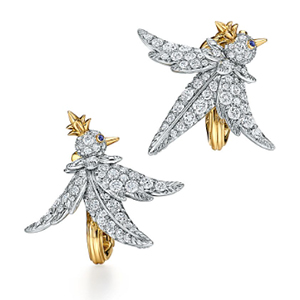
At LVMH, the jewelry that is selling sounds a lot like the lasting value Danziger describes. On the company’s earnings call, LVMH said Tiffany & Co.’s HardWear and Knot lines “continued to outperform materially.” Sixteen Stone and Bird on a Rock are resonating with a broad clientele, it said.
In high jewelry, Tiffany’s Blue Book Hidden Garden collection was well received, and Bulgari’s Eclettica line posted what LVMH called record-breaking revenue.
LVMH’s sales in Asia outside Japan fell 5% organically in the third quarter, which the company blamed on deteriorating Chinese consumer sentiment. Fashion and leather goods took the hardest hit. Jewelry, LVMH said, has still grown across its markets this year.
HENRY: High Earners, Not Rich Yet
The corporate luxury industry often calls its upper-middle-tier shopper “aspirational,” a label Danziger rejects “because it implies motivation, and you can’t quantify it.”
HENRYs, as she calls these consumers, are the luxury shoppers who sit below the top 5% in income and wealth but above the rest of the marketplace. They’re a group of high earners with heftier salaries than most, but they’re not free from financial pressures. Their participation in luxury, she says, has dropped significantly since the post-pandemic boom.
There are signs that HENRYs might be coming back, and jewelry could be the right luxury product to catch them with their money. Bain’s June update this year found U.S. upper-middle-class luxury spending “roughly twice the rate of wealthier cohorts,” with jewelry still the top category in terms of growth.
Jewelry momentum at LVMH did cool, with organic growth slowing from 11% in the second quarter to 6% in the third. But it’s still growth.
Danziger says quarterly swings matter less than the fundamental motivators driving buyers. Financial analysts “look at companies, and that’s a very short-term perspective,” she says.
Consumers may change brands and how they shop, she says, but at the high end, their motivations hold steady.
Top: Bird on a Rock by Tiffany & Co. Bird earrings in platinum and gold with diamonds (photo courtesy of Tiffany & Co.)
- Subscribe to the JCK News Daily
- Subscribe to the JCK Special Report
- Follow JCK on Instagram: @jckmagazine
- Follow JCK on X: @jckmagazine
- Follow JCK on Facebook: @jckmagazine