The jewelry industry has spent 2026 writing big checks to solve its talent problem from the outside in—most visibly Jewelers Mutual’s record $10 million commitment to bench jeweler education, announced in March.
But some of the country’s oldest independent retailers have been working the problem from the inside out for decades, building internal academies with curricula, faculty, and follow-up surveys of their own.
Three of them—Hamilton Jewelers (est. 1912), Lux Bond & Green (est. 1898), and Day’s Jewelers (est. 1914)—say those programs are a big part of why they’re still in business. All three stores treat education as infrastructure: formalized, taught in-house, and refreshed constantly as products, technology, and clients change.
Below, we offer snapshots of their educational initiatives.
Hamilton Jewelers: An Evolving 25-Year Syllabus
At Princeton, N.J.–based Hamilton Jewelers, the retailer has codified its education into Hamilton Jewelers University (HJU), an annual team-building event that grew out of internal training modules more than 25 years ago.
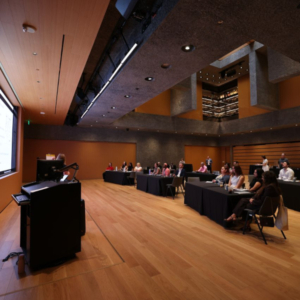
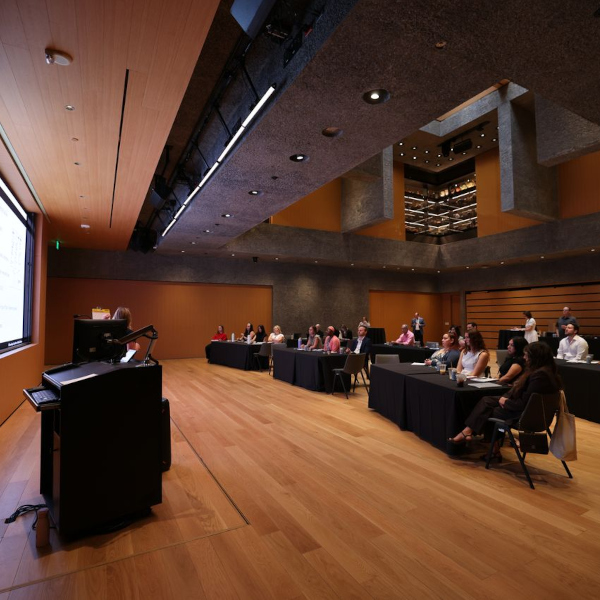
This year’s edition, held last month, brought the Hamilton team to Princeton University’s Art Museum for three days of intensive learning. More than a dozen in-house presenters taught modules ranging from vintage jewelry to client relationships to “the secret sauce” that differentiates the Hamilton brand.
“I firmly believe, especially with today’s highly educated and sophisticated luxury consumers, this investment pays dividends in our business on a daily basis,” says president and CEO Hank Siegel.
While the retailer has upgraded the curriculum, HJU’s core education remains fixed on the basics: brand history, values, culture, the philosophy of merchandising luxury goods, and hospitality excellence.
Andrew Siegel, the fourth generation of his family in the business, works as the chief operating officer. He kicked off HJU with a “Who We Are” philosophy presentation, educating staff about the business’ 114-year history.
His presentation urged attendees to “think like an owner,” a familiar refrain heard by other centenarian jewelers who spoke to JCK.
Lux Bond & Green: In-House Training Built for Knowledge Transfer
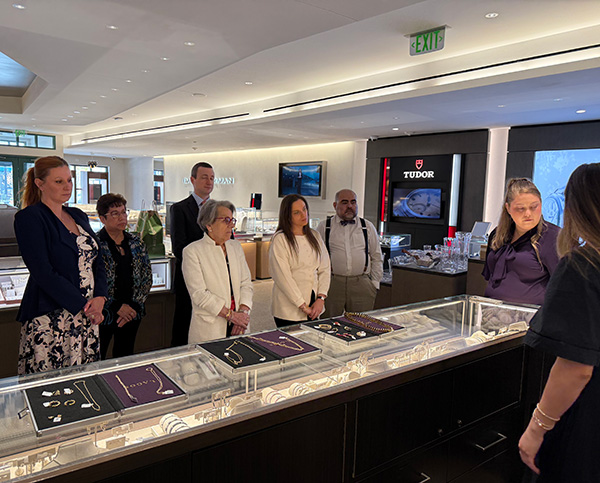
At Lux Bond & Green, the West Hartford, Conn.–based retailer, now in its 128th year, education initiatives help ensure that loyal employees never leave.
“We have employees who are in their 40th year that don’t share the last name Green,” says Charlie Green, director of stores and one of three fifth-generation family members in the business. “We have a ton of people even this month celebrating 20-, 24-, 25-year anniversaries.”
Tenure is bittersweet, though. Longstanding employees eventually retire, potentially taking decades of informal knowledge along with them.
Two years ago, the company hired an in-house sales training manager to overhaul its onboarding process across its six locations and 100-plus employees. Green says onboarding used to take a day or two at company headquarters—now, it’s a whole week for every hire. Watchmakers, service techs, salespeople, and managers are all getting a standardized, well-rounded education on every corner of the business.
Day 1 covers cybersecurity. Day 2, the buying offices and its staff. Day 3 is led by the company’s diamond and gemstone buyer, who teaches new hires about loupes, microscopes, what 14 karat really means, and offers a deep dive into why the company sells only natural diamonds (not lab-grown). The session also includes a talk on the benefits of diamond production in African nations, providing a factual counterpoint to the often-grim portrayal of the diamond industry in popular culture.
“They might be asked a question even by a friend or a neighbor,” Green says. “We want to make sure that they’re educated properly about who we are and what we believe in—and why.”
Lux Bond & Green follows up on the training with surveys to new hires and managers after 30 days and check-ins through day 90. In a sense, though, the education never ends; employees regularly undergo brand-specific training as well as GIA and AGS credential education.
Day’s Jewelers: Everyone Owns the School
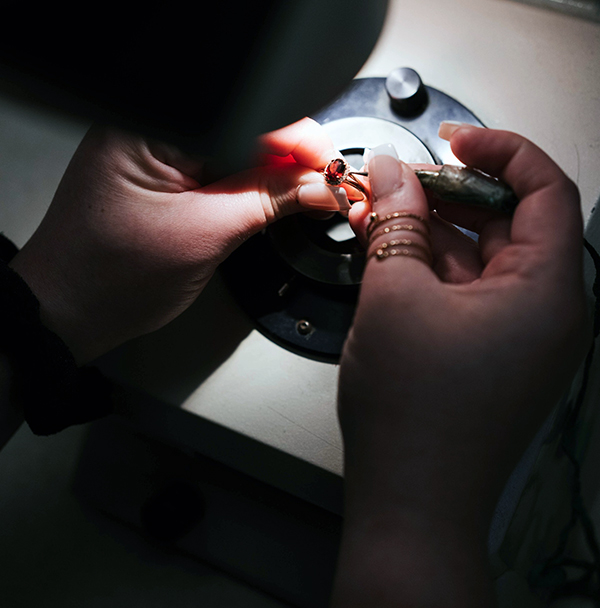
Day’s Jewelers, founded in Portland, Maine, in 1914 and now based in Waterville, has the most literal answer to employee buy-in: every employee is a co-owner—fractionally, at least.
The retailer created Day’s University about three years ago to formalize and standardize training across the nine-store chain. Corporate staff, marketing, and HR personnel are all expected to complete the Diamond Council of America’s Beginning Jewelry Sales and Diamonds courses.
“We all have to talk the same language,” says Bobbi Avery, the company’s vice president of human resources.
Avery says new consultants eventually move into side-by-side selling under an assistant store manager, with monthly one-on-one meetings to review performance and fine-tune how each person learns best.
One of the most striking recent additions to Day’s education was the introduction of bench jeweler training. Created in 2024 in response to an industrywide shortage, the curriculum was developed entirely in-house and is supplemented by partnerships with various schools.
The hardest part about teaching has little to do with products, Avery says—with the notable exception of coaching lab-grown–vs.–natural diamond discussions with bridal clients chasing big stones. It’s soft skills.
“How do you put a measurement to empathy?” she says.
At Day’s, managers observe associates in the sales process, keeping an eye out for nuances: Are consultants rushing guests? Listening? Following up? “There’s something very special happening in their lives,” she says. “There’s a responsibility to that.”
Retail Training Takeaways
All three retailers stressed that the playbook for educating staff rests on some key takeaways: It’s essential to formalize knowledge before an associate walks out the door into retirement. Train everybody, not just sellers. Understand that the people who work a showroom floor are, in the words of newly hired Benjamin Siegel at Hamilton, part of communities outside of their work.
Measure progress early and measure the soft skills, too. And remember that there’s no such thing as an overnight education success story—all training takes time and resources. In short, the stores that last a century or more are the ones that never stop going to school.
Top: Hamilton Jewelers gathered its staff at Princeton University’s Art Museum in August for three days of intensive learning workshops on the subject of jewelry retail (photo courtesy of Hamilton Jewelers).
- Subscribe to the JCK News Daily
- Subscribe to the JCK Special Report
- Follow JCK on Instagram: @jckmagazine
- Follow JCK on X: @jckmagazine
- Follow JCK on Facebook: @jckmagazine