Fall has a way of deepening everything: Bright summer hues give way to burgundy, chocolate, forest green, and black—even our gemstones seem to take on a moodier cast.
But there is always room for something that refuses to behave seasonally.
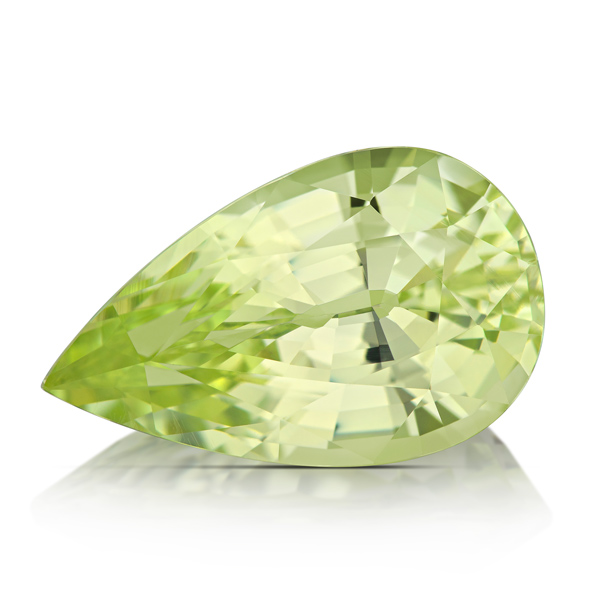
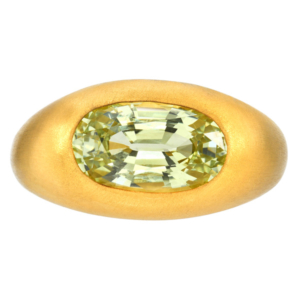
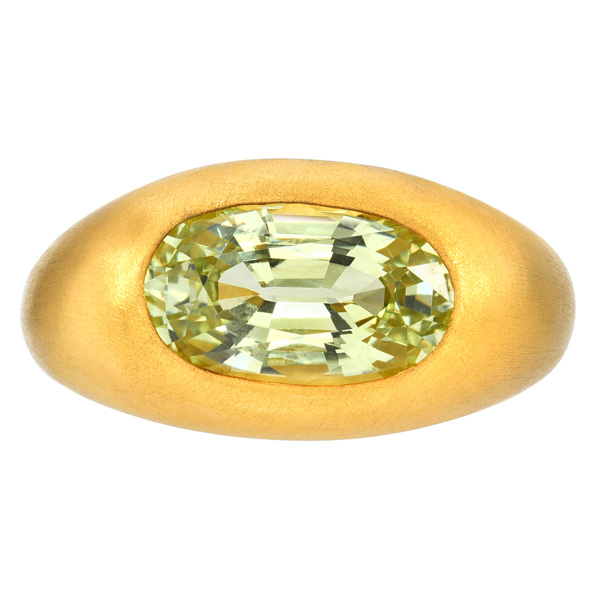
Neon chrysoberyl, the electric yellow–to–yellow-green gem that looks a little like someone captured the color of a highlighter and made it precious, is precisely that. And from what Los Angeles gem dealer Dave Bindra, vice president and head of acquisitions at B&B Fine Gems, shared, customers are asking for it. “Mandarin garnet, lavender spinel, neon chrysoberyl—those have surprised us for sure,” says Bindra, who specializes in unusual colored stones.
Bindra, whose customers include designers and jewelry houses, has long observed an appetite for uncommon colored gems; he previously told JCK that high-end consumers were particularly interested in “rare and unusual items,” and that sentiment has only grown. “The appetite for colored gemstones has become stronger than ever over the past two to three years,” Bindra says. “Consumers are educating themselves on rare and exotic stones before ever even reaching the retailer or designer that they’re sourcing through.”
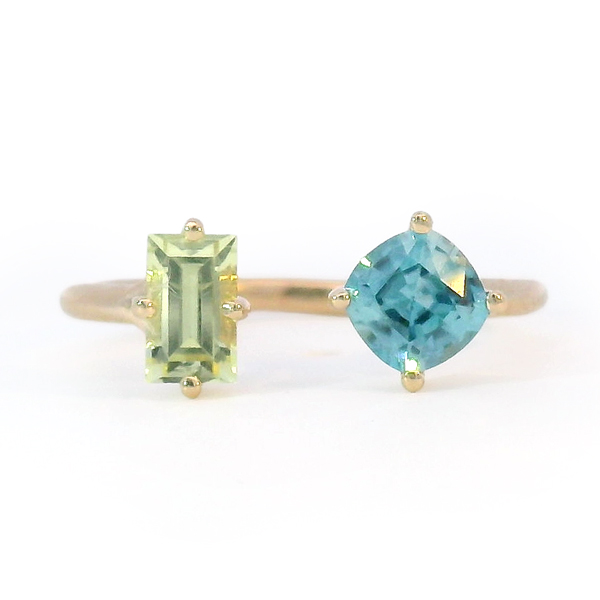
Chrysoberyl itself isn’t new, but it may require an introduction at the jewelry counter. “Chrysoberyl, in its several varieties, is one of the most beautiful and costly of all gems,” the spring 1949 issue of Gems and Gemology, archived on GIA’s website, reads. “In spite of this, it is not well known to the layman and has not attained the popularity it deserves.”
That sentiment hasn’t changed much from over 75 years ago—most consumers who recognize the mineral at all probably know one of its more famous forms: alexandrite, the prized color-change variety; or cat’s-eye chrysoberyl, another gem with a magnetic personality. Ordinary transparent chrysoberyl typically ranges through yellow and greenish-yellow, and with an 8.5 on the Mohs scale, the mineral is remarkably hard and is well-suited to jewelry that’s actually worn on the daily.
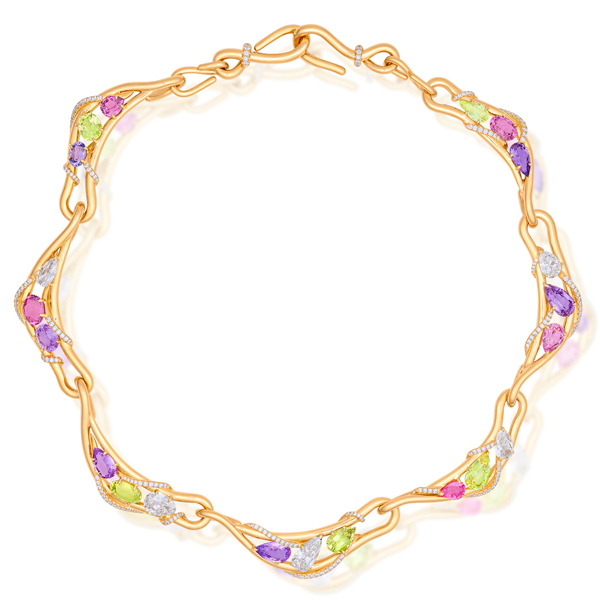
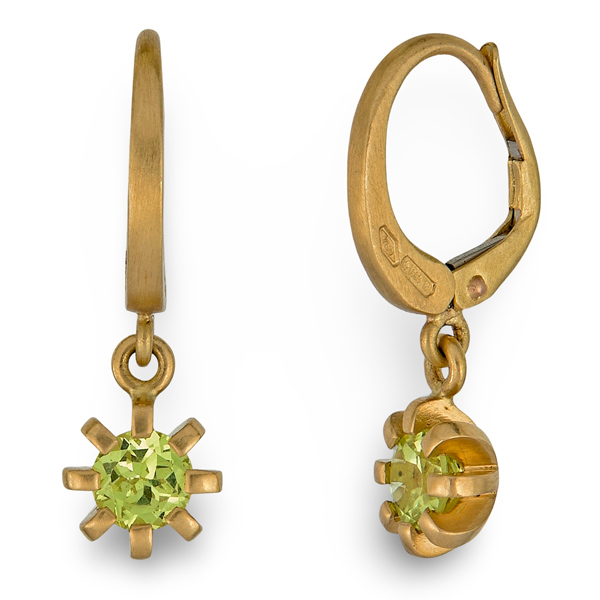
That “neon” descriptor is used in the trade for the particularly vivid examples—lemon yellow, chartreuse, or greenish-yellow stones with enough brightness to appear almost lit from within—and you won’t see it used on every piece showcased here. But the effect can be startling, particularly in a gem category many shoppers have never encountered before, and even for those styles with labels like “lime-green chrysoberyl,” the same remains true.
That lack of familiarity is what creates an opportunity for jewelers. Much like the padparadscha we touched on earlier this month, chrysoberyl offers consumers the chance at discovery—and the satisfaction of wearing something beautiful that doesn’t immediately announce its identity to everyone in the room.
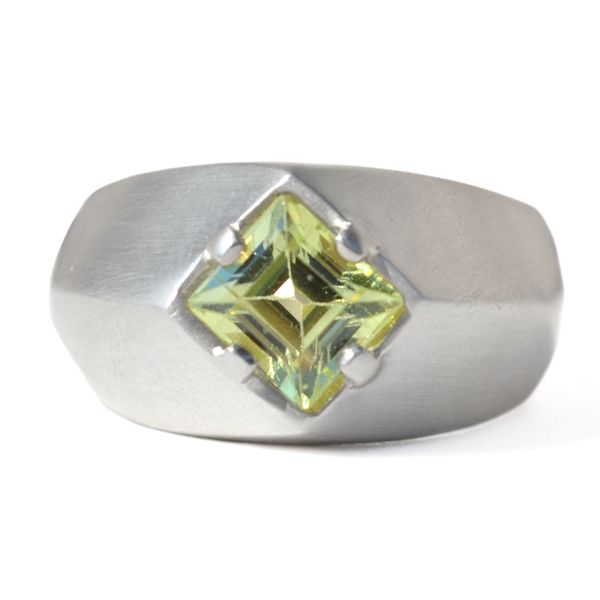
For a retailer, there are several easy talking points—durability, the stone’s relation to alexandrite, and, of course, color. A shopper doesn’t have to be a gemologist to know when a stone is downright electric. And this time of year, when the colors veer richer and more dramatic, that acid yellow-green gets an even better stage. Imagine this gem against black, oxblood, chocolate brown. It doesn’t compete with the colors of autumn; it punctuates them.
The days may be getting darker, but the jewelry doesn’t have to.
Top: Signet ring in 18k yellow gold with 4.41 ct. chrysoberyl, price on request; Darius
- Subscribe to the JCK News Daily
- Subscribe to the JCK Special Report
- Follow JCK on Instagram: @jckmagazine
- Follow JCK on X: @jckmagazine
- Follow JCK on Facebook: @jckmagazine