As Paris Haute Couture Week gets underway, an array of high jewelry presentations are unfolding throughout the city, including the latest debut from Mellerio. Just don’t expect a traditional collection of masterworks from the heritage French jeweler that once counted Marie Antoinette as a client: This season, the maison is unveiling “nail ornaments”—glittering, almond-shape jewels that amount to what might be the world’s most glamorous manicure.
Founded in 1613, Mellerio carries a certain gravitas. While the distinction of being the oldest family-owned jewelry business in Europe—and a supplier to the French royal court under Louis XVI—is essential to Mellerio’s prestigious status, the company has balanced these distinctions with moments of innovation and forward-looking design.
The nail jewels are an undeniable novelty, and coming from such a venerable maison, they are even more of a (beguiling) curiosity. Yet they have surprising historical roots: They refer back to an archival design from 1951, when Mellerio patented a set of garniture décorative pour ongles—decorative trim for nails. The brand never brought the concept to market on a grand scale.
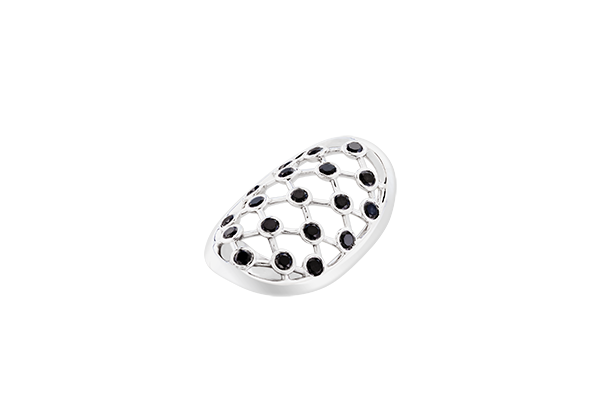
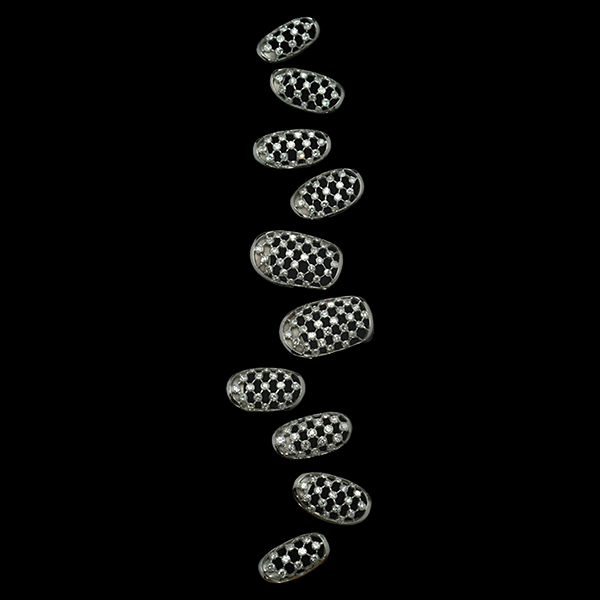
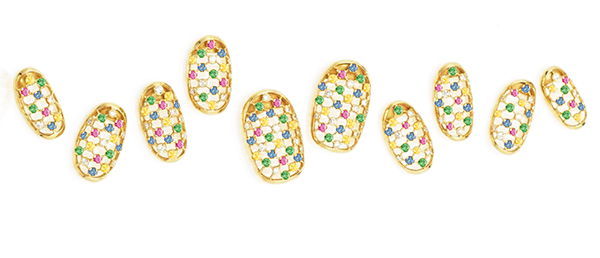
Shaped to resemble false nails that follow the contour of the fingertip, those original nail jewels had delicate openwork structures made of palladium and diamonds. The nail designs Mellerio is presenting this week are rendered in gold, with white or black diamonds or “tutti frutti” colored gemstones in frames of gold mesh.
Conceived as lasting fine jewelry statements, the collection arrives at a moment when elaborate manicures—adorned with decals, painted stripes, faux gems, and even genuine diamonds—have become a widely embraced platform for expressing personal style.
The new nail jewels are sold individually and available in five sizes, to accommodate a variety of finger shapes. The sizing system allows the pieces to adapt comfortably to most wearers while preserving the intended design and proportions.
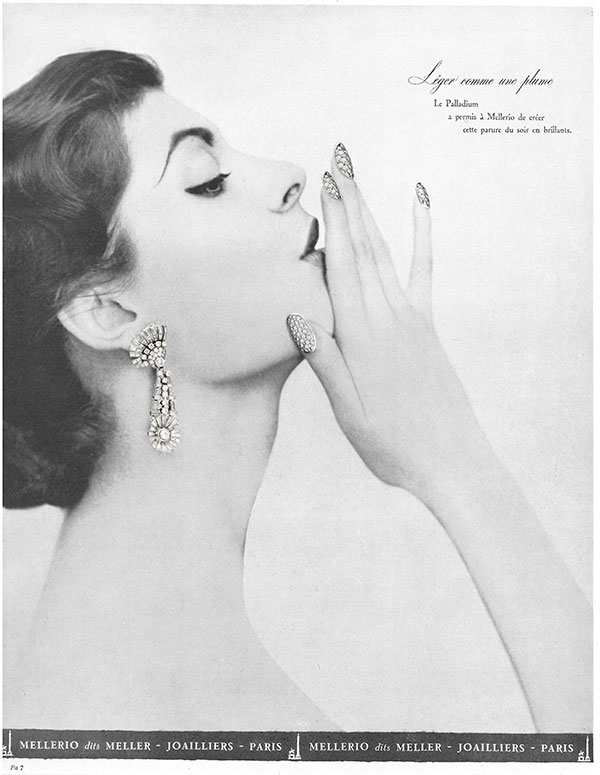
Knowing their 1950s origins, the nail jewels’ metalwork may have been inspired by Parisian ladies’ hats finished with sheer, netted face veils—accessories that were in vogue at the time and frequently accompanied Christian Dior’s New Look designs.
An early version of the 1950s nail designs is displayed (in a vitrine, alongside a pert midcentury clutch made in gold and diamonds) in the gallery on the bottom floor of Mellerio’s boutique on the Rue de la Paix in Paris. This miniature museum houses several centuries’ worth of design catalogs and client ledgers.
There is also a gallery displaying historic jewels owned by French royals and other archival treasures, including the marmotte—a small portable trunk used by itinerant jewelers—that Jean-Baptiste Mellerio used to sell his creations just outside the gates of Versailles around 1777.
In a modern-day context, I can’t help but see the Mellerio nail jewels as a flirtatious wink. One can imagine them on the Met Gala or Grammys red carpet, where stars and musicians, working closely with their stylists, often bring in an element of spectacle and surprise.
Can I declare Mellerio’s new collection as fishnet stockings for your fingertips? Surely Marie Antoinette, one of history’s most iconic fashion influencers—and certainly a woman prone to coquettishness—would have worn them happily….maîtresse-en-titre-worthy hosiery included.
Top: White gold openwork “fingernails” studded with diamonds, priced at $2,400-$3,700 per nail ($33,600 for a full set) from Mellerio, the French heritage house that patented the nail design in 1951 but never made the jewels available to the public—until now.
- Subscribe to the JCK News Daily
- Subscribe to the JCK Special Report
- Follow JCK on Instagram: @jckmagazine
- Follow JCK on X: @jckmagazine
- Follow JCK on Facebook: @jckmagazine