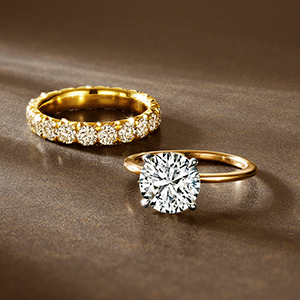
A new report from De Beers Group found that the U.S. market for natural diamonds is increasingly driven by younger consumers, non-bridal purchases, and higher per-item spending, even as overall sales sit below pre-pandemic levels.
The report, issued June 11, is based largely on De Beers’ 2025 Diamond Acquisition Study, which surveyed 18,500 women ages 18 to 74. According to De Beers, “Natural diamonds remain the most desired jewelry items.”
Spending on natural diamonds has risen more than 25%, to an average $4,063 per piece in 2025 from $3,242 in 2023, De Beers said. The report also showed increases in average carat weight and higher acquisition rates among affluent consumers.
Younger buyers are playing a growing role in demand, De Beers reported, noting that Gen Z “is already the second-largest generation buying natural diamond jewelry,” despite many consumers in that cohort not yet reaching life stages traditionally associated with diamond purchases.
The survey found that Gen Zers are spending almost double what baby boomers spend when buying natural diamonds—an average of $4,080 per piece, compared with boomers’ $2,250. Millennials spend more overall, but Gen Z accounts for a disproportionate share of spending relative to its population size, De Beers said.
The report also highlighted a shift away from engagement rings as the dominant market for natural diamonds. Bridal purchases now account for only 25% of U.S. natural diamond demand, De Beers found.
Meanwhile, gifting and self-purchases—motivated by personal milestones, such as a new job, a promotion or other achievement, or “just because”—have become the primary growth channels for natural stones. In 2025, gifting represented 44% of sales, up from 35% two years earlier, while self-purchases accounted for 31%, De Beers said.
De Beers’ findings generally echo those presented by diamond market analyst Edahn Golan at the recent JCK show in Las Vegas. Golan said the average value of a natural diamond purchase is rising in part because the low end of the market is increasingly captured by lab-grown stones. He also reported that the lab-grown share of engagement ring sales grew from around 10% in 2020 to 58% in 2025.
In Vegas interviews for JCK’s podcast, other industry leaders credited marketing efforts—including De Beers’ recent push on behalf of colored stones—for helping boost natural diamond sales.
“We’ve also heard how marketing campaigns such as Desert Diamonds are actually moving the needle,” former De Beers exec Feriel Zerouki, president of the World Diamond Council, told The Jewelry District. “We’re seeing an array of colors in the natural diamond segment, but it’s in the larger sizes.”
De Beers said that women in its survey ranked natural diamond jewelry ahead of gold jewelry, other gemstones, and lab-grown diamonds as their most-wanted luxury gift.
“The study findings highlight that today’s consumers aspire to own natural diamonds just as much as the generations that came before them, and ahead of any other jewelry product,” said Diana Mitkov, lead researcher on the De Beers report.
“The opportunity for the diamond industry is to ensure that natural diamonds continue to capture the value of this strong underlying desire in an increasingly competitive landscape by offering compelling designs across all sizes, colors, and price points, and for occasions that go well beyond traditional engagement or wedding jewelry,” said Mitkov.
The JCK News Desk uses AI to help research and produce the first draft of articles. This story was then reviewed by staff writer David Blomquist.
- Subscribe to the JCK News Daily
- Subscribe to the JCK Special Report
- Follow JCK on Instagram: @jckmagazine
- Follow JCK on X: @jckmagazine
- Follow JCK on Facebook: @jckmagazine