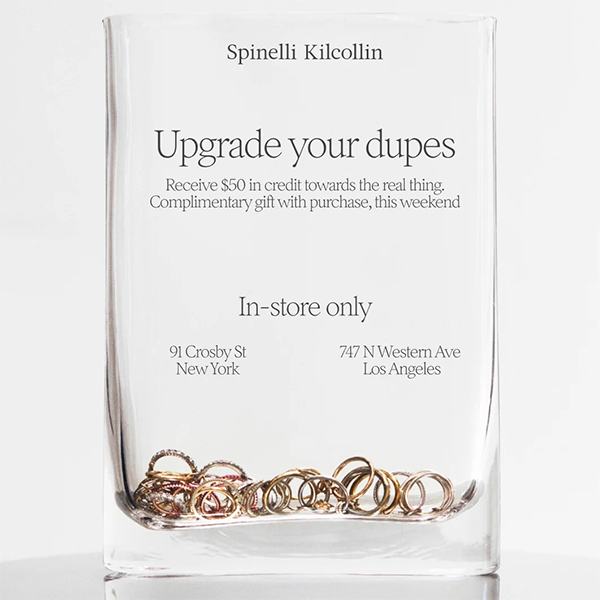
Spinelli Kilcollin is the latest fine jewelry brand to address the “jewelry dupe” problem and find a creative solution that gives customers a way to become loyal clients.
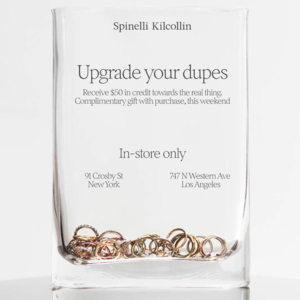
This summer, the Los Angeles–based brand started a Trade-In Bar program at its official boutiques. People who bought an imitation of one of its iconic linked rings can swap their fake in exchange for a $50 credit toward an authentic Spinelli Kilcollin piece.
In a statement, the brand said the idea originated with a customer who brought her dupe into Spinelli Kilcollin’s New York City store. She told the staff she had bought the dupe to “test it,” but she was ready to buy the real thing.
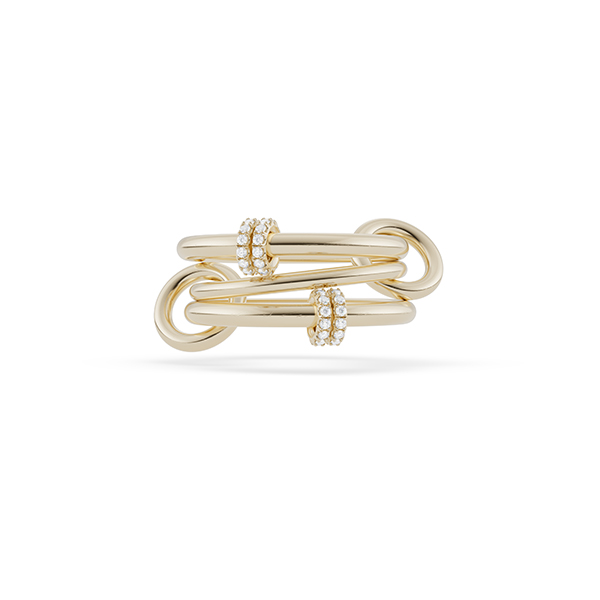
The Trade-In Bar works like this: Customers bring in fake rings, place them into a specially marked jar, and receive credit toward a future purchase of an authentic piece.
Its marketing was just as simple. As its Facebook post said: “It’s time for an upgrade. Drop off your dupes and receive $50 in credit toward an original Spinelli Kilcollin piece. In store only.”
Since the Trade-In Bar started, Spinelli Kilcollin said it has received several hundred dupes—and that’s before it even started to advertise the program on social media. Its initial Instagram post got many positive comments from jewelry buyers and other designers, who said it is a creative way to handle the so-called dupe economy. The brand also has expanded its sterling silver offerings with prices starting at $390 to make its jewelry more accessible to anyone who wants to own a piece.
Spinelli Kilcollin was founded in 2010 by partners Yves Spinelli and Dwyer Kilcollin. They started with a piece they called the Galaxy rings, an interconnected design meant to be stacked or worn across multiple fingers. The look became so recognizable that it grew to define the brand.
Since then, the brand has gained many influencer and celebrity followers, some of whom have shared dupes. But that kind of marketing also has allowed Spinelli Kilcollin to expand, adding retail stores in New York, Los Angeles, Seoul, and London.
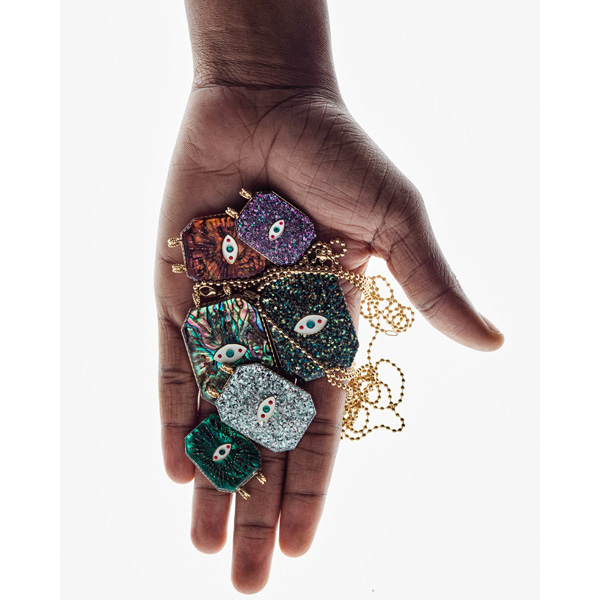
One other designer who got creative on the copycat issue is Marie Lichtenberg, who saw many fake versions of her signature lockets and scapulars—celebrity favorites on icons such as pop singer and entrepreneur Rihanna, making them not only valuable but on trend with fashion watchers.
Lichtenberg responded in 2023 with a fundraising program she calls Raiz’in, which sells what she describes as authentic copies of her jewelry. The pieces are made from resin rather than gold or sterling silver. Her initial Raiz’in resin locket sold out, and she introduced a second iteration with scapulars in three sizes.
Interestingly, the Raiz’in pieces often can be found on resellers sites going for more money than they did when Lichtenberg sold them, showing how challenging the dupe world is as well as the pros and cons of the secondhand marketplace.
Top: A promo for Spinelli Kilcollin’s dupe trade-in program (photo courtesy of Spinelli Kilcollin)
- Subscribe to the JCK News Daily
- Subscribe to the JCK Special Report
- Follow JCK on Instagram: @jckmagazine
- Follow JCK on X: @jckmagazine
- Follow JCK on Facebook: @jckmagazine