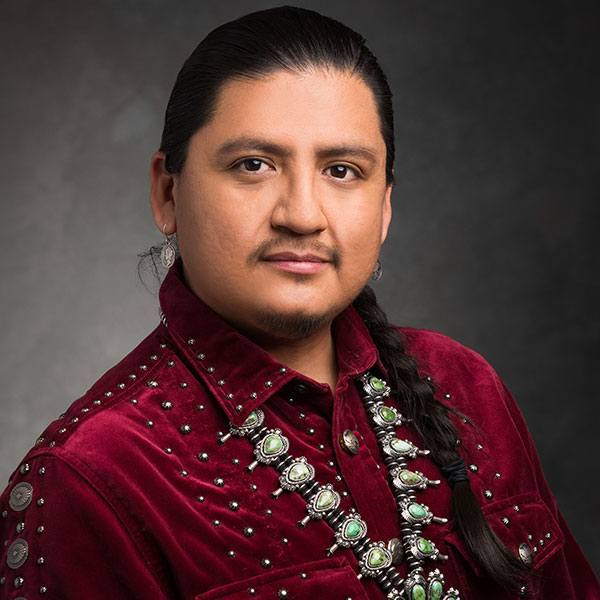
Utah-based Enoch Platero (pictured) is the first traditional Native American jewelry artist to win the Halstead Grant, an award the founder of Enoch Michael says is all the sweeter given its reflection on his jewelry, work ethic, and perseverance.
The Halstead Grant, which is designed to aid new and emerging silver jewelry businesses, consists of $7,500 in cash and $1,000 for jewelry supplies. Halstead, a Prescott, Ariz.–based industry supplier, provides winners and finalists with guidance on their business plans in addition to the monetary awards. This was Platero’s second time entering the competition.
“Getting finalist last year was just the lift I needed,” he says. “Halstead recognized my potential; gave me targeted, actionable feedback; and I applied it. It taught me so much about planning and more importantly it unlocked the vocabulary needed to ask for help from small-business experts.”
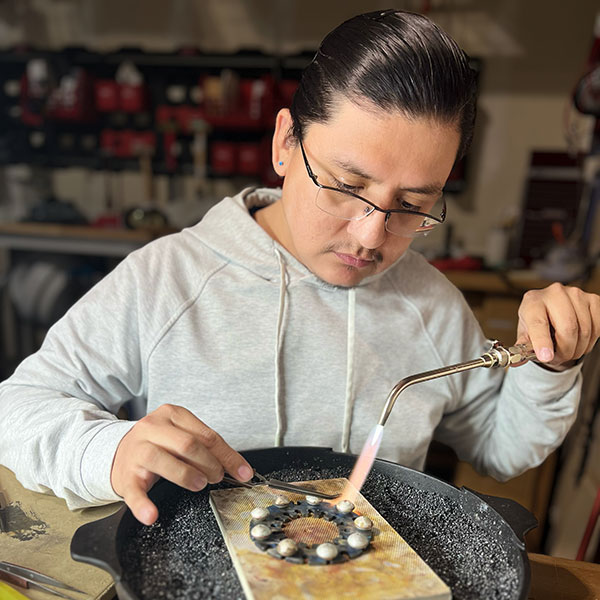
Platero focuses on structure, symmetry, and balance in creating his one-of-a-kind or small-batch jewelry. Sterling silver and turquoise are his primary materials, and each piece is handmade. Enoch Michael jewelry ranges in price from $90 for a pair of Mercury Dime earrings to $10,000 for larger statement pieces, such as the Sonoran gold turquoise Squash Blossom necklace.
“We are proud to honor Enoch Michael’s accomplishments and enormous potential,” Halstead brand founder and president Hilary Halstead Scott said in a statement. “Over 21 years of awarding grants, we have recognized a broad range of silversmithing styles.”
Platero will also receive a Halstead Grant trophy as well as a trip to Prescott for the award ceremony. Finalists receive $1,000 cash and $250 for jewelry supplies; this year’s finalists are Abigail Leaventon Jewelry, Cassidy Kaufman Jewelry, and Solaris Forge Creations.
Like many early-stage jewelry designers, Platero has a full-time job elsewhere—in coding—and works on his jewelry at night and during the weekend. But he sees an upside to the time he has to spend away from the jewelry practice he loves.
“On the creative side, that manifests as more time to think creatively before any torch touches silver. I mentally plan and modify designs before starting, so when I do finally make a product, I’m almost always happy with the results,” he says. “In my mind, my collectors are looking for that POV—deliberate, intentional silver work—and I want to meet them there.”
Platero’s jewelry is based in Navajo silversmithing traditions, though he didn’t live within the Native community until he was in high school. “I was not raised within a family silversmithing tradition or with sustained instruction in Navajo stories, ceremonies, symbolism, and cultural practices,” he says. “I learned metalsmithing as an adult from non-Native teachers in Salt Lake City.”
Those teachers include Amy Schmidt and Jan Harris-Smith at Salt City Smithery, whom Platero thanks for his success today.
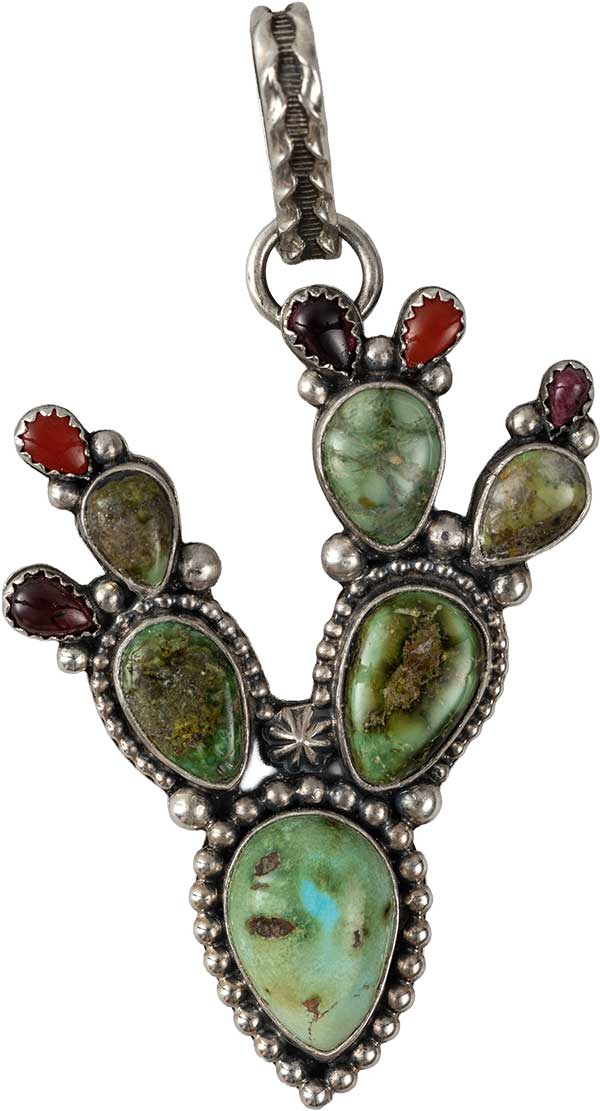
“I think of myself as working my way into Navajo silversmithing as carefully and honestly as I can,” Platero tells JCK. “My Navajo identity comes through naturally in my preference for turquoise, substantial metalwork, and certain proportions, while my designs and finishes also reflect a contemporary studio practice.
“Because I was not taught the meanings behind every traditional form or symbol, I am careful about what I use. I want to be able to speak accurately about its history, meaning, and cultural context rather than claim knowledge that I did not inherit.”
His advice for those who want to apply for the Halstead Grant? Collaborate. Collaborate. Collaborate. Applicants must submit a design portfolio along with detailed responses to questions about their marketing strategy, business development plan, sales history, and production capacity—and for his second application, Platero received assistance from SCORE mentors and the U.S. Small Business Association. Halstead’s judges noted his improvements in their feedback on his winning application, which he says felt validating.
“The application, over two years, only takes a few hours from pen to paper. The gargantuan effort is in the actual management,” Platero says. “Around 200 hours were spent adding scaffolding to the operation, researching customers and competitors, creating goals and budgets, being ambitious and working back with capacity in mind, and really dissecting how the business functions in order to improve it.”
Applications for the 2027 Halstead Grant are now open.
(Photos courtesy of Enoch Platero)
- Subscribe to the JCK News Daily
- Subscribe to the JCK Special Report
- Follow JCK on Instagram: @jckmagazine
- Follow JCK on X: @jckmagazine
- Follow JCK on Facebook: @jckmagazine