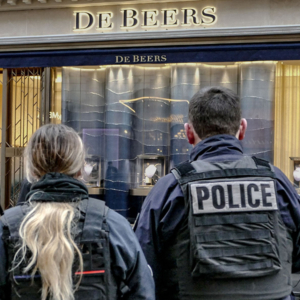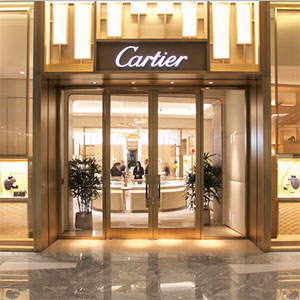
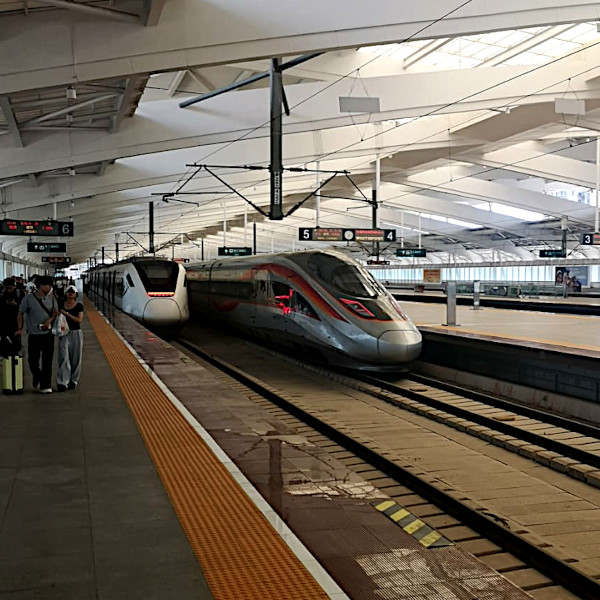
After the swift train ride, the lights, the fingerprint scanners, the surveillance cameras, passport control, and a few questions, hundreds of travelers an hour walk the bright corridors between Hong Kong and Shenzhen, in both directions, every day.
Some are heading south to buy gold, jewelry, and watches in Hong Kong, where they can cost less than on the mainland, depending on what they buy and who they know. Others are heading north into nearby Shenzhen, to Shuibei, where gold and gems can sell for less than in Hong Kong’s brand-name shops. Which way the cash moves depends on the knowledge of who is carrying it.
A couple of metro stops north of the border, still in Luohu district, rain spatters the wide sidewalks of Shuibei in early July.
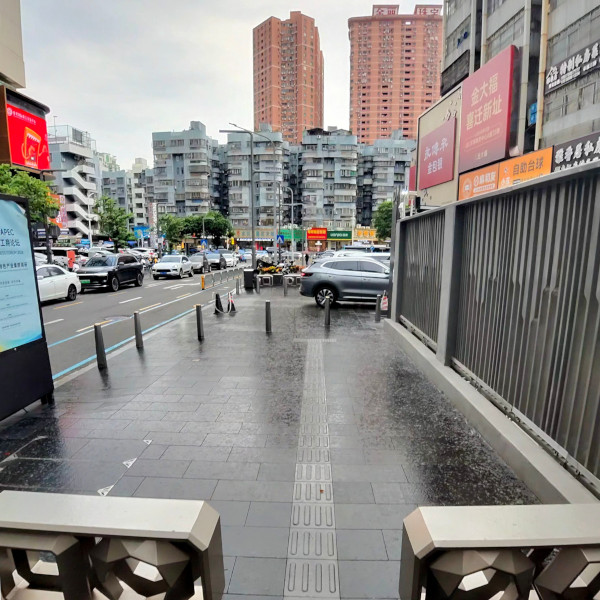
A fruit seller with a megaphone calls out the price of watermelons. Across the street and down the escalator, the offer is gold and loose stones, sold by the gram and carat respectively.
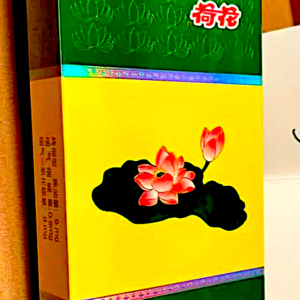
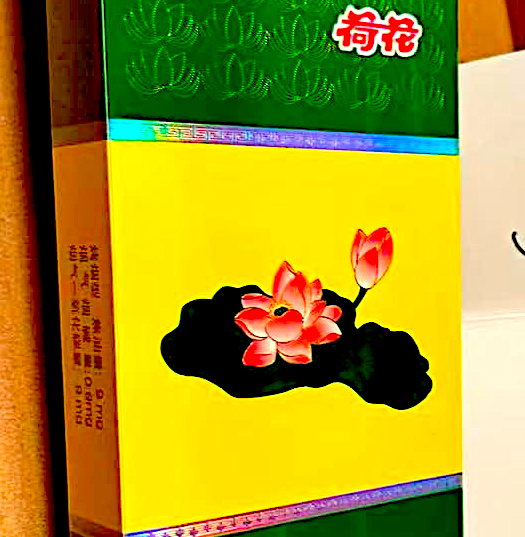
Liang Bowen pats his pockets for a lighter. He sparks up a Diamond Hehua, the lotus-branded cigarette widely believed to be a favorite of Chinese President Xi Jinping—Liang mentions this, with some amusement, to the foreigner reporter. These days, Liang sells trays of gold ring mountings, waiting to be filled with gems.
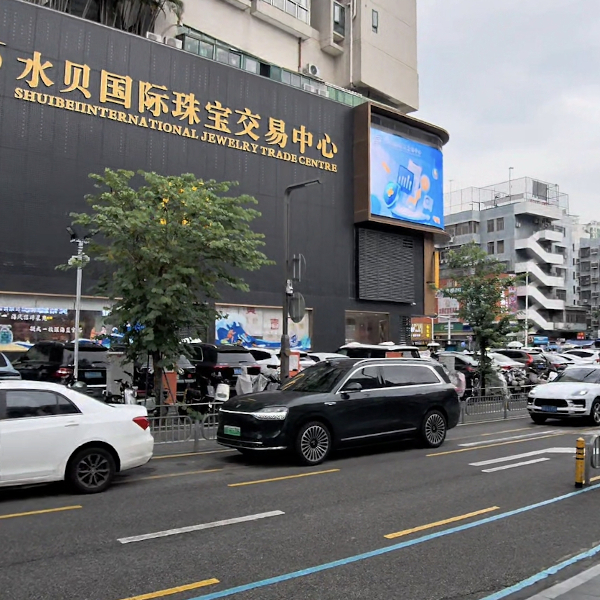
He’s standing outside Shuibei’s Jinzuo, aka the Gold Tower, a sprawling jewelry mall like many of the massive buildings around it. The district is among many turbo-charged exchanges that serve a country of 1.4 billion potential investors and speculators—many of whom are a mere bullet train or two away from the action.
“The Chinese people—they can’t buy AI stocks [and] get rich overnight like in America. It isn’t allowed in the same way,” he says. “Gold and gems are practical and real commodities. A different system. And you can bring your cash. This is what we do here.”
His view, voiced earlier this summer, anecdotally complicates the story told by recent numbers in the jewelry trade press. Hong Kong’s government reported that sales of jewelry, watches, and valuable gifts rose 22.4% in the first nine months of 2026, to HK$45.82 billion ($5.84 billion). Bloomberg tied the jump to Beijing’s tax campaign against wealthy mainlanders’ offshore assets.
That 22.4% measures money spent, though, not goods sold. Sales volume rose only 6.8%. Most of the gain came from higher prices—not more jewelry changing hands.
Bloomberg’s case rests partly on a Hong Kong adviser, whose mainland clients once asked about insurance policies and now ask to be taken gold shopping instead. But one adviser’s clients are as much an anecdote as Liang, who is about halfway through his cigarette as he loiters ceremoniously outside a Shenzhen jewelry exchange. And the link between mainlanders’ offshore holdings and a 22.4% jump in Hong Kong luxury sales is a lot thinner than it looks at first glance.
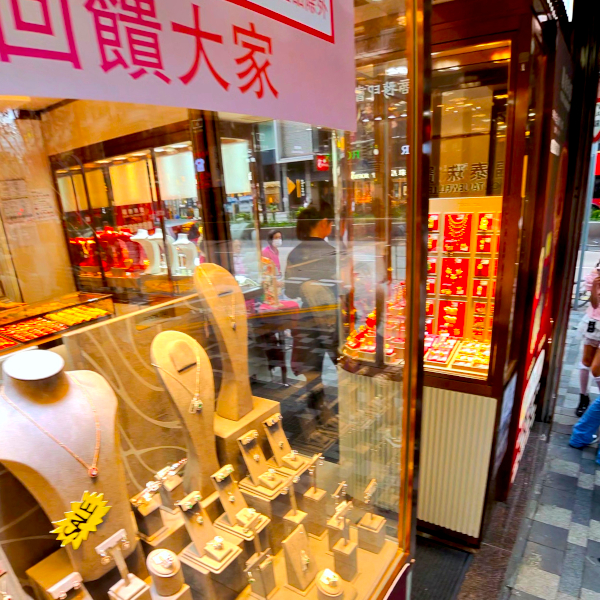
A Hong Kong insurance policy or brokerage account is an offshore asset, and Beijing now taxes its returns on its citizens. A gold bangle bought on Nathan Road in Kowloon and carried back into China isn’t. Once in China, it’s a mainland one. Buyers are no doubt making such swaps, as they have forever. Hong Kong’s figures don’t record who is buying or why, and there are plainer reasons to shop there: Hong Kong charges no sales tax on gold, while the mainland charges 13% VAT on most gold sold to consumers, and Beijing ended a gold-tax rebate late last year.
Meanwhile in Shenzen, the counters, stalls, and livestreams of places like Shuibei—part of a trade the Gems & Jewelry Trade Association of China put at 978 billion yuan in 2025—barely register in mainland China’s official retail statistics. That’s because the only retailers who appear in the data are those who are reeling in more than 5 million yuan (roughly $700,000) annually.
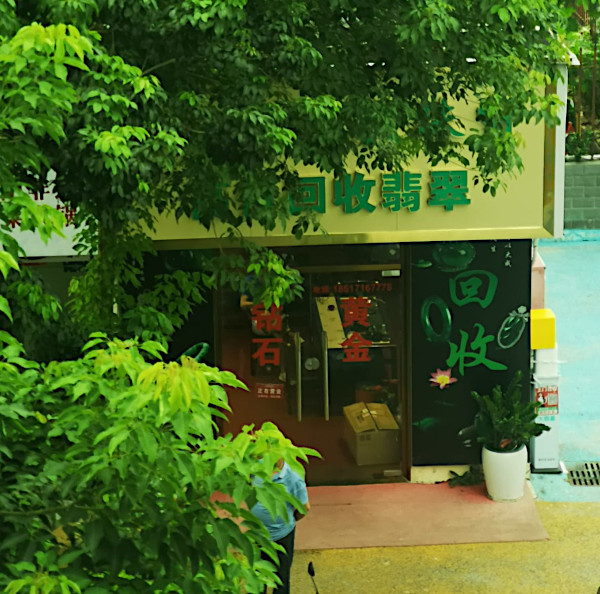
None of these stats matter much to the people doing the trading, though. Liang has stubbed out his Diamond Hehua and is now pointing to a group of smiling brokers standing outside the Starbucks next-door to the jewelry megamall.
They’re greeting new arrivals—people with their phones out, holding umbrellas and bags, looking confused. From their accents, Liang can tell, they’re Chinese buyers from another province, meeting contacts they first found on WeChat, likely months before.
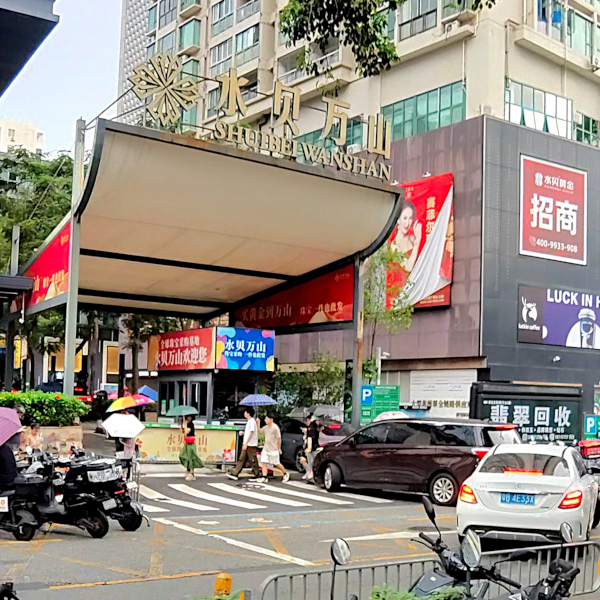
The brokers usher them inside. First it’s coffee and tea, then the loupes. Stones and gold pass the Starbucks table before deals get made.
“Let’s go, they’re hunting,” he says.
The Chinese Belt and Jewel Initiative
Far beyond the corridor between Hong Kong and Shenzhen, Chinese buyers from cities across the mainland are heading abroad, across Southeast Asia and much of the rest of the world, scouting for gold, stones, and jewelry they can sell back home or to others, or simply hold instead of cash.
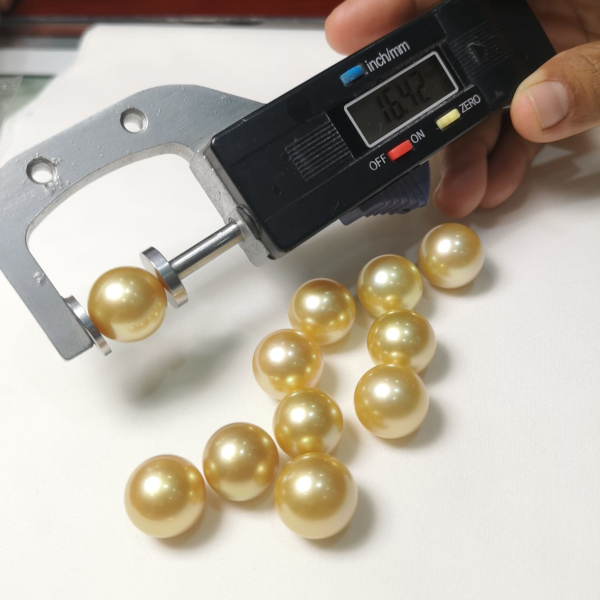
Some find the Shuibei model has followed their own pursuits. In Bangkok, a short taxi ride to Silom Road brings them to the newly erected Chinese-owned “Gold Plaza Gem Buyers’ Center,” the Shenzhen plaza’s first venture abroad, which opened within the past year.
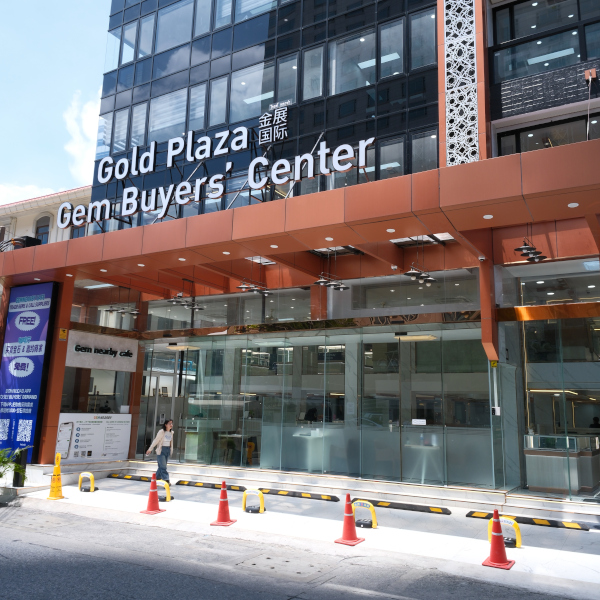
Back in Shuibei, Liang is amused but not surprised. “They obviously modeled it after [Jinzhan],” he says.
Buyers fly in from cities across China. For 100 Thai baht (about $3), they can take a seat in the building’s exchange and coffee shop, where two gem labs, one of them China’s state-owned National Gemological Testing Center (NGTC), check stones and jewelry before anyone pays.
Andrew Lu, a jeweler from Qingdao, flew into Bangkok in late May and spent a week buying there. Perched on a stool, leaning toward a row of paraiba tourmalines he’d just agreed to buy, he explained why he made the trip.
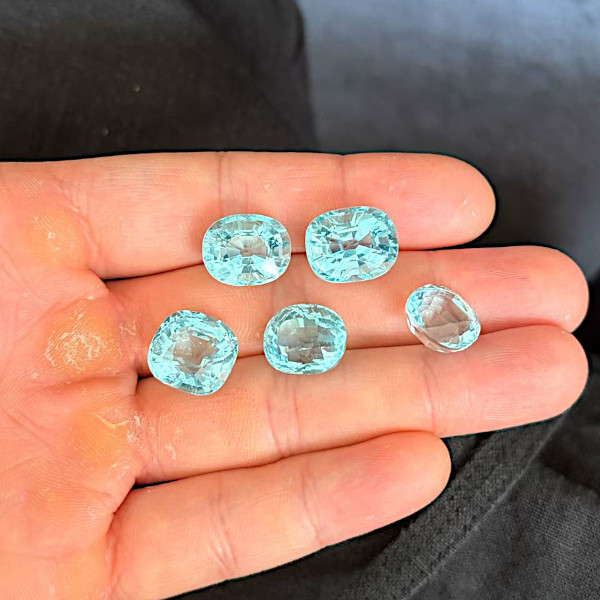
“My customers want specific things [like this] so I go get it. Then I make the jewelry. I also wanted to see what is new here,” he says.
By the time Lu’s tourmaline jewels reach Qingdao, they’ll carry reports from reputable labs such as the NGTC. They won’t be offshore assets. They’ll be coming home, and so will the money that bought them, in a form Lu can hold, resell, or pass on.
He’s not alone. In Chanthaburi, Thailand’s colored-stone trading town in the far east near Cambodia, a deputy provincial governor claimed Chinese buyers made up 80% of the local market in 2023.
The jewelry numbers cited in Bloomberg aren’t wrong—sales of jewelry, watches and valuable gifts did rise 22.4% this year in Hong Kong. But those statistics capture only the piece of China’s appetite for physical value that passes through Hong Kong’s luxury retail shops.
The rest—and there’s a lot of it—sits on café tables from Thailand all the way to Tanzania, and elsewhere around the world. It moves through livestreams and gets checked by state-run labs before it falls into the hands of a mainland consumer. Some of it could be money ducking a small tax bill. But much of it is simply money coming home in a form people can hold.
Between Hong Kong and the mainland, the corridors still run both ways: Branded watches and jewelry move back and forth, and the same can be said in a place like Shuibei.
The amount of money moving still depends on who holds the cash, and why. The link between mainlanders’ offshore holdings and a 22.4% jump in Hong Kong luxury sales is a lot thinner than a headline makes it look.
Liang isn’t waiting on the data. He’s already wrestled his electric car out of the parking lot and is leaning on the horn.
“Get in, we’ll shop at Caibao too. It’s only a few minutes away,” he says, naming another trading center nearby. “Of course they accept cash. This is Asia.”
Top: A carton of Hehua Diamond, a luxury brand of Chinese cigarette favored by gold and diamond merchants, as well as by Chinese President Xi Jinping (all photos: Sam Cooley)
- Subscribe to the JCK News Daily
- Subscribe to the JCK Special Report
- Follow JCK on Instagram: @jckmagazine
- Follow JCK on X: @jckmagazine
- Follow JCK on Facebook: @jckmagazine