It’s not uncommon for an established jewelry brand to evolve its aesthetic, experimenting with new materials, shapes, or other design details. But designer Lizzie Mandler generally chooses to refine her eponymous brand’s signature look rather than wholly reinvent it, thus remaining true to its DNA. As a result, the Los Angeles–based designer—who’s celebrating her 15th year in business—creates collections that feel fresh yet are still instantly recognizable to longtime collectors and new customers alike.
Since starting her brand in 2012, Mandler has steadily refined a design language rooted in architectural forms, clean lines, and thoughtful proportion. Her signature knife-edge profiles, sculptural silhouettes, and rich yellow gold have anchored her work from the beginning but have evolved over the years into bolder proportions (as seen in substantial chains and chunky rings) while retaining the restraint and precision that define Lizzie Mandler jewelry.
With Mandler’s more recent collections, including Liquid Gold and the new Form, another shift has emerged: The edges on those sculptural gold jewels have softened, the lines have become more fluid, and the volumes feel fuller and more considered. It’s a subtle change rather than a dramatic departure—one that reflects a designer growing ever more confident in her own visual language.
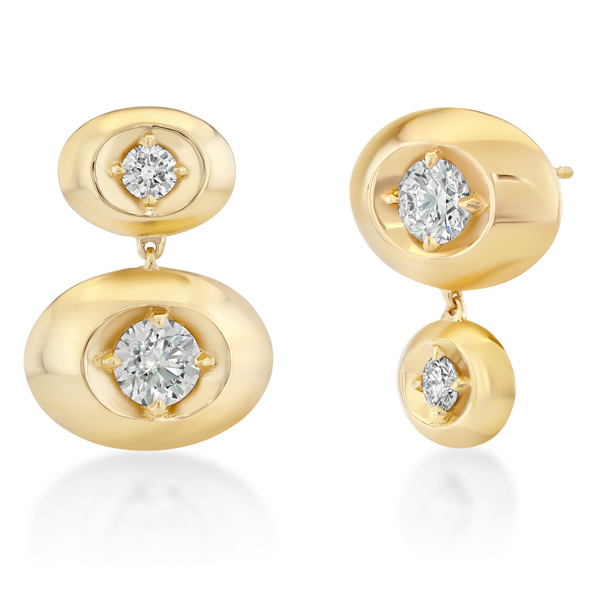
That sense of continuity is precisely the point of Form, which Mandler describes as “both a reflection and a foundation.” The collection revisits the codes that have shaped Lizzie Mandler up until now and lays the groundwork for where the brand is headed.
Below, JCK talks with Mandler about the new collection, what she has learned in her 15 years of business, and what might be coming next.
What made this feel like the right moment for a collection like Form, which revisits your signature design language rather than introduces something entirely new?
I think reflection is an important part of any milestone—taking the time to acknowledge both your origins and how far you’ve come. It’s so easy to get lost in the constant forward momentum of building a business, always focused on what’s next.
For me, this anniversary felt like an opportunity to pause and really sit with the past 15 years of the brand. I wanted to revisit the collections I’ve created over time, study how my design language has evolved, and consider the threads that have remained constant throughout. Form became a way of honoring that journey, creating something that feels both deeply rooted in the brand’s beginnings, representative of where it is today, and where I see it going.
You describe Form as “not a return, but a continuation.” What are some of the design elements that longtime collectors will recognize, and how have they evolved?
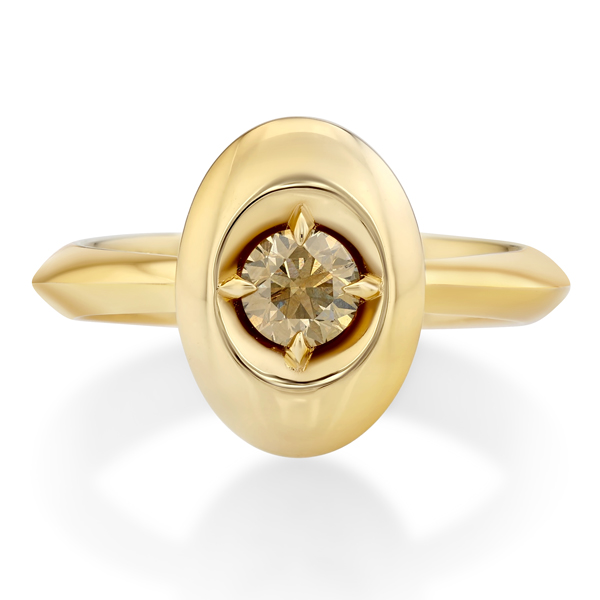
The process began with identifying the core design codes that have defined my brand over the years, from setting techniques I continually return to signature silhouettes. The knife-edge in particular has been central to my work since the beginning. I’ve always loved the way it plays with our perception of depth and draws the eye across a piece. Over time I’ve continued to manipulate and reinterpret that shape, creating new expressions of something familiar.
With Form, I wanted to push that idea to its edge—blowing up the proportions, softening the curves, but always maintaining that defining line that guides the eye. It feels familiar but evolved.
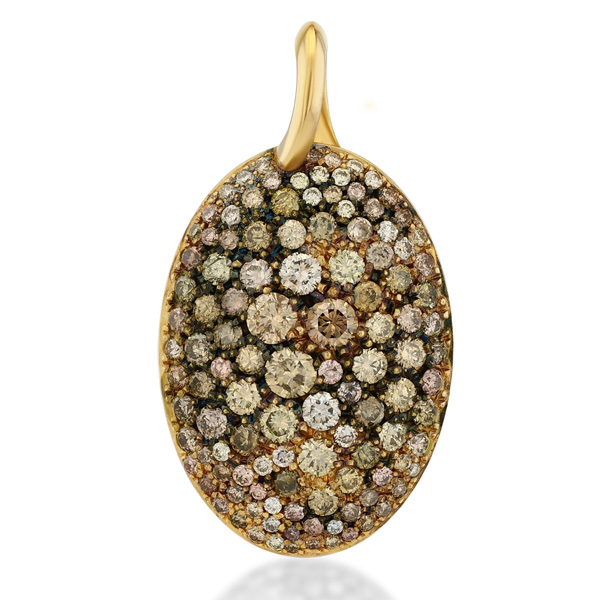
Jewelry in Form features two new surface treatments—contour pavé and pavé shadow. How did those techniques come about, and what do they allow you to achieve that wasn’t possible before?
A single graduating line of pavé is a treatment I’ve returned to throughout my career. But with the exaggerated proportions of Form, I suddenly had larger surfaces than could be covered by a single row of diamonds. Contour pavé became my way of merging the discipline and precision of that signature graduated line with something more organic. By allowing the pavé to contour to these expanded forms, it introduces a sense of softness and subtle irregularity—a bit of chaos that complements the new softer shapes.
Pavé shadow, on the other hand, is a natural evolution of my long-standing love of hidden diamonds. From some of my earliest pieces, I’ve placed diamonds in unexpected locations: on the tips of open bangles or along the edges of thicker bands. Pavé shadow continues that idea in a new way. I love how it highlights the curves of the form while remaining slightly concealed, revealing itself as a pleasant surprise as the piece moves. It’s a detail that reveals itself over time, which makes the experience of wearing the piece feel more intimate.
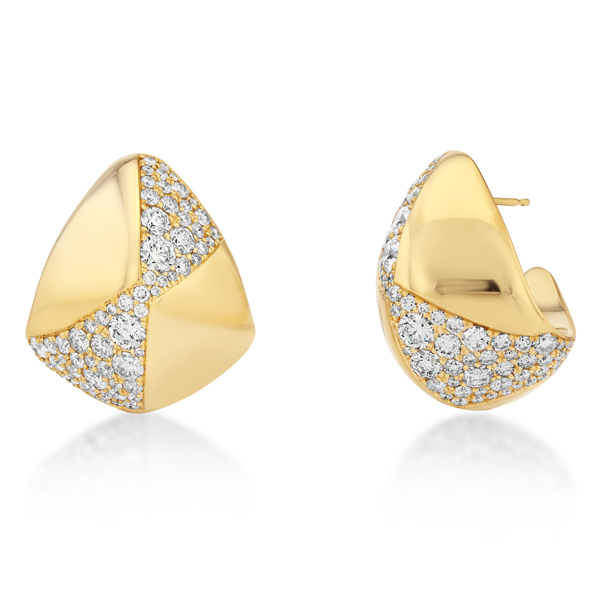
Many designers talk about adding detail, but Form seems to be about removing what’s unnecessary. How has your editing process changed over the past 15 years?
I think confidence as a designer comes from knowing what to leave out. The editing process has become less about embellishment and more about distillation—removing anything that doesn’t serve the essence of the piece or the collection. This collection even has some “missing” parts—a bracelet, for example, because I just couldn’t land on a bracelet that felt right for it. Historically I might have just figured something out for the sake of having a well-rounded collection, but now the integrity of each piece matters more than needing to check certain boxes.
Form is really the culmination of that evolution. The shapes are larger and bolder, but they’re also more reduced. Every curve, every edge, every diamond placement has a purpose. There’s a clarity that comes from 15 years of refining and revisiting the same ideas, stripping them back until only the most essential elements remain.
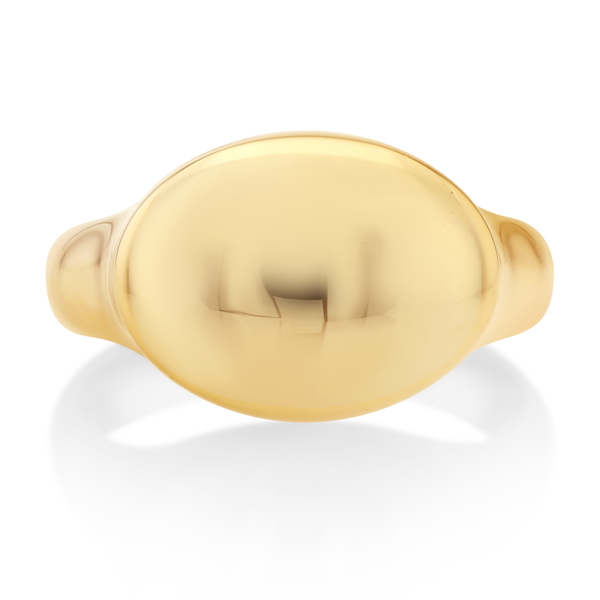
Do you see Form becoming a new pillar of the brand, with these silhouettes and surface treatments appearing in future collections?
Absolutely. One of the things I love most about fine jewelry is that it’s seasonless. We don’t need to adhere to trends or fashion calendars, which means collections can evolve over time rather than be replaced by the next thing.
I’ve always viewed my collections as evergreen: ideas that I can return to and continue building upon. Form very much feels like a new pillar of the brand in that sense, with endless opportunities to revisit these shapes and techniques through new interpretations in the future.
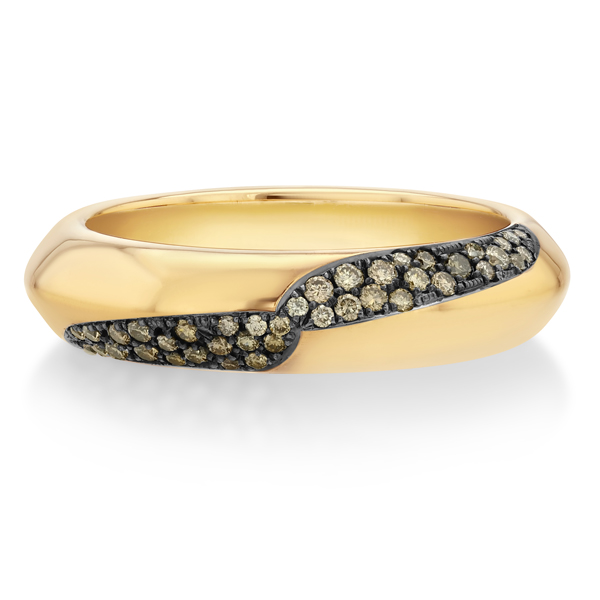
Looking back at your first collection, what is one design lesson you wish you knew then that has become central to your work today?
I wish I had known that you’re never really “done” as a designer. Early on, I kept waiting for the moment when I would feel like I had fully arrived—that my signature was completely defined or that a collection felt entirely complete. I thought that certainty would be a sign that I was doing things right.
I’ve realized that the opposite is true. The work is never finished, and that’s actually the beauty of it. Your perspective evolves, your interests shift, and the ideas that matter most continue to reveal new possibilities. I’ve come to embrace the fact that a collection can remain open-ended and that your signature is something you continually refine rather than something you definitively arrive at.
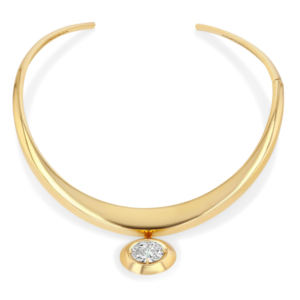
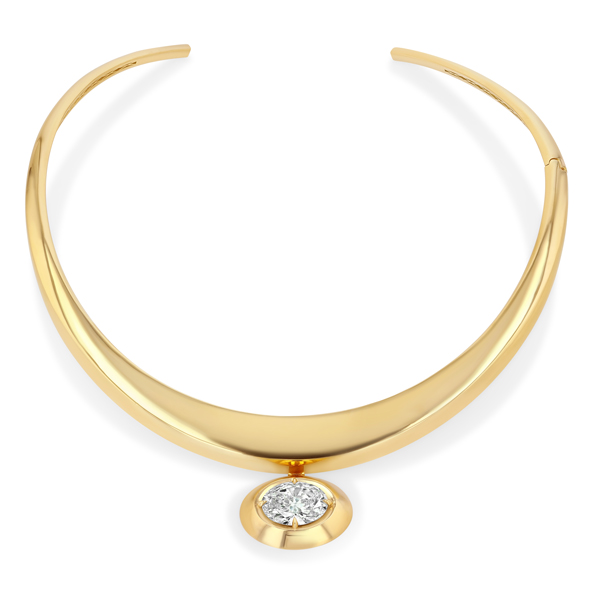
Top: Form taper collar necklace and pendant in 18k yellow gold with 6.5 ct. oval diamond detachable charm, price on request; Lizzie Mandler
- Subscribe to the JCK News Daily
- Subscribe to the JCK Special Report
- Follow JCK on Instagram: @jckmagazine
- Follow JCK on X: @jckmagazine
- Follow JCK on Facebook: @jckmagazine