Three jewelers—a household name, a well-known artist, and an up-and-coming brand making a splash with its new hire—each made announcements last month about their lab-grown product lines, and they’re now talking individually with JCK about their support for lab-growns.
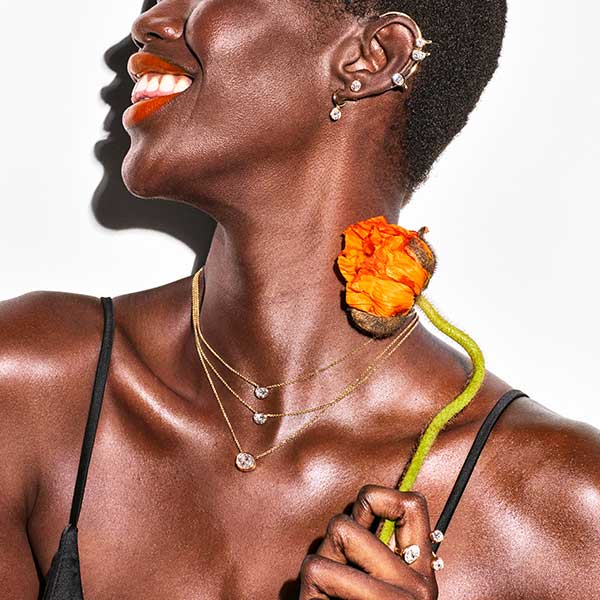
John Hardy, which is celebrating its 50th anniversary this year, announced its first collection of lab-grown diamond jewelry, part of an exclusive creative partnership with award-winning musician siblings Billie Eilish and Finneas O’Connell.
New York City–based, Australian-born designer Ray Griffiths—best known for his signature Crownwork pattern and passion for colored gemstones—said he was starting to use lab-grown diamonds in his jewelry.
And Astrea London, a lab-grown diamond brand established in 2023, grabbed headlines across the jewelry and fashion world when founder and CEO Nathalie Morrison announced the brand had appointed actress and style icon Sarah Jessica Parker global creative director and founding partner.
The three jewelers spoke with JCK about why they are working with lab-grown diamonds and what it might mean for the jewelry industry.
“This was a creative exploration of what you can do with non-mined diamonds that allowed us to develop proprietary cuts that embrace the brilliance of what the stones really are and how to take advantage of that,” says John Hardy creative chairman, Reed Krakoff. “It was a comprehensive rethink of what diamonds are today, what can they be going forward and how can we make a difference in a space that is already filled with a lot of sameness.”
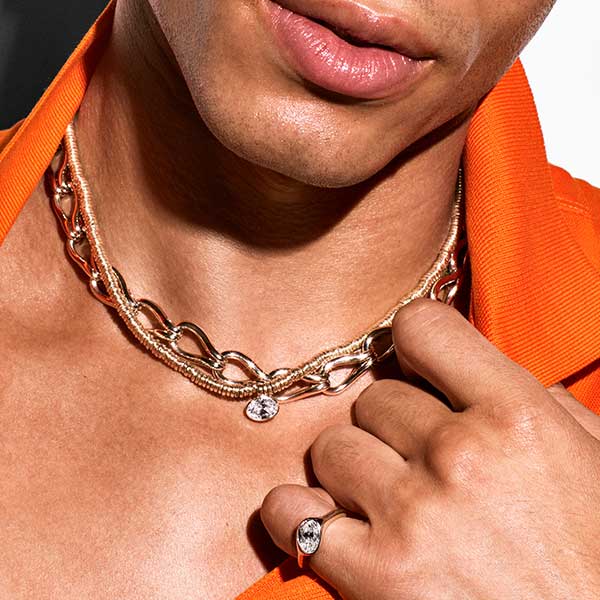
The brand wanted to embrace the flexibility of lab-grown diamonds, including for more casual jewelry looks, according to Krakoff.
“Traditionally, you cut a diamond down for value and classic shapes, but I wanted to do a single-stone collection that celebrates the natural state of a diamond. The jumping-off point for me was the idea of no two stones being exactly the same,” he says.
John Hardy’s JH Lovestruck collaboration with Eilish and her brother debuted Sept. 29 online and in John Hardy boutiques. Krakoff says Eilish and O’Connell got on board because of a shared interest with the brand in sustainability, reclaimed precious metals, and renewable energy.
“Given John Hardy’s 50-year history of sustainable practices, I never thought about any other way of approaching a diamond-forward collection than lab-grown,” Krakoff adds.
Ray Griffiths says lab-grown diamonds are an industry disruptor, like Uber was for the taxi industry, and he was ready to join this evolution in the jewelry and diamond marketplace.
“You’ve got to change. You have to move with the times. You can’t get stuck,” he says. “I knew lab-grown diamonds were here to stay, so we decided to get involved to see what we could do with them. And I’m excited about the possibilities.”
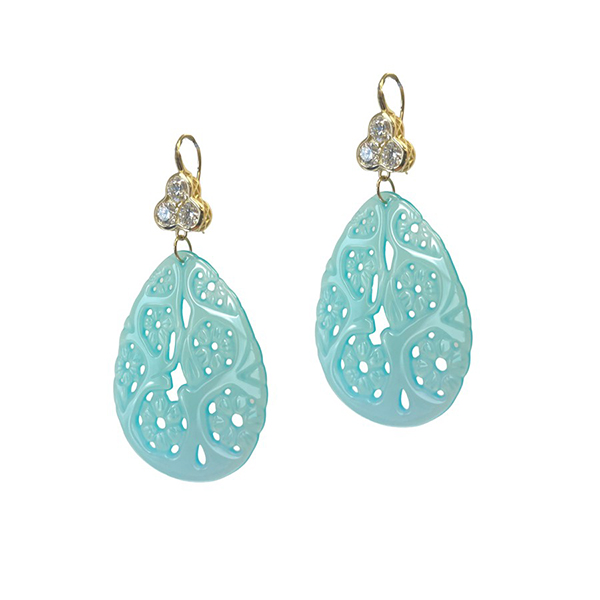
Griffiths likes that he can get the exact sizes he wants in lab-grown diamonds, especially larger stones that suit the showmanship of his jewelry.
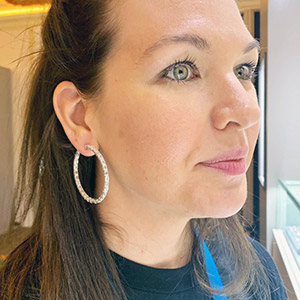
“I’ve found you can get a big look out of them, like for the tops of our earrings. I would have used sapphires before, but now I can get one and a half carats of lab-grown diamonds on each ear to get that striking look,” says Griffiths. “It’s about the glamour of them—you can get the volume without having to break the bank.”
At Astrea London, Parker and Morrison are working directly with jewelry artisans to design a 12-piece collection using what Morrison describes as the highest-quality lab-grown diamonds. Parker wears one of the pieces in the publicity photos released when her appointment was announced.
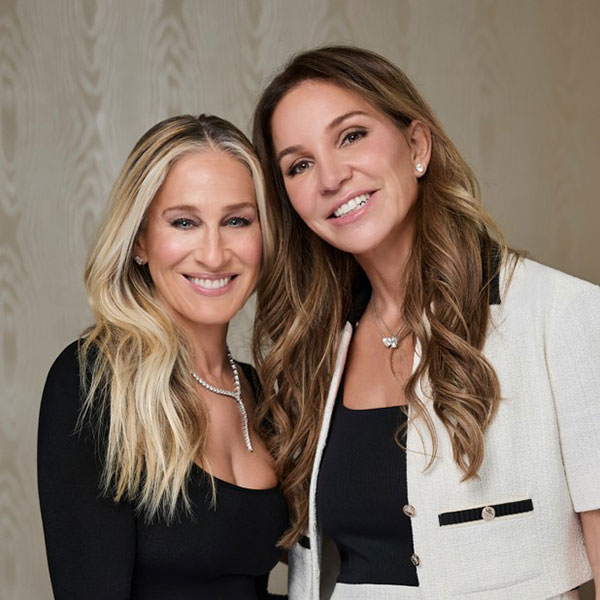
Astrea London has boutiques in France, England, and Greece, and is opening three stores in Dubai this fall. Morrison says she started a brand focused only on lab-grown diamonds after researching gemstones, the jewelry industry, and consumer behavior. The French-born businesswoman, who has owned two wealth management firms and runs seven vineyards, determined that lab-grown diamonds are the future.
“It’s coming. You can’t stop it,” she says. “In 2015, lab-grown diamonds were 1% of the market. In 2021, it was 5%. Today, it’s 20%…. Three years ago, people were still doubting it. Today, it’s a fact—a diamond is a diamond, no matter how it’s made.
“The market is ready. The product is ready. The consumer is listening,” Morrison adds.
About her decision to collaborate with Parker, Morrison notes that both her 13-year-old daughter and her 80-something mother-in-law love the actress. Parker also makes wine, and they share the same values, Morrison adds.
“When we sat down together, Sarah Jessica said, ‘I want to design. I want to be more than an ambassador—I want to be a creative director and a shareholder,’” recalls Morrison. “We’re filming our first collection together in New York City in November, and it will be ready and in stores before the holidays.”
Top: John Hardy recently released its first lab-grown diamond jewelry collection, including the JH Lovestruck necklace in three sizes. (All photos courtesy of the brands)
- Subscribe to the JCK News Daily
- Subscribe to the JCK Special Report
- Follow JCK on Instagram: @jckmagazine
- Follow JCK on X: @jckmagazine
- Follow JCK on Facebook: @jckmagazine