Largely attributed to Gen Z growing up on social media, the push toward alternative engagement rings is cementing itself as a lasting trend rather than a passing fad, according to interviews with independent jewelry retailers.
Alt wedding rings—as Pinterest has dubbed them—are part of the broader alt wedding movement that has seen couples reject rigid, traditional wedding norms in favor of highly personalized, authentic, and unconventional celebrations. As Pinterest’s 2026 Wedding Trend Report reads: “Couples are ditching one-size-fits-all rituals for cinematic and expressive revelry.”
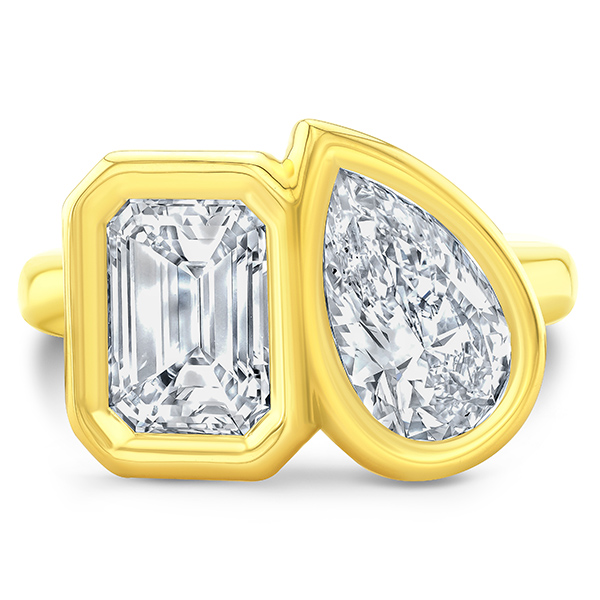
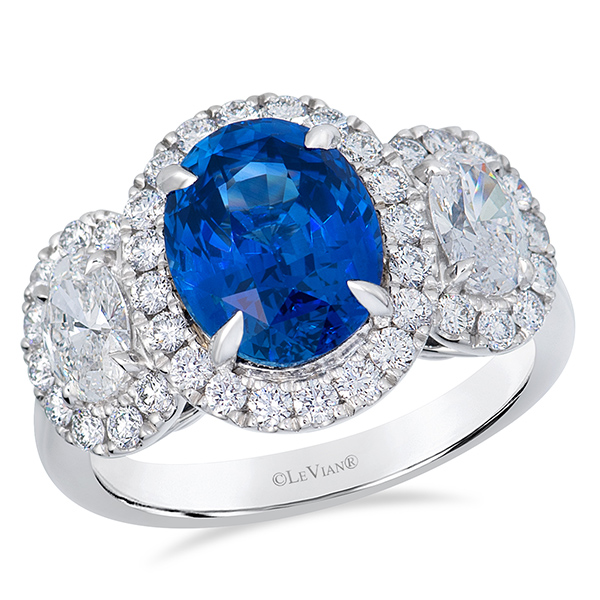
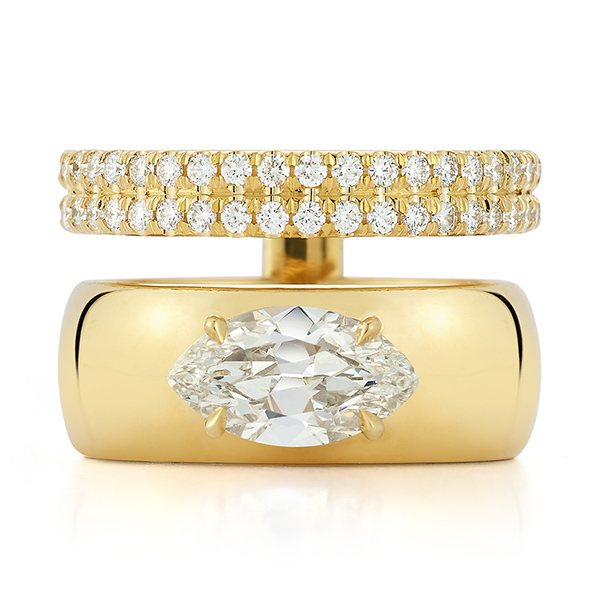
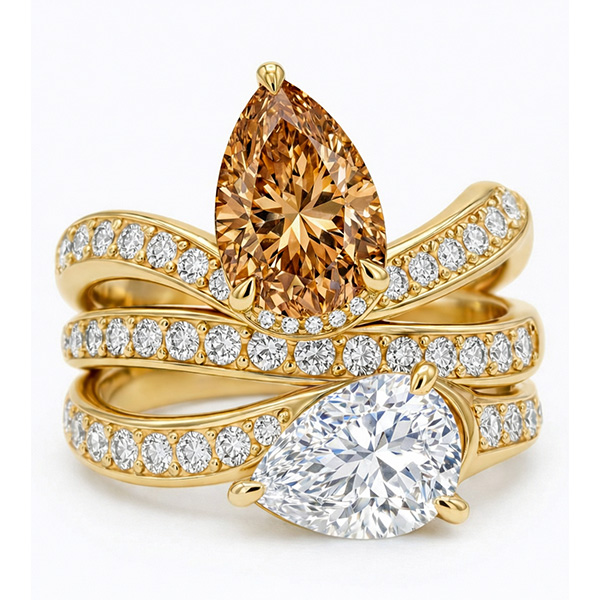
In jewelry, the trend plays out in bold, highly personalized individuality: Think east-west settings; toi et moi and asymmetrical designs; bold, chunky bands; vintage and antique-cut diamonds (a direct result of Taylor Swift’s old mine–cut engagement ring, designed by Kindred Lubeck); and colored center stones such as sapphires. Yellow gold and lab-grown diamonds—both increasingly popular in recent years—also are expanding options for customization, although several retailers told JCK that natural diamonds are making a comeback.
Courtney Sivard, director of marketing at Oklahoma City’s BC Clark Jewelers, believes the shift is accelerating because social platforms expose consumers to a variety of aesthetics and points of view. Lab-grown diamonds and inflation are also changing how consumers shop and compare options, she adds.
“Younger couples want to feel understood, not sold to,” says Sivard. “They’re highly visual, highly informed, and they’ve spent years curating their identity online, so naturally that carries into engagement and wedding jewelry. Some are choosing more unconventional styles—mixed metals, east-west settings, elongated shapes, or nontraditional stacks—while others still want a timeless solitaire. The difference is that they want the choice to feel intentional and reflective of who they are.”
Harris Botnick, co-owner of the Atlanta-based Worthmore Jewelers, points to the unveiling of Taylor Swift’s ring, which sparked an overnight surge of interest in vintage and cushion-style diamonds. He also believes product postings across TikTok, Instagram, and Pinterest are exposing couples to a wider variety of designs.
“There are sort of no rules anymore with trends changing so quickly because of social media,” said Botnick. “Something can sweep across the world in hours, where it used to take months to years. The change is much quicker.”
Social posts further incentivize couples to crave that one-off design. “We’ve had customers we’ve worked with say after we finished, ‘Okay, you’re not going to reproduce this ring and put it in your case, right? We want this just to be ours,’” Botnick says.
Jenny Chung Seeger, founder and owner of No.3 Fine Jewelry in San Francisco, also sees the shift toward more experimental engagement jewelry “absolutely accelerating” in her region, although she believes it’s more about Gen Z couples seeking self-expression.
“Social media plays a role, but I think the deeper driver is that younger couples are more intentional consumers,” said Chung Seeger. “They want pieces that feel like an extension of their personal style, not just a symbol they were told they should want. They’re looking for something that feels deeply personal and expressive.”
Engagement Ring Ringers
At No.3 Fine Jewelry, east-west settings, chunky gold bands, antique cuts, asymmetry, and mixed stacks are trending within engagement rings. Adds Chung Seeger, who also owns the lab-grown diamond brand Eliette, “It’s less about tradition and more about identity.”
She says lab-grown diamonds are enabling many couples to choose larger or more uniquely shaped center stones while staying on budget. “At the same time, we are seeing renewed interest in natural diamonds, especially antique cuts, colored diamonds, and stones that have unique properties. Yellow gold also continues to dominate because it feels warmer, more modern, and luxe.”
BC Clark is seeing more interest in customization, distinctive silhouettes, and rings that “feel wearable with a bride’s everyday style rather than something reserved for special occasions,” says Sivard, adding that stacking rings, anniversary additions, and wedding bands with personality are also growing in popularity.
Natural diamonds also can still resonate, as many Gen Zers place high value on authenticity and meaning, according to Sivard. “We continue to see strong emotional connection to natural diamonds because of their rarity, individuality, and symbolism. For many clients, the story behind the piece matters just as much as the visual aesthetic.”
Worthmore Jewelers is seeing heavy interest in “lots of color”—particularly in low-color diamonds. “We’re getting lots and lots of requests for these brownish-champagney stones and more unique cuts,” says Botnick. “A lot of antique cuts or modified antique cuts as well.”
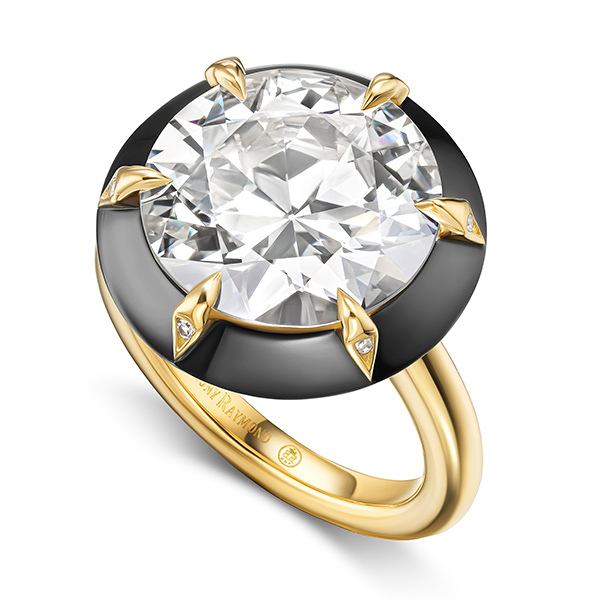
At the same time, Botnick is seeing large naturals “come back super strong,” estimating that his store is doing more solitaires “than we’ve done probably in the past 10 years.” He believes that as lab-grown prices have come down and stone sizes have ballooned, couples are seeking out the genuineness and simplicity of precious diamonds. “People don’t feel that it’s trendy. They feel like it’s just classic, and it’s never going to go out of style.”
Sean Dunn, president at J.R. Dunn Jewelers in Lighthouse Point, Fla., says his store is seeing a “softer version” of the alt wedding ring craze. “A lot of our Gen Z clients are the sons and daughters of long-standing clients, so they tend to lean more conservative on styling, but not on diamond size. The size expectation is still very much there,” he explains.
The two biggest shifts Dunn has seen in engagement jewelry in recent years are the popularity of lab-grown diamonds and the rise of “elongated everything,” he adds. “That’s where the structural change has happened.”
The store is doing more toi et moi and east-west settings, significantly more yellow gold, and slightly thicker bands than recent years.
Dunn is likewise seeing a rise in interest in natural diamonds. Gen Z couples, he explains, are “open to a conversation about beauty rather than chasing the four C’s, and that’s a real shift. They’ll consider a wider range of grades, especially in the more moderate colors and clarities, so they can maximize size.”
Intriguingly, he believes the shift reflects some disenchantment with lab-grown. “My honest take is that it commoditized colorless perfection and inadvertently re-elevated the case for natural diamonds with character and provenance.”
Kyle Bullock, owner of Bullock’s Jewelry in Roswell, N.M., and a partner of Train Retail, which offers sales and management training for independent jewelers, sees four major styles driving engagement ring trends: simple solitaires, half eternity solitaries, three-stone rings, and what he describes as “tiny twists” in the band that give the ring some “personality.”
Says Bullock: “Shoppers love a personalized experience, whether that is in creating a ring that feels personal or in the experience that feels tailored to them.”
Bullock also notes that Gen Zers are “very price-conscious” and advocates having about a dozen key semi-mount styles available across various price points. “This allows customers to buy then and there, and have it set with the center size/shape/style head they want quicker than having it custom-made. In this way, we can deliver what customers want quicker while still offering a personalized experience and product.”
Talking to Gen-Z
Retailers emphasize that securing positive Google Reviews and driving social media engagement are starting points in reaching Gen Z, often tagged as the first digitally native generation.
“This generation’s journey often starts digitally through TikTok, Instagram, Pinterest, creators, etc., long before they ever step into a showroom,” said BC Clark’s Sivard. “Because of that, we’ve focused heavily on creating content that feels educational, emotional, and visually aspirational without feeling overly transactional.”
BC Clark also tries to show a broader range of aesthetics and couples, as younger consumers want to see themselves reflected in the brands they engage with. “Even when showcasing classic diamond jewelry,” Sivard says, “the storytelling has become more modern, personal, and lifestyle-oriented.”
Chung Seeger said the imagery No.3 Fine Jewelry uses in marketing has become less aspirational in the traditional luxury sense and more emotional, intimate, and style-driven.
“Couples today respond to authenticity far more than rigid bridal conventions,” she says. “They also want to connect with a brand on a deeper level beyond just the styling of the ring. They care about who is designing and making the piece, the craftsmanship behind it, and the overall ethos and values of the company they are choosing to invest in.”
At J.R. Dunn, the conversation in recent years has shifted from “the perfect diamond” toward “a diamond with character,” says Dunn. “We talk more about how a stone was cut and what makes it feel a certain way, rather than leading with the grading report. The technical conversation still happens, just later in the process once we know what the couple is responding to emotionally.”
Bullock points to the benefits of using “use real, diverse models” in advertising. “No more sterile, hyper-filtered photo shoots.”
Selling-Floor Banter
At the store level, the biggest change over the years is that both people are involved with the discussion around the bridal ring—with the bride often making the final call.
“It’s much more of a couple’s decision now,” says Dunn. “She knows what she wants, she’s giving him hints, she’s showing him pictures, and the guys have really clued into that. That’s cool to watch.”
Dunn explains that his sales approach has become more about pulling a few contrasting options and letting the couple talk to each other while the employee steps back. “When the round brilliant dominated, there were honestly a lot fewer variables to navigate,” he says. “Now you’ve got shape, metal color, band width, setting style, and stone character all in play. And yellow gold being a true 50/50 option with white is a big part of what opened the conversation up.”
Chung Seeger agrees that the face-to-face consultation has become much more conversational. “Gen Z clients want to understand the ‘why’ behind a design.”
These consumers “typically arrive very informed,” says Sivard, having researched shapes, settings, price ranges, and trends online, but they still want guidance and expertise at the store. “Our role is less about selling and more about helping them navigate decisions confidently.”
At Worthmore, Botnick and his staff work to create a “very relaxed atmosphere” to foster open dialogue. Located in an artsy Atlanta neighborhood, the store allows its employees “truly show their personality,” he adds, whether that includes tattoos, piercings, or colored hair, to help couples feel they’re among peers.
“We want people to walk in and be like, ‘Hey, there’s one of everybody here. This is a comfortable place,’” says Botnick. “We’re big on the immediate greeting. We’re not here just trying to shove jewelry down their throats. We’re here to celebrate with you, whether it’s popping a bottle of Champagne while they’re in the store, or offering them a cold beer or hot coffee or something like that to start. Right away, it lets people know they’re in a friendly place.”
Top: Two-stone ring with 2.01 ct. pear-shape diamond and 2.38 ct. emerald-cut diamond in 18k yellow gold, price on request; Rahaminov
- Subscribe to the JCK News Daily
- Subscribe to the JCK Special Report
- Follow JCK on Instagram: @jckmagazine
- Follow JCK on X: @jckmagazine
- Follow JCK on Facebook: @jckmagazine