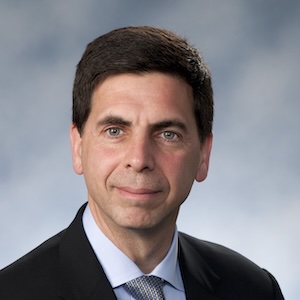
Earlier this month, Tom Moses, GIA’s executive vice president and chief research and laboratory officer, announced he would leave GIA in May, after working there for nearly five decades. Here, Moses talks about how he’s not retiring, whether an “undetectable” lab-grown is possible, and what it’s like to grade the Hope Diamond.
What will you do after GIA?
I haven’t thought about post-May yet, but I do want to continue working. It would be very difficult for me to go, as the expression goes, cold turkey. I’m still super curious. I think there’s just so much for me to learn.
I’ve reached the point when it’s time to have a new, younger team coming in. I don’t have immediate plans, but I hope to be doing something. I am still so interested, and I have so much more to learn. I still have a little fuel in the tank.
Who will be taking your place at GIA?
As I started to think about leaving, the board has asked me over the last few years to relinquish a lot of my responsibilities. I was lucky enough to have done many different things at GIA—I graded pearls, I learned a lot about each of those things. It was a different time. But there are individuals now [who can do those jobs]. They’ll divide my tasks up.
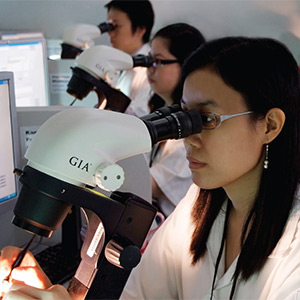
You have looked at countless lab-grown diamonds. Do you think one might someday be created that couldn’t be detected from natural?
I don’t think there will be an undetectable one that can be commercially grown. The temperature and pressure in the earth’s mantle is a good bit lower than it is in factories. In the earth, it can take 100 or 1,000 years to grow a diamond. In a factory or laboratory, you need to accelerate the growth time. That’s manifested in synthetic diamond in two ways: There’s the outer shape of the rough, and there’s differences in growth patterns and the defects, and some slight differences in chemistry.
You said “commercially grown.” Does that mean it is possible to create an undetectable diamond?
Conceivably, it’s possible, but not likely, and not commercially producible. The cost of production [for a lab-grown diamond] today is probably between $5 and $10 a carat, and that’s going to fall.
It would take so much longer [for growers] to fully disguise [the diamond’s] nature, and take so much more money, as there’s the high cost of energy. Likely, in doing that, you would reduce the quality of the diamond, too. Through multiple post-growth treatments, you could make [detection] more difficult. You are seeing more and more of that—people trying to disguise the origin with post-growth treatments.
Remember that white [lab] stones are all Type IIa, while only 2% of the average mined run are Type IIa. And 100% of the near-colorless IIa’s are synthetic. So that’s a great clue, right away.
We grow synthetic diamond, and have done so for some time, and we have a pretty good understanding of it, so we can make sure our instruments will be robust and not be defeated. And, of course, De Beers has been doing the same thing for years.
I saw the first colorless diamond come in here in 1990. They weren’t really being produced then. I think that was a test. It was a small, round stone. It was under 20 points. So it’s been a concern here for a long time.
Will there ever be a cheap, portable lab-grown detector?
No, because we need to look at those differences in growth patterns, in chemistry, using sensitive measurement with sophisticated techniques. [Detection devices] will likely become less expensive, but I don’t think we’ll see a pocket tester, like you see with cubic zirconia.
Do you see an increased number of lab-grown stones being submitted to GIA undisclosed?
More and more. Last year, 60 million carats of synthetic diamond were produced—40 million in China, and 20 million in India. With all these stones going into the market, it’s natural they will get co-mingled, intentionally or unintentionally. So the need for grading reports from an organization with high-quality screening will be more important going in the future.
Let’s look back a bit. What brought you to GIA?
I grew up in a retail family business [Moses Jewelers in Pennsylvania]. My father had me coming into the stores doing the things that teenagers do—cleaning counters, vacuuming, everything. That’s when I learned about GIA through the Gems + Gemologys that were lying around. I saw these short columns written by [then GIA vice president] Robert Crowningshield and [GIA chair] Richard Liddicoat.
In 1976, I went to GIA. I was like a sponge there. It was a six-month program, but I finished it in about four and a half, I was just so intense about it. Then I returned to my family business. And Mr. Liddicoat’s assistant contacted me and asked if I was interested in working at GIA. That was early 1977. I think I started at about $8,000 a year.
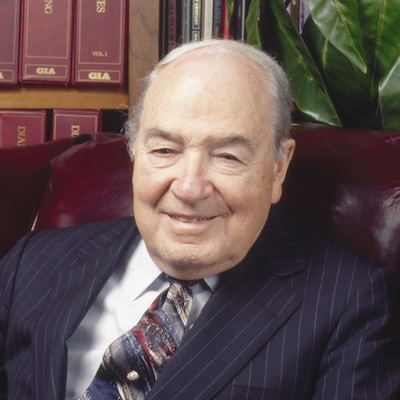
When I began, we had about seven people in the lab in Santa Monica. I would grade students’ classwork at night. I think we had about 90 people in the whole organization. So I would get called on from time to time to help out in class. I remember going to trade shows, selling books, microscopes. It was like a family business. You did what needed to be done.
I left in the early 1980s for about four or five years, rejoined my father’s business as he expanded. Then I returned to New York in 1986, to work with Bob Crowningshield. RTL [Richard T. Liddicoat] said, “Just learn everything you can from him.” He referred to Bob as “the greatest gemologist in the world.” And it didn’t take long for Bob to convince me that if he wasn’t, he was damn good. That began a new journey.
Bob was so amazing. He had a photographic and encyclopedic memory. If you were into gemology, RTL and Crowningshield, those were the names. They became my teachers and mentors and bosses, and somewhere along the line, they become friends. Both were very interesting men, Renaissance men, who had a bigger vision of the world.
Bob used to say, “We’re here, practicing gemology.” I took “practicing” literally, meaning, “One day, we’ll get good.” A couple of years ago, I realized I have been practicing gemology, but I’m still not as good as I would like.
But I remember I would visit those men and worry about messing up what they built. So every day the thought came to me to stay focused on what we do, which is providing trust and very deep gemological knowledge. And to try to make each report perfect. That can’t happen, but that was the goal.
Something I tried to maintain, watching Bob work for so many years, was to look at every gemstone as important. I can have a half-carat or a 30-point stone, and I still try to look at it with the same amount of care and importance as a 15-carat or 20-carat stone. Because to the recipient, it’s celebrating something important, with a lot of meaning behind it.
It must have been amazing to see GIA go from a small business to its current size.
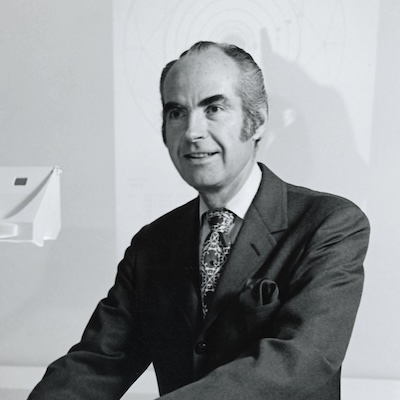
The mid-1980s was when it started to really grow. And of course, the big spurt was when we went international, around 2006. India was starting to grow significantly, and we didn’t have a presence there. I believed there were more stones that we could be grading. To me, that meant getting more stones out with trusted information out to consumers.
We opened around seven labs in five years, all over the world. That became my focus. The challenge always is, when you have several locations, consistency in grading. We did a lot to [stay consistent]. We have dummy accounts all over the world, and we submit stones blindly into our labs all the time. It’s a way to take account of a lab’s performance, as well as individuals in the lab. We have a metrology team—experts that were monitoring the devices that we use throughout the lab, looking at the performances of these devices. We have invested heavily in [consistency]. I wish I could tell you it’s perfect. It’s not, but it’s pretty good.
You have graded some famous diamonds. Did any stand out for you?
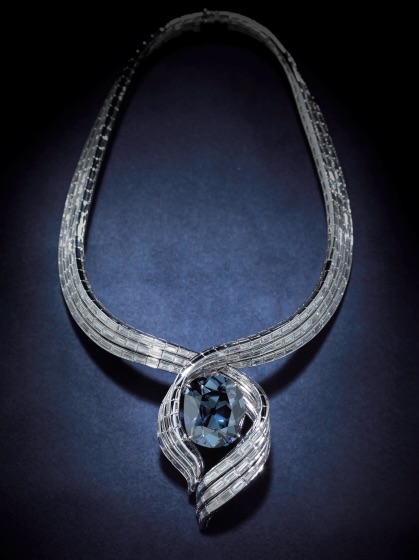
There’s been so many. I graded the Hope Diamond at Harry Winston’s store on Fifth Avenue. There was a security man standing over me. I was superfocused on grading it—I still remember where the inclusions are—but for a moment, I lost my concentration and started to think about who had touched this diamond, and the history, the legacy. The sheer beauty, the rarity, the lore, sometimes takes over. You have to block that out. You have to lock in and focus on what you’re doing.
After all this time, do you still get excited looking at a diamond?
Definitely. Today I’ll look at a diamond that will really excite me.
(Photos courtesy of GIA)
- Subscribe to the JCK News Daily
- Subscribe to the JCK Special Report
- Follow JCK on Instagram: @jckmagazine
- Follow JCK on X: @jckmagazine
- Follow JCK on Facebook: @jckmagazine