
The future of AI and how it will shape life and commerce in the years to come dominated the agenda at “Conversations in Half Moon Bay,” a retreat organized by Jewelers Mutual this past weekend at the Ritz-Carlton Half Moon Bay resort in Northern California.
The event—which welcomed jewelry trade executives, retailers, marketers, and media—featured a lineup of speakers who touted the benefits of AI platforms that can help automate repetitive tasks and create content in seconds.
“It’s never been easier to go from idea to working mobile app,” said author and consultant Dan Olsen in a session about “vibe coding,” a software development approach that allows nontechnical users to build apps by using AI assistants. “Don’t worry about the back end—the web server or database—at all. Only create the front end.”
During Olsen’s session, he invited audience members to suggest ideas for an app that he could build during his time on stage. The winning suggestion was for an app to help jewelry clients size rings. It took Olsen only a few seconds, using Google’s Stitch AI design tool, to create mock-ups for the new app, and a few minutes to command a host of AI-powered platforms, such as Lovable and Bolt, to build different versions of it.
Despite the futuristic bent of the content, the event was roundly praised for offering attendees an intimate, face-to-face experience in a luxe atmosphere, where the dress code was humorously described as “Northern California coastal chic.”
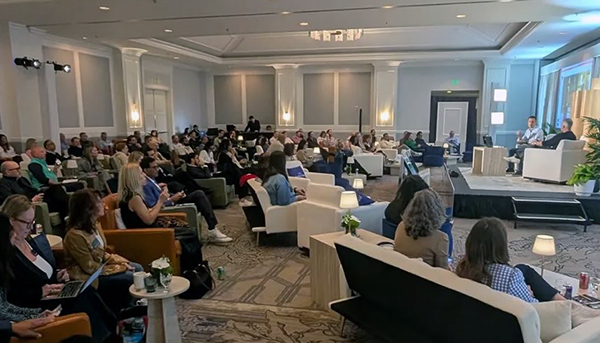
One of the more provocative takeaways from the event was that human-centric creativity and emotions are more important than ever.
“I feel like we’re hitting a digital plateau, where younger generations will actually start pulling away,” said keynote speaker Mike Cessario, founder and CEO of the beverage brand Liquid Death. “Now everything is so digitally maxed, you might soon hear people say, ‘You can’t trust videos anymore. The only thing you can trust is face-to-face.’ Don’t discount that the new trend could be going back to the 1800s and people making stuff in analog.”
Below, we highlight the most thought-provoking and insightful comments overheard at the conference:
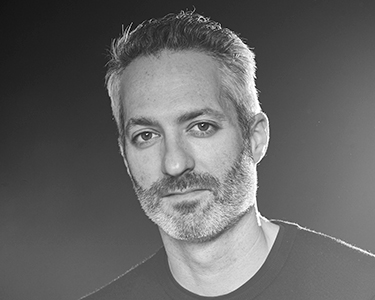
Moderator Jeff Weiner, director of new business at AI market research firm Evidenza: “AI: Past, Present & Future”
“The popular narrative is that AI will displace all of us from working. But this is the most human industry ever—the jewelry industry is not going anywhere.”
“Think of Large language models (LLMs) like ChatGPT, Claude, Gemini, and Copilot as ‘the brain.’ You talk to it, it thinks with you. ‘Agents’ like Claude Code, Manus, and OpenClaw are like the brain with hands. They don’t just answer, they act.”
“AI cannot replace presence, trust, taste, story, emotion, and craft.”
“Think about the task you hate the most—the follow-up email, the product description, the response to a negative review. Automate it. I firmly believe AI is not going to replace you, it’s going to make you more formidable.”

Jeff Mack, VP of marketing at enterprise AI solution firm Reejig: “What We Can Learn From Enterprise AI Adoption”
“Most of us would designate IT to help drive AI across the organization. But the most innovative companies in the world have approached it through the lens of HR. AI is not here to replace people; it’s here to replace work. Who in the organization has the best visibility into the work of an organization? HR.”
“In the early days of AI, it was like a search engine because people were asking it questions. It went from answering to creating—documents, images, generative stuff. Now it’s going to doing—the most exciting part, the agentic side of things.”
“If you want to use your company’s data, it’s probably not a good idea to use the free version of ChatGPT. Professional versions will not train their LLMs on your data.”
“Here’s an exercise: Write down your work and break it into tasks. Have AI do the things you hate so you can do the things you love.”
“I’m a huge believer that the human eye, intuition, and creativity are the best tools we have—full stop.”

Dan Olsen, product management trainer, author, speaker, and consultant at Olsen Solutions: “Vibe Coding: The New Superpower”
“In a Feb. 2, 2025 post on X, OpenAI cofounder Andrej Karpathy wrote: ‘There’s a new kind of coding I call vibe coding, where you fully give into the vibes, embrace exponentials, and forget that the code even exists.’”
“People think, I can’t do it, I don’t code. But everyone in this room can vibe code.”
“It’s about making projects as turnkey as possible. Type what you want, iterate it. This is unlocking a whole new class of ‘solopreneurs.’”
“Where do we go for vibe coding? “The least technical tools are Magic Patterns, Lovable, Replit, Bolt and V0. Find the full spectrum here.”
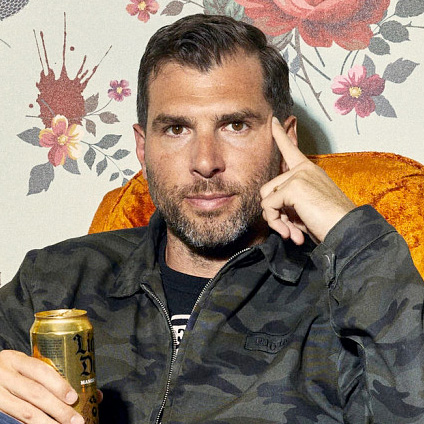
Keynote speaker Mike Cessario, founder and CEO of Liquid Death
“I came from the world of marketing and advertising. I noticed that the coolest, most memorable marketing was all for stuff that’s terrible for you: Bud Light, Cheetos, Snickers. Healthy products for a long time were marketed quietly, in a sensible way. What I tried to do is take the playbook of unhealthy brands like Red Bull and Monster—they blend entertaining and marketing.”
“How Liquid Death came to be: In 2015, I had the loose idea of putting noncarbonated water in tall cans that look like beer and I wanted to call it Liquid Death. I had to prove the idea before anyone actually gave me money. I put up a Facebook page, came up with idea for a commercial. We shot it for $1,500, and $1,000 of that went to my wife’s friend, the actress. We made a funny commercial for a product that didn’t exist and put it on Facebook. We made it seem like a real product. Over about five months, we put about $5,000 of paid media behind it and got 5 million views and got more followers than Aquafina.”
“Almost every single product in the world is a commodity. You can’t own a package, a flavor, an ingredient. You can copy a product. The one thing that’s really hard to copy is brand. For us it was always about, ‘How do we win with brand? And how do we de-risk everything else?’”
“We want to entertain people first and our genre is comedy. The big beverage brands, like Coke and Pepsi, aren’t built for comedy (“What if we get sued?”). In a way, comedy becomes our moat from the big guys because we’re not afraid of it. When we put out marketing, we don’t want it to feel like marketing.”
“Unless you have endless money and budgets, trying to buy every eyeball and awareness growth will be increasingly more expensive. You have to get people to actually pay attention and spread your message for free. But here’s the thing: Marketing is easy; entertainment is hard. You can’t make it if you use normal marketing channels. Making entertainment requires a different model.”
“For Liquid Death, all our creative is done in-house. We don’t have traditional copywriters and agency people. We have weirdos who have proven they can entertain people. But we have to toe that line—make it legitimately funny but not piss off the Walmart buyers who are the main source of our revenue.”
“Keeping things cheap is essential because when it comes to entertainment, it’s almost impossible to predict what will work and what won’t work. Look at Napoleon Dynamite, which cost $400,000 to produce and made like $45 million.”
“‘Never been done before’ is a good filter. If it’s never been done, it’s inherently newsworthy. News wants to write about things that have never been done. Chatter is good. Just getting people talking about your brand, good or bad, with some outlier exceptions, is inherently good.”
“Spending big and being ignored is reckless. There’s a falsity that being edgy or provocative is risky. I argue the opposite. If you’re a small company, being safe is actually risky because you’re going to run out of money before you get brand awareness.”
“In a social video, you need something provocative to happen in the first three seconds or else people will scroll past you. In social you don’t have time for a full arc. You’ve got to pull people in really quickly when you’re marketing on digital because they’re not going to stick around.”
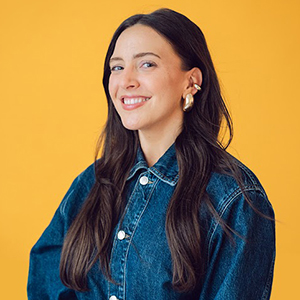
Hallie Spradlin, director of visionary at Future Snoops: “From Culture to Consumer”
“After years of hyperconnectivity and algorithm-driven consumption, a new awareness is taking hold. Constant access is no longer synonymous with engagement. Gen Z and Gen Alpha are experimenting with brick phones. The mindset extends into the physical world. A desire to disconnect is tied to the idea of reconnecting. Time outdoors is seen as essential. We’re seeing the rise of slow tech movements. Real time spent in nature gets priority.”
“As desire for authenticity intensifies, cultural exchange becomes more reciprocal, rooted in shared moments. At the same time, new travel patterns are shaping culture. International travel is growing. Africa saw the biggest gains last year (+8%) vs. the U.S. (-6%).”
“People are looking for places to reconnect, to rebuild concentration and restore a sense of presence in our lives. At the same time, media consumption is becoming more intentional. We’re seeking out trusted voices, familiarity, and communities that offer genuine resonance.”
“We’re seeing a cultural return to the value of making. To what feels tangible and undeniably human. At the same time, conversations about overconsumption are prompting conversations about how and why things are made, a deeper sense of purpose, a renewed respect for people. Craft is being seen as an expression of agency and care. Making becomes a way to slow down and engage more deeply, to restore attention to things that may feel disposable.”
“As young generations are itching to break free from algorithm-driven marketing, they’re seeing value in pieces beyond hype. They’re willing to go off the grid, to estate sales, to forge relationships with sellers. They’re motivated to buy secondhand treasures, items that hold unique charm over those coveted grails.”
Top: The Ritz-Carlton Half Moon Bay resort in Northern California (photo: Jim Sullivan at 26Rogues)
- Subscribe to the JCK News Daily
- Subscribe to the JCK Special Report
- Follow JCK on Instagram: @jckmagazine
- Follow JCK on X: @jckmagazine
- Follow JCK on Facebook: @jckmagazine