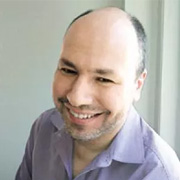
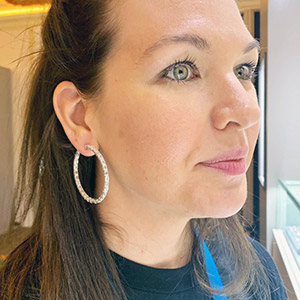
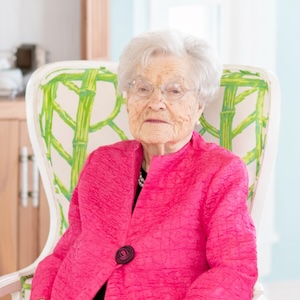
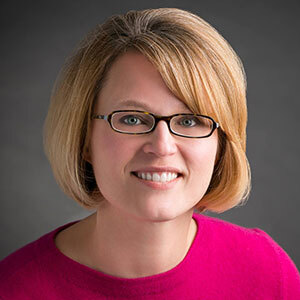
In this week’s episode, JCK editor-in-chief Victoria Gomelsky and news director Rob Bates share interviews they did at Converge—a new event combining the American Gem Society (AGS) Conclave and GIA Symposium—which was held Sept. 7 through 10 at the Omni La Costa Resort in Carlsbad, Calif. They checked in with Elyssa Jenkins-Pérez, Katherine Bodoh, Elizabeth Gibson, Georgie Gleim, Sara Murphy, Elizabeth West, Pinny Gniwisch, and Terry Chandler.
In the interviews, these experts give their points of view on a gamut of topics: trends they’re stocking up on for the holidays; how the industry is handling lab-grown diamonds; the benefits and drawbacks of AI; and key takeaways from Converge’s packed agenda of professional development and education programming. Follow along with our Q&As to be a fly on the wall at the event.
Listen Now
Sponsor: Jewelers Mutual (assetprotection@jminsure.com)
Show Notes
00:40 Elyssa Jenkins-Pérez, head of North American development, Responsible Jewellery Council, and president and cofounder, Black in Jewelry Coalition
04:50 Katherine Bodoh, CEO, American Gem Society
08:55 Elizabeth Gibson, founder and CEO, Eliza Page, Austin, Texas
13:20 Georgie Gleim, CEO, Gleim the Jeweler, Palo Alto, Calif.
16:00 Sara Murphy, executive director, Jewelers for Children
17:55 Elizabeth West, senior technical educator, De Beers
21:30 Pinny Gniwisch, president, Delmar Jewelers, Montreal
24:45 Terry Chandler, president and CEO, Diamond Council of America
Episode Credits
Hosts: Rob Bates and Victoria Gomelsky
Producer and engineer: Natalie Chomet
Editor: Riley McCaskill
Plugs: @jckmagazine; assetprotection@jminsure.com
Show Recap
Elyssa Jenkins-Pérez, head of North American development, Responsible Jewellery Council (RJC), and president and cofounder, Black in Jewelry Coalition (BIJC)
Rob: Did you do a presentation [at Converge]?
Elyssa: My presentation is…about industry associations and how getting involved can help your business. I love all of the different industry associations that are out there. Of course it’s great to see RJC members here and our BIJC members. We worked with AGS and GIA this year again to have a grant recipient come from BIJC. We have two here, so that’s really exciting.
Rob: Anything really strike you during these couple days?
Elyssa: The networking has always been amazing. It’s good to see new faces but also reconnect with people I already know. But also, I went to a panel on determining a diamond’s country of origin from the scientific side of it, and that was really interesting to me because I’m also kind of a nerd. I have a master’s in biomedical science, so I love kind of getting into the science of it and seeing the data. So that was fun for me.
Victoria: Do a lot of people know what the RJC’s mission is? Do you find that you have to explain what your mandate is, and what do you hope people will take away about your work at RJC?
Elyssa: There’s a lot of people that know a lot about RJC. There’s been a lot of people that have been excited that they’re members and they’re excited to see me here now that we have a head of North American development again. They’re proud to be members, and it makes me really happy. And then there’s some people who know a little about RJC, and I’ll talk to them. But I don’t want to overwhelm them. So it’s like, I’ll give them a taste and they’ll be like, ‘Okay if you want to talk about it more…’ But yeah, RJC is doing a lot of really amazing things right now.
Rob: RJC is looking for a new executive director. Can you tell us, Who’s that going to be?
Elyssa: Rob with the hard-hitting questions! I don’t know, but right now our interim executive director, John Hall, is amazing. I love working with the RJC team. We’re very diverse in education and thought, in regions from different countries throughout the world. It’s an incredible team to be a part of. I definitely encourage everybody to get involved with RJC.
Victoria: So, Elyssa, you’re very involved in Black in Jewelry. You’re the current president, and you founded it. How long has it been around?
Elyssa: We’re actually celebrating our five-year anniversary during Jewelry Week—it’s going to be the official networking event of Jewelry Week…. But Black in Jewelry Coalition has been doing a lot in five short years, with our strength of our amazing cofounders and current board of directors.
We’re going to have presence in Chicago, at the Chicago show, and in Miami. A lot of cool things in the works, so definitely stay tuned to BIJC. Follow us at Black in Jewelry Coalition on Instagram.
Rob: I think Black in Jewelry is a great idea. I always thought it was a great idea. And in five years, I think it’s done a lot, made a lot of headway. So you guys should be proud. Congratulations.
Elyssa: There’s a lot of really diverse, amazing talent out there that’s, I think, been untapped and haven’t had a chance to reach some of these associations and didn’t know that these associations are out there. One of our attendees yesterday was saying how impactful it’s already been in one day. So it’s amazing. And we’re just trying to grow at the rate that we can because we’re all volunteers.
Katherine Bodoh, CEO, American Gem Society
Rob: We’re here at Converge, which is the melding of American Gem Society and the Gemological Institute of America. This is the first time this has ever been done. So can you tell us a little bit about why you decided to do this and what you think it adds to the whole Conclave experience and the GIA Symposium experience?
Katherine: I think that in our industry we have a ton of events on the calendar every year. And so we were mindful of that and made the decision. When we talk about collaboration, it’s a word that gets thrown around a lot, but what does it really look like when two organizations bring their best, combine it, and then create an elevated experience of learning and engaging and networking, and do so across the supply chain to have unique conversations that may never occur without an event totally focused on education and not just selling? And so we’re trying it.
We kicked off with an amazing speaker, Dr. Beau Lotto. He was fantastic. I think he set a vibe of energy and conversation and openness and willingness to have dialogue that’s much needed in this time of change, and to do so from a mindset of thriving and being open to new ideas and embracing change. And I think that’s what our industry needs right now. And so I think that is what Converge is aiming to deliver.
Rob: During the Conclave experience, it’s always a big rush and it’s always a lot of stress. When I was involved in Conclave, I was very impressed with all the work that goes into something like that. It’s very smooth, but you see it behind the scenes—there’s a lot going on. How’s this different for you?
Katherine: It’s fun to get to work with another team—the GIA team—in addition to AGS and all of our engaged stakeholders that help us support. Plus, having the research element and Harvard and things that AGS normally doesn’t get to have at Conclave—I think that’s been a terrific addition, a new dynamic.
AGS is a member-only event, so we have that strong community feel, but it’s also great to be introducing people into that feeling and meeting new people and expanding our circle. And I think Converge and AGS, we’re looking for the most passionate, excited, professional people in our industry. Converge is a great opportunity for people.
Rob: Next year we’re doing standard Conclave, correct?
Katherine: Yes, we’re back to Conclave. And then we’re booked through 2029. It’s all on the website.
Rob: So you talk to a lot of your members. How are they doing?
Katherine: Our retailers are still having really good years. I think everyone is experiencing some volatility, obviously. Tariffs and all of the headlines impact those, but I think AGS members are still really positive about jewelry and embracing the storytelling. A lot of what today’s industry panel was talking about was highlighting the special natural diamond story. Of course we’re all experiencing the turmoil of what’s happening today. But I think AGS members as a whole, because of where they stand in their communities and their dedication to professionalism, are still thriving.
Rob: Anything else you want people to know?
Katherine: Dr. Lotto in his keynote yesterday talked about how we approach every interaction, every conversation, and if that has a positive frame of mind, the outcomes are going to be better. And I think as an industry we could use that message right now, as we go into this holiday season, and approaching situations with How can we make this better? How can we all do our part?
Elizabeth Gibson, founder and CEO, Eliza Page
Victoria: We’ve covered this beautiful store before many times in the pages of JCK. What drew you here to attend Converge? And have you heard anything that’s made an impression on you or that you think you’re going to try to implement from sessions you’ve been to?
Elizabeth: Yes, for sure. I am so honored to be part of American Gem Society. I’m a relatively new member, and this is my second conference.
The last one was in Austin, where I live, so I was going home every night. And now I’ve been able to come here in this beautiful venue and just connect with friends. It’s been wonderful, and the education has been incredible. And truly, the Harvard education is not the main reason I signed up, but when I learned that was part of the conference, I signed up immediately. It was so inspiring and engaging and reminds you of what really propels you to want to learn more. It’s so engaging that the professors were really dynamic. And I can see why people go to Harvard and get excited about that.
Victoria: You’re wearing a wonderful suite of jewelry so I can’t help but ask you about the trends you’re seeing in-store and what you’re banking on for the holiday. It’s mid-September, so you have to make sure that’s set up soon. Are you buying, or you have everything you need at this point?
Elizabeth: We are finalizing our buying literally right now. Something that we’ve really enjoyed as a jewelry store this last year is more color, more romantic designs, and things with a lot of personality. Gold is a luxury no matter where you are, but the incorporation of gemstones, enamel, and color has been able to bring exciting designs to clients at a variety of price points.
And then definitely more white gold, silver. We started selling a little bit of that. We’re pretty much a 100% yellow gold store. But again, we’re in a downtown touristy area. And it’s come to my understanding that one of our local collections, designed as sterling silver, is selling out. So that’s exciting.
We just did a big event at my store, which featured like 20 local designers. That’s always been a part of my brand, but I feel like staying really true to who you are and differentiating yourself is really important now. As for trends, the layering is still in, and I think bigger and bolder too. Bold is back, and that’s been fun.
Victoria: At the keynote, the founder of Clear Cut [Olivia Landau] was talking about this demand for more sort of stones that would have been disdained a few years ago: R, M, and Q colors. Have you noticed that too? Tell us a little bit about what you’re seeing in terms of customers gravitating to stones that maybe would have been considered off-color, not desirable, and now have a sense of realness to them.
Elizabeth: I completely have seen that in our business. There is that rare personality, the fire of a natural diamond, and it does have such a unique profile, personality, color, sparkle, all of it, that a lab-grown does not have.
We have seen clients who still have a budget they want to stick to, and we are selling them completely different grades of stones. That’s exciting for all of us because we can still offer them something that is forever heirloom-worthy at their price point.
Georgie Gleim, CEO, Gleim the Jeweler
Rob: You’ve been to a bunch of sessions, I assume. Anything strike you of what you’ve heard?
Georgie: Each session, I write down a couple little bits of information, a couple of phrases that I like. In a session yesterday afternoon, one member of the audience had a really good way of talking about how a piece of jewelry combines the efforts of people around the world to create this ring. The miners in Africa, the gold that came from someplace else, the artisans from someplace else, all to create this ring for this customer. I thought that was a really nice way of phrasing it.
Rob: You have a lot of tech industry customers. Are they interested in lab-grown diamonds? Do they talk to you a lot about it?
Georgie: Depends on the customer. Some engineers think it’s a really fascinating process to be able to create this product. Which it is. We can create something that had only been made in nature up to this point. So some of them really get intrigued by that. And for some of them, it’s the price. Some of them still want the idea, they like the idea of a natural diamond that’s, you know, a few billion years old, and they like that much more than just the lab-grown product.
Rob: What are you hearing from your fellow retailers as far as business? Are they all having as good a time as you?
Georgie: What I’ve heard mostly is that people are having an okay year, nothing outstanding. It depends on the retailer, of course. It depends on what your product mix is. I know most dealers who carry expensive watches have been having a really good year. We don’t have those. We’ve been having a good year with jewelry, but I think we’re also a little bit cautious not knowing what’s coming up in the next few months.
Rob: Is there anything else you want to tell people?
Georgie: If you’re not here at Converge or if you haven’t been to Conclaves before, make sure you put them on your calendar, because it is an unmatched mix of fellow retailers, suppliers, and industry members. It’s inspiring and fun and you create friends.
Sara Murphy, executive director, Jewelers for Children
Rob: What kind of things are happening here at your booth?
Sara: We have a beautiful silent auction with over 38 items, and we’re selling some jewelry donated by Maya Caroleena and Gabriel, and our friends at Richline—just doing whatever we can to make some money for the kids.
Rob: How much money do you usually make at these events?
Sara: At Conclave, we usually make about $20,000, sometimes more, sometimes less. But if you think about it, that’s 100 wishes in India, which is a super big deal.
Rob: So have the wishes gone to India?
Sara: Yes, we do about 250 wishes a year in India, and we’re doing about 25 here in the U.S.
Rob: This is for Make-a-Wish. How do the wishes in India differ from the wishes here?
Sara: India’s really different than America. In America, wishes are usually for experiences, but in India, the kids are wishing for things. So we call it a wish to have. So they want a bike or a computer or something that we would think of as a token here, a piece of jewelry.
Rob: And that’s pretty easy to get, I assume.
Sara: It is pretty easy, but Make-a-Wish India is chronically underfunded, so our funding really means a lot to them.
Rob: What are the other charities that Jewelers for Children [contributes to]?
Sara: We actually brought on four new charities this year, so we’re up to nine. But we also work with St. Jude, Elizabeth Glaser Pediatric AIDS Foundation, No Kid Hungry, and the Ticket to Dream Foundation, just to name a few.
Rob: As you speak to people here, what kind of mood have you been hearing?
Sara: I think people are having a great time. It’s a beautiful place to be. You can’t complain about the location, and everyone here is really so kind.
Elizabeth West, senior technical educator, De Beers
Rob: Elizabeth just gave a very interesting presentation called “the universe and the diamond,” which basically tracked everything from the big bang and showed how diamonds are formed. At the beginning of the presentation, you said you wanted to show why diamonds are so fascinating to people and why diamonds are so fascinating to you.
Elizabeth: That’s exactly right. This whole presentation came about through reflecting on my career in the industry and my fascination with the subject, with diamond.
It was trying to pinpoint what leads a lot of people to appreciate the gemstone. And that’s when I started to think about that notion of connection. Diamonds seemed to get under the skin. They seemed to connect you to something greater than yourself. And the more I spent time considering the research that sits behind diamonds and what you can draw from that, the more I realize there is actually quite a robust connection.
Rob: You’ve talked about how diamonds are formed and what they mean and what they mean to you in particular. Do you think that if they perhaps had a better understanding of that, it might give them a better appreciation of what’s on their finger, which is really this incredible object?
Elizabeth: Absolutely. Most people, when they see a diamond, they don’t see beyond the sparkle, really. They don’t really engage with the story, because all they have is something that sits in the imagination, something that was created through faceting to make it look pretty and sparkly.
But if you extend that out and actually put it into context and link it back to its natural origin, not just within the earth but within the grand scheme of things, and you realize just how immense the story is, that’s exciting. That gives you that sense of the miraculous, which brings a diamond to life. At least it does for me.
I can hold a diamond in my hand, and as I said at the end of the session, it’s like holding the entire journey of existence within it, from that point of synthesis of the carbon in the heart of stars through its evolution within the earth, its survival through that, its journey to the surface. And also all the way through to potentially the end of our solar system.
Pinny Gniwisch, president, Delmar Jewelers
Victoria: Pinny has just given a well-attended, vibrant presentation on harnessing the powers of AI for design and so much more—for marketing, creating all kinds of content, commercials, marketing materials, impressing customers. Tell us, how did you get so deeply interested and involved, and how do you know all this? What was your entrée into AI?
Pinny: I think it all started when digital started. I was one of the first e-commerce jewelry companies on the web in 1999: ice.com. So we have this curiosity from the beginning.
And I think it comes from the fact that I don’t have a traditional education. I didn’t go to traditional college, I went to rabbinical school. So I always have this chip on my shoulder that I’m always looking to outdo in the technologies that nobody knows about, where we’re all starting at the same starting point.
E-commerce was that, and now AI is the same: Nobody knows. And because nobody knows, you have an opportunity to really get deep if you’re really interested in knowing. And I think that’s the reason.
Victoria: You talked about a number of apps, platforms. What are the key ones that other retailers should keep in mind or should investigate?
Pinny: You have this new tool from Google called Nano Banana. It’s an interesting image-generating tool. We’ve worked with it now, in depth, we’ve been testing it, and it’s really, really good. Midjourney is great for images. Evo 3 is great for video—it’s a Google tool—and then you have the regular ChatGPT and Copilot.
Victoria: You talked a lot about efficiency and time-saving. What are the other benefits? Also, I’d like you to talk about perhaps the things that concern you, the things that you feel are challenges, or the things you think AI can’t do or maybe shouldn’t do.
Pinny: The efficiencies are there. When it comes to marketing, when it comes to product design, all that stuff, we’re moving in warp speed, right? The question is getting your team to buy in. So, if you’re dealing with a traditional team, slower adoption, all that stuff, and there’s a lot of friction. So you have to work that out.
Then you can get your team to understand that this is a tool that can help you and make your life easier and give you more time. For example, we have someone in our team that is a genius at pivot tables. But now with Copilot, we just ask for what we want. And they [say], “I don’t have to sit there and create the different algorithms?” Using the tools and proving to the team that the tools are going to make your life better.
What am I scared about? We lose our creativity. If we rely on these tools, what happens is we become lazy. So I’m always pushing my team: “Yes, you can use this for this, you can use this for that, but just remember that I want you guys to come to work. I want you to bring your A game, and I want you to bring your creativity, and I understand this is helping you out, but I hired you because of you.”
Terry Chandler, president and CEO, Diamond Council of America
Rob: We’re here with the legendary Terry Chandler, president and CEO of the Diamond Council of America until the end of the year. How long were you president and CEO?
Terry: Twenty-five years. And actually there’s 12 years before that when I had the retail stores. And remember, I was on the board for 12 years before I took over, but I’ve been running the organization for 25 years.
Rob: What are your future plans?
Terry: I’ve made no plans. I’m going to rest for a few months and then figure out what to do next.
Rob: Annie Doresca [Jewelers of America’s chief financial and operating officer] is taking over.
Terry: Very excited about that. She’s so talented and been so engaged. You know, we affiliated DCA with Jewelers of America about nine or 10 years ago, and she’s been very involved with DCA since we did the affiliation. And she has served on school boards for her kids and very involved in education in other ways. So she’s ideal, and she’s very excited and I’m thrilled.
Rob: How do you see what’s happening with lab-grown diamonds? Do you think the industry’s handling it well? Do you think it’s handling it badly? How could the industry handle it better?
Terry: Well, that’s the topic of everything. Here at Converge, every session eventually gets around to the lab-grown issue. We had a session this morning to kick off the day and one of the speakers made a very good point, which I agree with totally: You cannot denigrate another product to defend your product. It’s a luxury product, the high-end natural diamond. Present it and let it stand on its own merits, and stop this bashing back and forth.
There’s room in the marketplace for both things. When Carroll Chatham started growing color, everybody’s hair got on fire. “Oh, it’s going to kill the color business, it’s going to be awful, it’s terrible.” Chatham’s doing very well all these years later, and natural color—ruby, colored gemstones—are higher per carat than diamond. It will only hurt the business if they keep fighting about it.
Rob: Any thoughts on this event, or in general?
Terry: The Conclave is one of my favorite events in the industry. I love it. I see all my friends, people I’ve known for decades. I think the jewelry industry has a very strong future. And it’s going to be a different future. A lot of technology advancements are going to happen, but it’s still got a bright future because a piece of fine jewelry to commemorate a special moment can’t be replaced.
Any views expressed in this podcast do not reflect the opinion of JCK, its management, or its advertisers.
- Subscribe to the JCK News Daily
- Subscribe to the JCK Special Report
- Follow JCK on Instagram: @jckmagazine
- Follow JCK on X: @jckmagazine
- Follow JCK on Facebook: @jckmagazine