Swiss Watch Exports Jump 12% in September as U.S. Shipments Surge
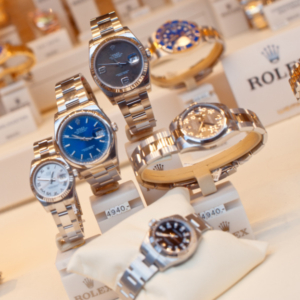
Swiss watch exports accelerated in September, rising 11.7% year over year to 2.23 billion Swiss francs ($2.8 billion), according to the Federation of the Swiss Watch Industry (FH). It marked the sector’s fourth consecutive month of export growth.
The United States posted an especially sharp increase. Exports to the U.S., which was Switzerland’s largest watch export market in September, jumped 85.7% to 292.9 million francs ($354.1 million) and represented 13.2% of the month’s worldwide total. The FH said the comparison benefited from relatively weak results in the same month a year ago.
Overall wristwatch export value increased 11.6% to 2.13 billion francs ($2.58 billion), while the number of watches exported climbed 19.9% to nearly 1.4 million units. The strongest gains by value came from bimetallic watches, up 29.3%, and steel watches, which increased 13%.
Growth was spread across price points. Watches with export prices above 3,000 francs increased 9.9% in value, while watches priced below 500 francs recorded a combined 39.5% increase, according to the federation.
Results varied considerably among other major markets. Exports to France more than doubled, rising 128.2%, though the FH cautioned that the figure may partly reflect the reallocation of trade flows among European markets. Japan gained 12.3% and Hong Kong rose 3%, while China declined 14.2%, the United Kingdom fell 5.2%, and the United Arab Emirates dropped 9%.
For the first nine months of 2026, Swiss watch exports totaled 19.5 billion francs ($23.6 billion), a 2.7% increase from the comparable period last year. The FH cautions that its figures measure watches exported from Switzerland rather than retail sales to consumers, so the data should not be interpreted as a direct measure of sell-through in individual markets.
De Beers Diamond Production Falls 11% in Q3
De Beers Group’s rough diamond production fell 11% year over year to 6.8 million cts. in the third quarter of 2026, as planned maintenance in Botswana and a production slowdown in South Africa reduced output.
Production in Botswana, by far the largest contributor to De Beers’ quarterly output, declined 20% to 4.8 million cts., primarily because of planned maintenance at Orapa. The company said Oct. 20 that it expects production there to fall further in the fourth quarter due to planned maintenance at Jwaneng.
In South Africa, production dropped 37% to 418,000 cts. as the Venetia mine slowed operations ahead of a planned two-year production pause. By contrast, Canadian production more than doubled to 1.1 million cts., reflecting planned processing of higher-grade ore at Gahcho Kué. Namibian production rose 8% to 495,000 cts.
De Beers said rough diamond trading conditions showed signs of stabilizing during the quarter, citing a more balanced supply-demand environment and improved consumer demand in the United States and India. However, the company said lab-grown diamonds continued to weigh on demand for lower-value natural diamonds, particularly in more price-sensitive categories.
The miner sold 9.8 million cts. during the quarter, up from 5.7 million cts. a year earlier. Consolidated rough diamond sales revenue edged up to $731 million from $700 million, even as the average realized price fell. For the first nine months of 2026, De Beers’ consolidated average realized price was $97 per ct., down 37%, partly reflecting an 18% decline in its average rough price index.
De Beers also raised its 2026 production guidance to between 25 million and 28 million cts., from the previous estimate of 21 million to 26 million, after taking full ownership of Gahcho Kué in Canada on Oct. 16. The change does not increase global diamond supply, but De Beers will begin reporting 100% of the mine’s production, rather than its previous 51% share.
Namibia Diamond Miners Seek Government Aid as Prices Slump
Namibia’s two leading diamond mining companies are seeking financial assistance from the government as weak diamond prices pressure revenues, IDEX Online reported.
Namdeb, which operates on land, and offshore miner Debmarine Namibia are both owned by Namdeb Holdings, a 50-50 joint venture between the Namibian government and De Beers.
Namdeb Holdings approached the government in September seeking recapitalization, Namibian finance minister Ericah Shafudah said. The amount requested has not yet been finalized, and the company has not said how the additional capital would be used, IDEX reported.
The request was a sharp turn for an industry that once delivered as much as 5 billion Namibian dollars ($305.3 million) annually to government coffers. Namdeb CEO Riaan Burger said the company’s revenue is running 60% below projections made before diamond prices began declining.
According to IDEX, Namibia’s diamond production fell 4% to 2.2 million carats in 2024, while De Beers’ tax and royalty payments to the government declined 11% to $545 million. Offshore production is particularly important: Debmarine accounts for roughly three-quarters of Namibia’s diamond output, but reduced its production by 13% in 2024 amid weaker demand and competition from lower-priced Angolan rough.
The Namibian government has previously sought to support the industry by cutting Namdeb’s royalty rate from 10% to 5% in 2021. In 2025, the country’s central bank governor called for that reduction to remain in place through 2042, covering the expected remaining life of Namdeb’s mines, according to IDEX.
The JCK News Desk uses AI to help research and produce the first draft of articles. This story was then reviewed by staff writer David Blomquist.
(Photo: Getty Images)
- Subscribe to the JCK News Daily
- Subscribe to the JCK Special Report
- Follow JCK on Instagram: @jckmagazine
- Follow JCK on X: @jckmagazine
- Follow JCK on Facebook: @jckmagazine