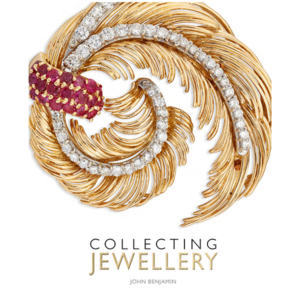
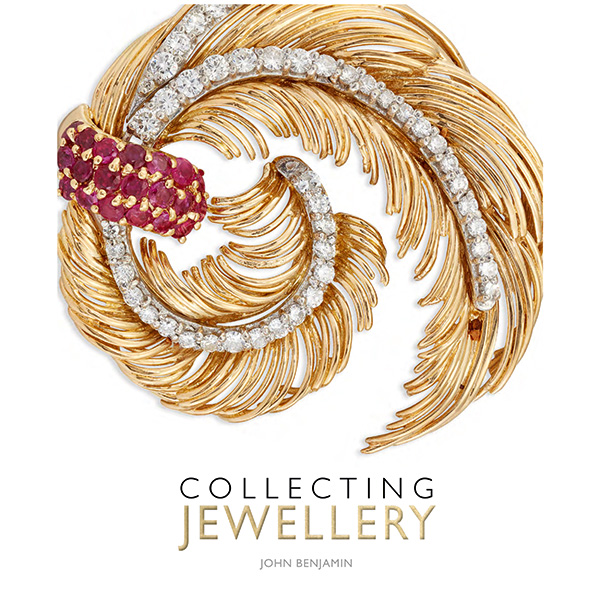
A respected British jewelry authority has substantially revised and expanded his best-selling book, adding 400 images drawn from recent U.K. auction results to produce an ideal reference book for the jewelry industry.
John Benjamin’s Collecting Jewellery (ACC Art Books, $35) comes at an interesting time for jewelers and jewelry enthusiasts who are watching antique and vintage jewelry go up in value and become more precious because celebrities—think Taylor Swift’s engagement ring—and Gen Z are showing increased interest in sustainability.
The original 2003 book, Starting to Collect Antique Jewellery, was specifically written to provide readers—whether enthusiastic beginners, experienced collectors, or practicing gemologists—with a highly accessible compendium embracing the full spectrum of antique and later jewelry ranging from early times to art deco, says the longtime jewelry expert and former Antiques Roadshow personality.
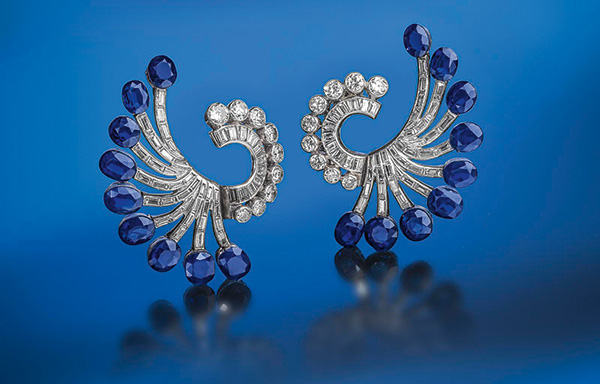
This new, extended book brings the evolution of jewelry design right up to the millennium. What Benjamin says he found in working on Collecting Jewellery was that much of the jewelry made before 1900 is misunderstood today.
“I was fortunate enough to be brought up on the material ‘at the sharp end’ having been taught by renowned experts such as Malcolm Lewis, the great specialist in Georgian paste, and Miss Florence Cook, my first boss at Cameo Corner, who, believe it or not, had worked in the shop as far back as the 1930s,” he says.
“When I first started as a 17 year old in 1972, the shop’s two front showcases were crammed with 16th- and 17th-century pendants and 18th-century parures. A safe at the rear of the shop contained ancient gold artifacts. Needless to say, it’s all gone now,” Benjamin says. “There has been a great deal written about 20th-century jewelry, but far fewer books examine specialist subjects such as cut steel, enamel, cameos, intaglios, and mosaics. The aim of this book is to redress the balance.”
What people should collect or invest in is entirely up to the individual, Benjamin says. He remains a traditionalist; he’d take a natural diamond over a lab-grown stone any day. That said, he believes people should buy what they love.
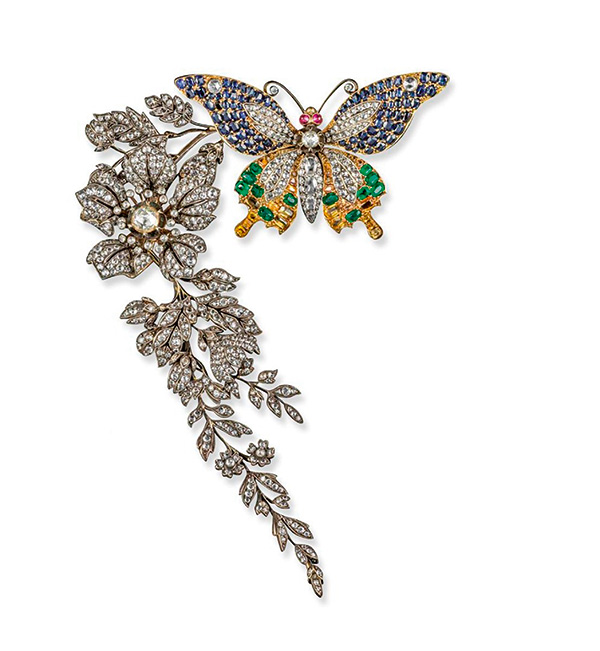
And, if you dare to resell, make it something people are willing to buy, like branded jewelry—which holds its resale value for its distinctiveness.
“There’s no doubt about it: a Cartier early-20th-century platinum and diamond bow brooch or a Tiffany enameled gold orchid brooch will be breathtaking in their design, originality, technical virtuosity, and sheer beauty,” Benjamin says. “Nobody would deny that a Cartier Tutti Frutti bracelet or a Van Cleef mystery-set sapphire brooch are both at the absolute pinnacle of the designer-craftsman’s skill.
“They will also, however, be incredibly expensive,” he adds. “My proposition has always been that people who are passionate about their jewelry should venture into the vast hinterland of beautiful antique jewels which are out there waiting to be discovered.”
His suggestions? A Regency pink topaz rivière, 19th century Holbeinesque pendant, or stunning Castellani gold archaeological bracelet—all of which can make just as significant a visual impact as an art deco diamond double clip or 1950s gold collar and possess the distinct advantage that nobody else will be wearing another piece quite like it.
“In a world where we all seem to be striving for a sense of our own selves, antique jewelry provides exactly that—style, individuality, and effortless good taste–and frequently at a considerably more affordable price,” Benjamin says.
Top: Former Antiques Roadshow personality and jewelry expert John Benjamin recently released Collecting Jewellery. (photo courtesy of ACC Art Books)
- Subscribe to the JCK News Daily
- Subscribe to the JCK Special Report
- Follow JCK on Instagram: @jckmagazine
- Follow JCK on X: @jckmagazine
- Follow JCK on Facebook: @jckmagazine