Memento mori is familiar territory for jewelry: skulls, serpents, hourglasses, wilting flowers. Jewelers have been borrowing the visual language of mortality for centuries.
Death is a theme Fernanda Durmer, the owner and designer of Universal Deco, has always been drawn to it.
Halloween is her favorite season. She has long been fascinated by Samhain and the idea that, at this particular time of year, the distance between the living and the dead feels just a bit smaller. But this year, death means something different—and grief something else entirely.
On Oct. 30, 2025, Durmer lost her younger brother, Chris. As the first anniversary of his death approached, she began thinking about how she wanted to spend the day. “I knew I wanted to surround myself with beautiful art,” she says. “As artists, we have this incredible ability to create, and there was something deeply poetic to me about being surrounded by creation on a day that represents the death of someone I loved so much.”
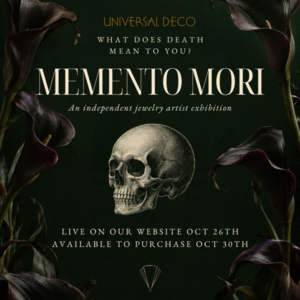
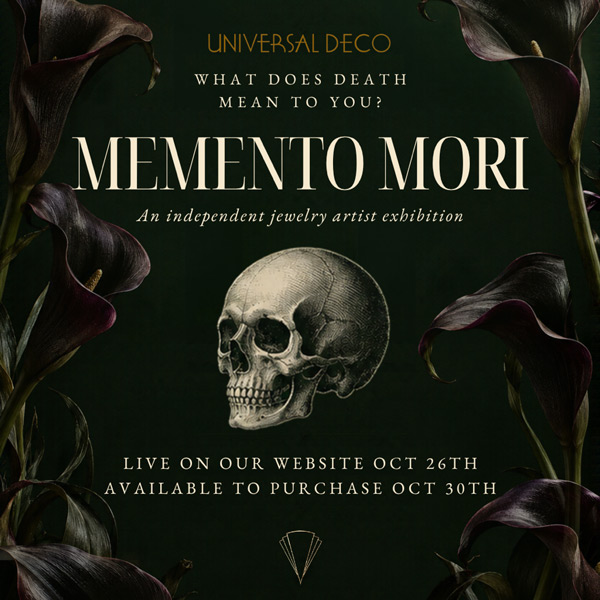
That thought became What Does Death Mean to You?/ Memento Mori, the first artist exhibition at Durmer’s Denver jewelry store, Universal Deco. She invited 14 jewelry designers from across the country to answer one question through their work: What does death mean to you?
It’s a deceptively simple prompt. “Death is one of the few things we all have in common, yet it’s something we often struggle to talk about openly,” Durmer says. And she was interested in death beyond its most literal definition: the end of a relationship, the loss of the person we once were, the closing of a chapter. The answers she received, and the jewelry creations communicating them, are just as varied.
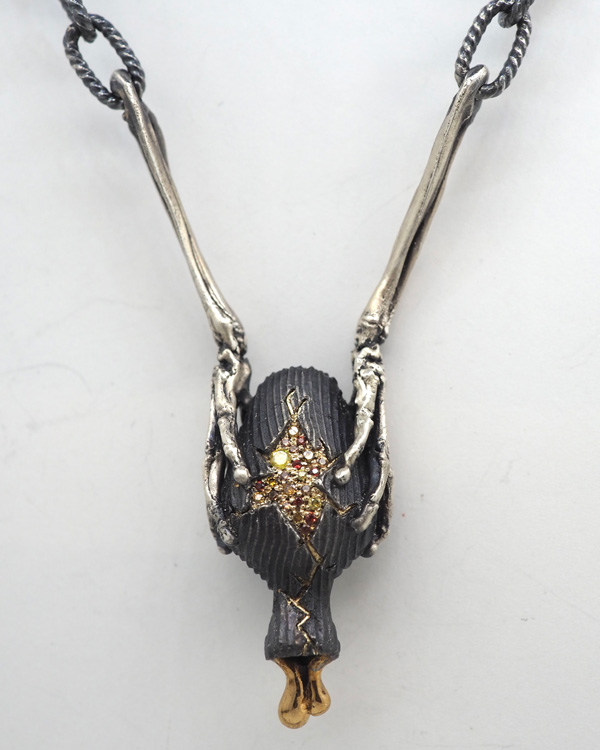
For Kimi Kaplowitz of Portland–based Theeth Jewelry, death became a broken vessel. Kaplowitz’s late mother was a potter who kept a collection of broken ceramics in the backyard that she jokingly called “the archeological site.” Some pieces were repaired, some reused, others left to return to the earth. Kaplowitz’s sterling silver Vessel is cracked and filled with gold in a nod to kintsugi, while skeletal hands hold it as gold appears to pour away, revealing sapphires and diamonds beneath. “The cracks in the vessel are the grief of losing a loved one, the pouring of the vessel is loss, the gold and gems are the healing,” she writes.
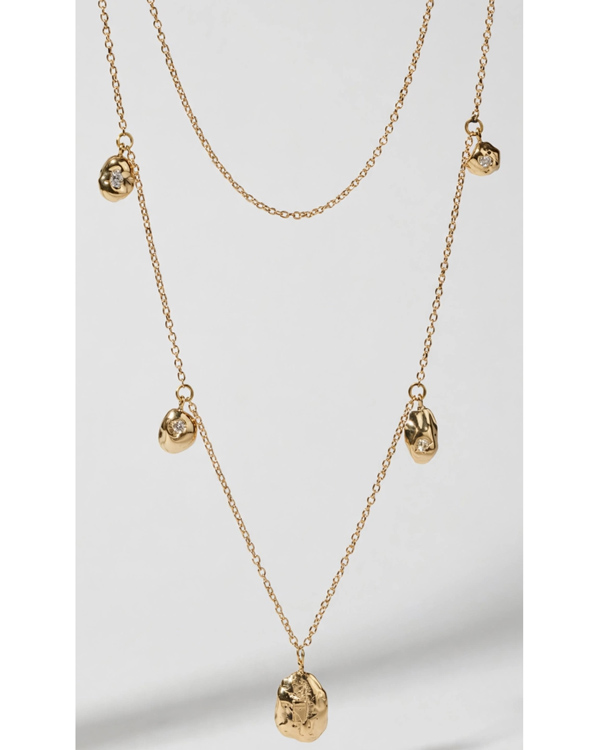
Sarah Ott of Love Eva Jewelry sought to explore the way grief becomes incorporated into the life that follows loss. Her one-of-a-kind Shredded Souls necklace features irregular 10k gold forms and various shapes of lab-grown diamonds, each one representing the scattered pieces left behind. “Life goes on though grief is never gone,” Ott says. “Instead, it is set into each moment of our lives.” The necklace’s construction reflects that idea, its diamonds cast in place, deliberately imperfect and unplanned, just as grief itself becomes cast into a life.
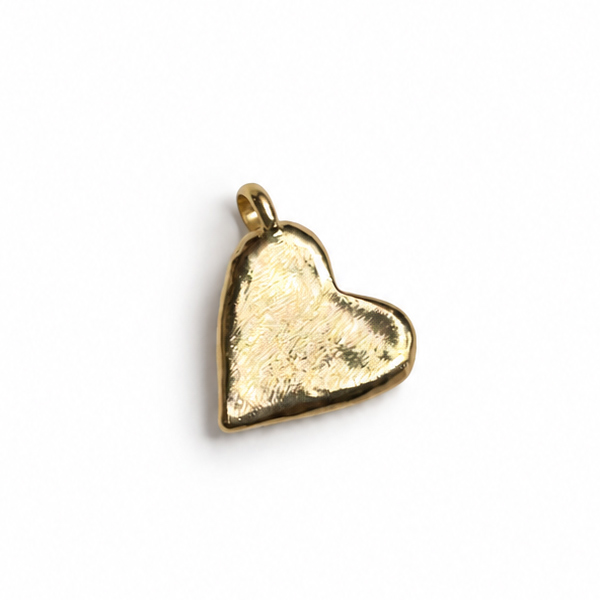
Saintly Fine Jewelry’s Samantha Chang, who is based in Boulder, Colo., explores something similar through touch. Her sand-cast, heart-shape Hold Me Through This charm is designed to double as a worry stone. The more its wearer rubs and holds its rough gold surface, the more polished it will gradually become. “We learn to carry [loss] differently, and what once felt rough may become softer to hold,” she says.
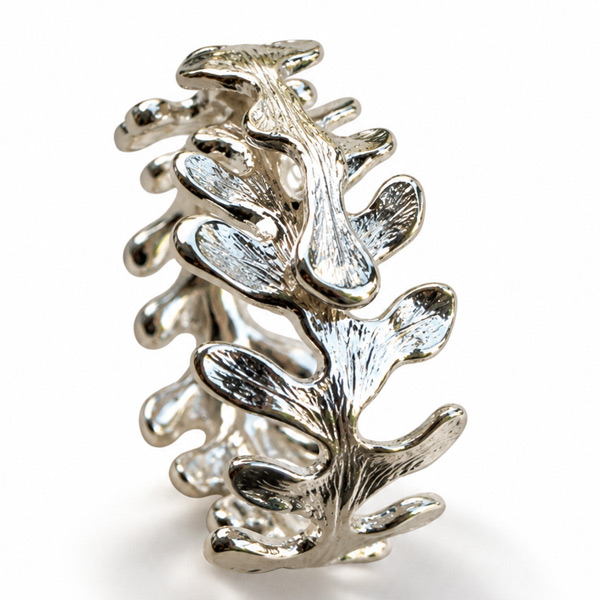
For Sandrine Valentine of Sandrine B. Jewelry, that rawness is still very new: She created the À VIF ring following her mother’s death on Aug. 25 of this year. The sterling silver piece takes its form from fern leaves Valentine gathered from her sister’s garden in France in 2018, preserving their natural texture before eventually having them molded for casting.
What originally began as an attempt to preserve something fleeting took on a different significance after loss. “À VIF, French for raw or painfully exposed, is not a representation of death itself, but of what remains in us after someone we love is gone,” Valentine says. The fern remains intentionally organic and imperfect, its leaves wrapping around the finger much as memories grow around an absence. “The loss remains, but so does the love.”
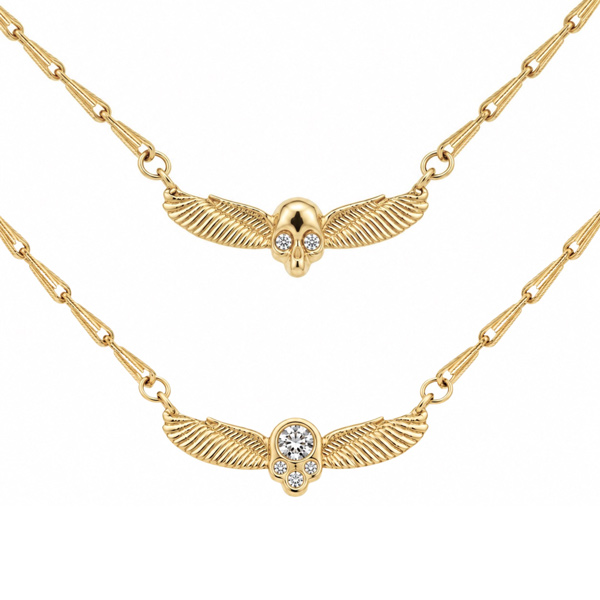
And then there are the artists who considered whether death is really disappearance at all. New York–based Tamsin Rasor’s reversible Continuum necklace places a winged skull on one side and a diamond scarab on the other. The symbols point in opposite directions—one toward mortality, the other toward rebirth.
“I’ve always loved the idea of taking flight after death energetically,” Rasor says, thinking of energy as something that changes form rather than ceases to exist. “One acknowledges mortality or Memento Mori, the other promises renewal. Where will we go and what will we do next? The universe has other adventures waiting for us.”
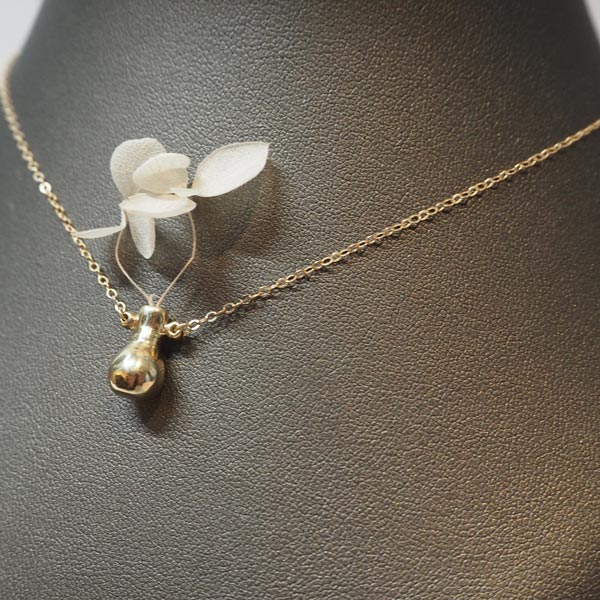
Nicole Renea of Steamboat Springs, Colo., answers Durmer’s question more simply: “Death means remembering that there is life.” Her Ever Near pendant is a tiny 14k gold vase meant to hold the small objects that can suddenly feel charged with meaning after someone is gone: a flower found on a walk, a feather in your path, a clipping from a place you don’t want to forget. “I believe these moments are messages,” Renea says, “not simply reminders of what we have lost, but quiet invitations back into our own lives.”
Rather than as a monument to death, she imagines the vase as a vessel for life. “Perhaps the ones we have lost don’t send us signs to keep us looking backward,” she says. “Perhaps they send them so we remember to look up. To notice what is still here. To hold it close. To live.”
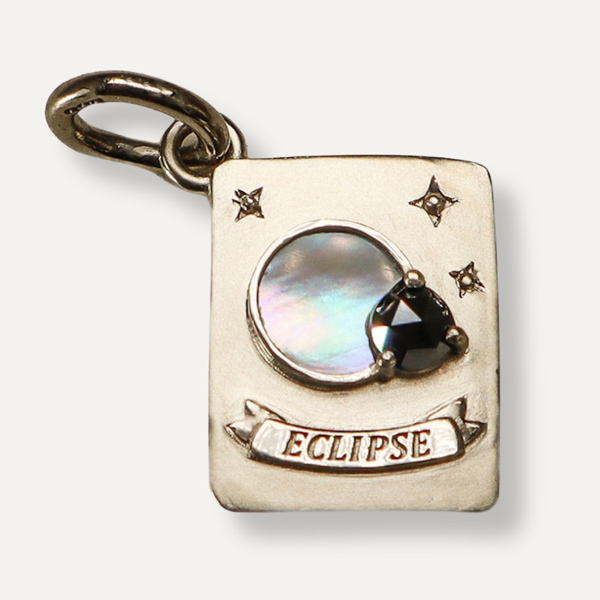
Ellie Lee arrives at a similar idea through her Eclipse Golden Seed Packet charm, which uses a mother-of-pearl sun partially obscured by a black diamond moon. “During an eclipse, the sun seems to disappear into darkness, but it is still there,” Lee says. “Its light is only hidden for a moment.” For Lee, death changes our view of what remains without necessarily eliminating its presence. “Even when something is gone from view, its presence can still stay with us.”
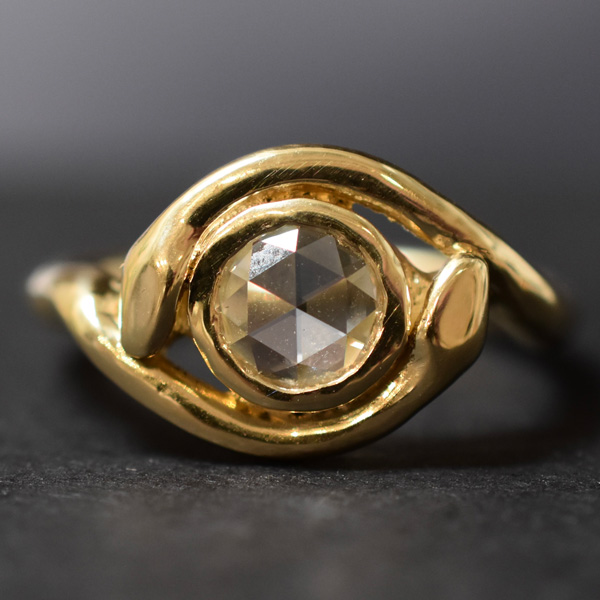
Amanda Hunt’s hand-carved Perpetua ring intertwines two snakes around a central lab-grown rose-cut diamond, connecting life and death in a single continuous form. “In my experience, death has often been closely followed by new life, bringing a distinct and aching bittersweetness to grief,” Hunt says. The diamond becomes what she calls “a window into that mystery,” a portal through which we might still feel those who have died.
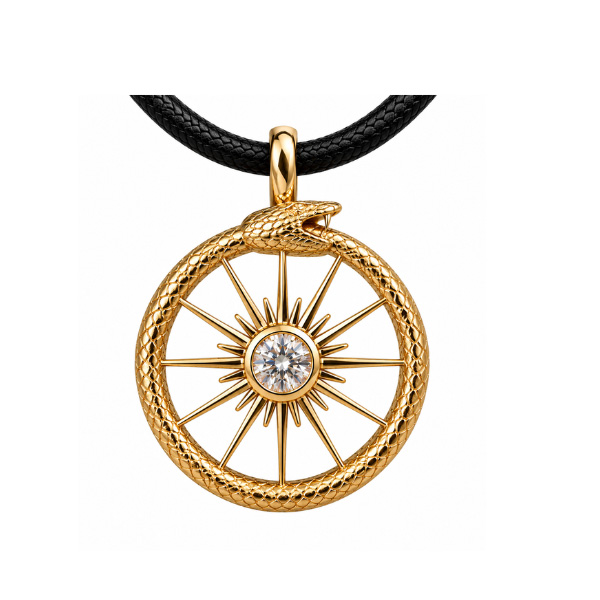
Kate Wilson of Her Haus also turned to a serpent, but hers looks toward the death of a former self. The Destroy to Become necklace takes inspiration from the Ouroboros, the ancient serpent consuming its own tail. “The serpent devours its former self, not in loss, but in creation,” Wilson writes. “An infinite return, a constant becoming.” Her interpretation gets directly at Durmer’s desire to expand the exhibition beyond physical death. Sometimes an ending is an identity being shed, a version of ourselves we can no longer inhabit. “What we release makes space for what we’re meant to be,” Wilson says.
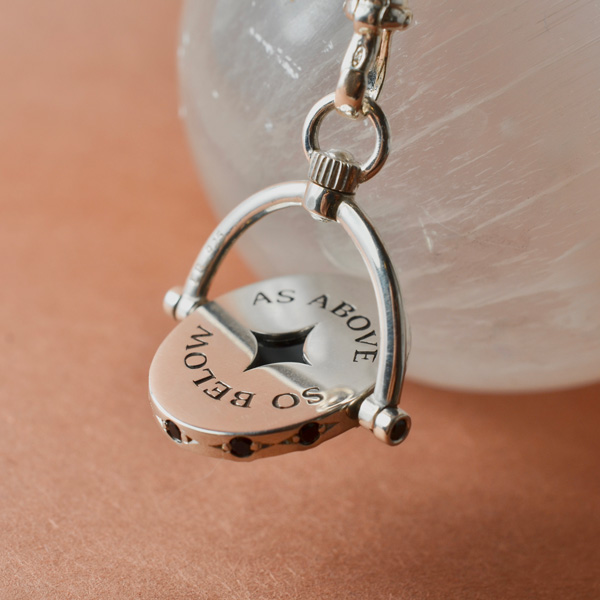
Still other featured pieces ask what we leave behind. Emma Rose of the Portland–based Emma Brooke Jewelry created So Below, As Above, a sterling silver pendant centered on a polished onyx tablet. Black stone has long been used for scrying, a form of divination where someone gazes into a reflective or translucent surface, and here its reflective surface asks the wearer to look at themselves while thinking about those who came before. On the reverse (pictured above), the phrase as above, so below can be turned to become so below, as above. Neither comes first. “The people who came before us shape the ways we live, and one day the actions we choose will be remembered and reflected by someone else,” Rose says. Twelve black spinels surround the piece like the hours of a clock or months of a year. “Memento mori asks us to remember that we will die,” she says. “But remember, too, that we’ll also be reflected.”
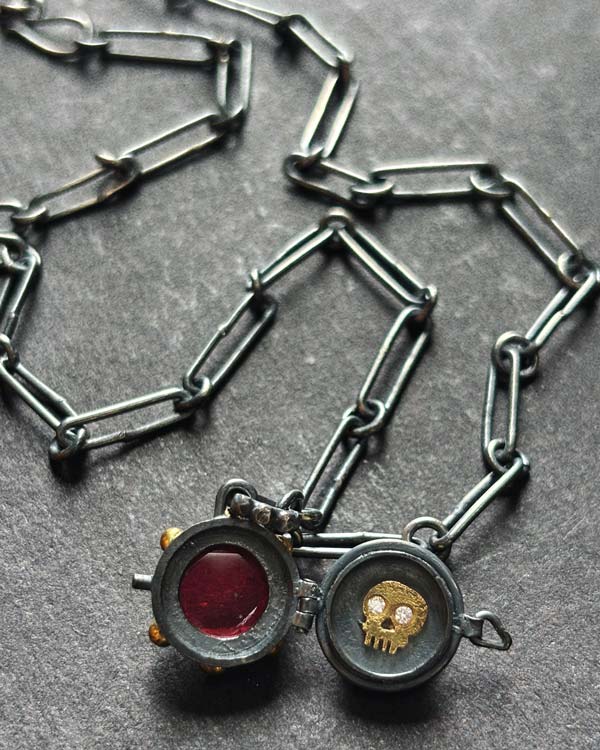
Zanny Cox of the Austin, Texas, brand Estudio Zanny also invokes “As Above, So Below” in the Mourning Talisman, though her one-of-a-kind locket is designed more as an object of remembrance. A garnet represents lifeblood, a skull honors the dead, stars stand for hope and the expansiveness of life, and three gold spheres represent past, present, and future. The locket itself can hold a small token of someone loved and lost, allowing the wearer to quite literally carry a piece of that person with them.
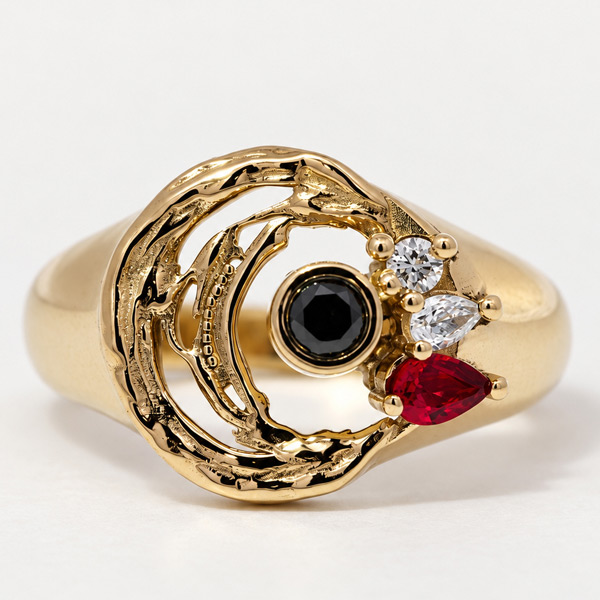
Eunmi Han of Los Angeles–based Le Conte Jewelry approaches mortality from another direction entirely: What if death doesn’t arrive at all? What if it has simply always been there? Her Around Us, but Not Always Seen ring takes inspiration from Hans Holbein the Younger’s The Ambassadors and its famous use of anamorphosis. Working with Le Conte’s signature brushstroke forms, Han created an abstract sculptural surface in which a skull reveals itself only through reflection and a change in perspective. “I realized that, for me, death is not necessarily defined by what it means, but by the simple fact that it exists,” Han says. Her conclusion is almost unnervingly straightforward: “Death does not suddenly appear when we notice it. It was always there.”
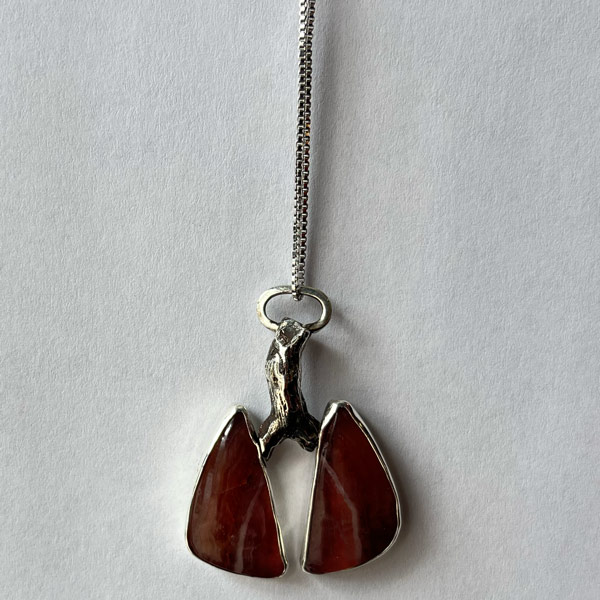
Leah Strong of Denver-based Victoria Malum Jewelry came to memento mori through art history. While earning her master’s degree in Florence, Italy, she visited La Specola, where centuries-old wax anatomical models made for scientific study stopped her in her tracks. Despite exposed bodies and visible anatomy, the figures were posed with the beauty and sensuality of classical sculpture. That mingling of beauty and mortality stayed with Strong long after she became a metalsmith.
Her response to this exhibition, however, brought her back to her grandmother, who died nearly a decade ago after years of illness. “I still feel her presence in so many ways even when I don’t immediately realize,” Strong says. It was only midway through creating her piece that she recognized a connection between what she was making and the fact that her grandmother had died from mesothelioma. Sometimes, perhaps, the hands know what they’re making before the mind catches up.
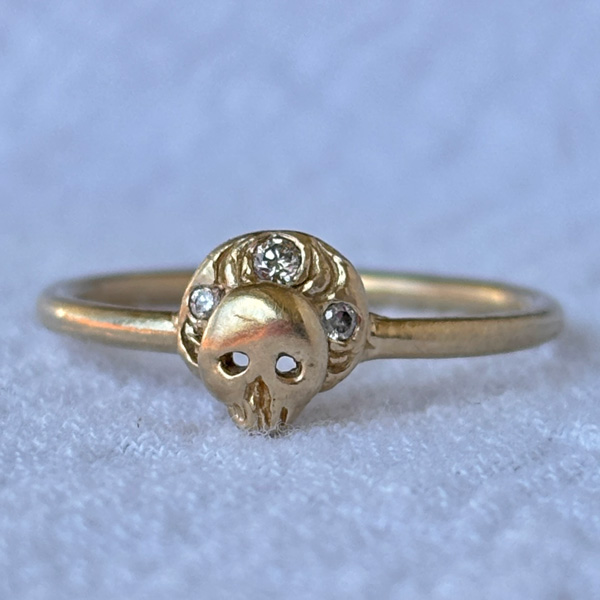
Meryl Smith of Tucson brand Myth and Stone found another lesson about death during her time living in New Orleans, where she was struck by traditions that allow mourning and celebration to occupy the same space. After experiencing a significant loss, Smith created the Freya ring, a 14k gold skull wearing a diamond-studded headpiece. “I saw that death is often the only time we really celebrate a person’s life and that there is so much beauty in this,” she writes. The ring is her reminder to remember those we love not only with sadness, but with joy.
So in all, that’s 14 artists, one question, and not one simple answer. “I think one of the most magical things about being an artist is our ability to take something as painful as heartbreak, grief, or loss and transform it into something beautiful and meaningful,” Durmer says. “To give physical form to emotions that can be so difficult to put into words.”
Jewelry seems unusually equipped for the task. It already carries the people, places, milestones, and memories we attach to it. It outlives us, then gets passed down. We wear it against our bodies, and sometimes we even just hold onto it when we need something to grasp. “My hope is that this exhibition encourages conversations about death, grief, transformation, and everything in between,” Durmer says. “That people see these pieces not simply as jewelry, but as expressions of the human experience, and perhaps find something within another artist’s interpretation that speaks to their own story.”
What Does Death Mean to You?/ Memento Mori debuted on Universal Deco’s website on Oct. 26, and the brand’s storefront in Denver is hosting an evening exhibition on Oct. 29.
The pieces became available for purchase the morning of Oct. 30, exactly one year after Chris died. The timing is intentional: Durmer had known she wanted to spend the anniversary surrounded by beautiful art, and through the exhibition, 14 other artists have joined her, each offering a different way of considering loss, remembrance, transformation, and what remains.
(Images courtesy of Universal Deco)
- Subscribe to the JCK News Daily
- Subscribe to the JCK Special Report
- Follow JCK on Instagram: @jckmagazine
- Follow JCK on X: @jckmagazine
- Follow JCK on Facebook: @jckmagazine