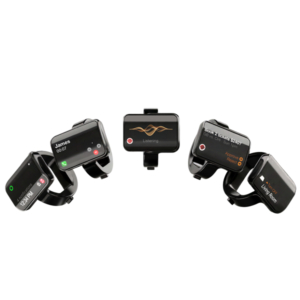
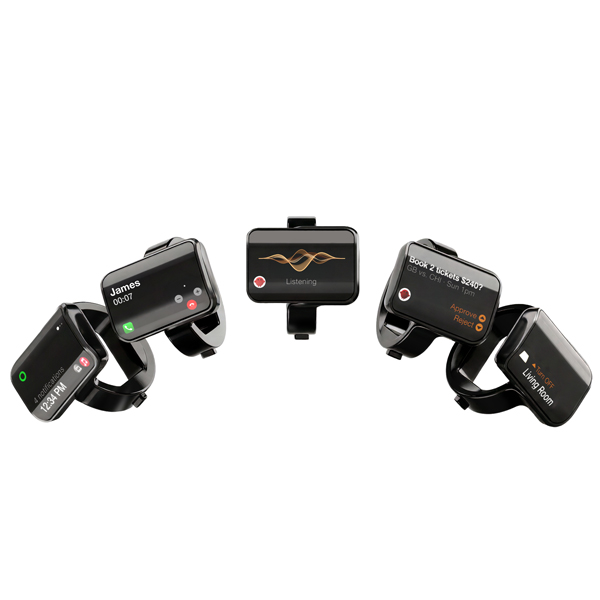
Well this brings “technology at your fingertips” to a new level. Hardware startup Aina is releasing a smart ring that looks like a teeny tiny computer, and that’s pretty much what it is.
The company recently unveiled a $399 smart ring equipped with a small screen, microphone, speaker, joystick, and gesture controls. Aina is positioning the device as a sort of remote control for both AI and traditional apps: Users can dictate notes, respond to notifications, control music and smart-home devices, join and mute meetings, call an Uber (though Uber reportedly said on its earnings call that very few people are using personal AI agents to book them), and approve or reject actions suggested by AI agents—all without necessarily reaching for a phone. Preorders are open now, with shipping planned for January 2027; the eventual retail price is expected to be $499.
Is this the ring that finally persuades everyone to start conversing with their fingers? Who knows. Even TechCrunch’s reviewer, after testing Aina for several days, wasn’t entirely certain where it would fit into his daily routine (Personally, I’m sticking with my Apple Watch indefinitely until something can truly convince me otherwise.)
But the broader idea, as these continuous tries at smart rings won’t cease, is worth watching for jewelers. Smart rings aren’t exactly niche curiosities anymore. Oura says it reached 6 million paid members as of Oct. 22 of this year; its business has grown enough that the company recently pursued an IPO valuing it at as much as $15.6 billion (before ultimately postponing the offering). The devices themselves are becoming more ambitious: Health tracking was one thing, but Aina imagines the finger as a place from which we might actively control the technology around us.
We’ve seen designers including Suzanne Kalan and Toi Fine Jewelry create diamond and gold jackets intended to make wellness rings feel more like jewelry, so they have relevance. If smart rings become even more useful—and therefore harder for consumers to take off—the desire to personalize, stack, disguise, or otherwise make them look better probably isn’t going away.
There’s a larger creative question here, too. As consumers grow accustomed to objects worn on the body doing something beyond looking beautiful, does that eventually change what they expect from jewelry itself? JCK has been asking variations on that question for more than a decade. Back in 2013, Rob Bates wondered whether customers might someday care as much about what operating system a ring worked with as they did about its diamond quality. That sounded fairly futuristic at the time.
Today, I still think we’re more concerned with where our diamonds come from than what’s running the devices on our fingers. However, some of those diamonds are decorating those devices. I have doubts that Aina will become the it piece of wearable technology that sticks, but eventually, something will. And when it does, it’ll be the ultimate status symbol that consumers are going to want to bling the hell out of.
The moral of the story isn’t that every piece suddenly needs a microphone and joystick. Fine jewelry already offers something technology can’t replicate: permanence, emotion, craft, and the ability to remain meaningful long after its electronics would be obsolete. But if these tech companies keep being so determined to move their products onto our fingers, accessorizing them is something jewelers should continue to pay attention to.
(Photo via Aina)
- Subscribe to the JCK News Daily
- Subscribe to the JCK Special Report
- Follow JCK on Instagram: @jckmagazine
- Follow JCK on X: @jckmagazine
- Follow JCK on Facebook: @jckmagazine