Businesspeople like to be in control. What’s particularly frustrating about the current tariff situation is that virtually no one can do much about it. Even the leaders of India and Switzerland—whose imports to the U.S. have been hit by 25% and 39% tariffs, respectively—appear at a loss.
Only one man, who heads the world’s largest consumer market, seems to be calling the shots here, and we are all subject to his whims—unless a U.S court limits his authority (and he follows its orders).
As Nick Hayek, CEO of Swatch Group, told Reuters: “What counts on the U.S. side is what Mr. Trump is saying. Nobody else.”
Some hope the new tariffs will be another example of what traders have labeled TACO (for “Trump always chickens out”). They note that the president’s “reciprocal tariffs” were originally supposed to go into effect April 9 but have been postponed three times—first for 90 days, then to Aug. 1, now to Aug. 7.
But how many companies want to take a chance on another delay, with the stakes so high? We hear that Indian manufacturers and Swiss watchmakers are upping their imports this week to beat the buzzer, just as they did during the first week of April.
The irony is, many retailers have already been putting off purchases in the hope that the current 10% tariffs would eventually be removed. Instead, it seems 15% has become the new baseline.
Hayek told Reuters that his company has at least three to six months of product in U.S. warehouses, so the tariffs will have no “immediate effect.” But they will down the road.
“A 39% tariff, we cannot absorb that,” he said. “Prices will go up for sure.”
No one knows what effect all this will have on natural diamonds and Swiss watches, but chances are it won’t be good for either industry.
The natural diamond business was hoping for a revival as lab-grown prices sink and the two markets continue to bifurcate. The over-$10,000 consumers will probably stick with natural—it’s hard to find a lab-grown for that much. The under-$3,000 category is largely lab-grown. But there’s a huge middle ground that’s currently up for grabs. A 25% surcharge could make it harder for natural diamonds to regain lost market share.
“Confusion and uncertainty breeds hesitancy and erodes confidence of doing business,” diamond industry analyst Paul Zimnisky tells JCK. “There is the existing tariff, the new tariff, the [possible] Russian penalty [on India]—all while negotiations are still ongoing. This is not good for anyone.”
As far as watches, demand remains high for the top brands, but that’s based on current prices. The long waiting lists won’t disappear overnight, but they could get smaller if collectors believe they can buy those items cheaper overseas.
“American retailers I have spoken to since last Friday have said they are not particularly troubled about demand shifting abroad if prices rise,” wrote Rob Corder on WatchPro, “but it is hard to imagine Canadian jewelers aren’t licking their lips at the prospect of a 10% price advantage over the U.S.”
Steven Rostovsky, owner of Rostovsky Watches in Los Angeles, tells JCK that if the 39% Swiss tariff goes into effect and prices rise, consumers have several options.
“Choice number one: Pay the new price,” he says. “Choice number two: Go overseas, and don’t declare the new price at the border. Choice number three: Don’t buy.
“What worries me is that a certain amount of consumers will lose interest,” says Rostovsky. “The market has been fueled by collectors who are buying multiple watches. How much of that passion will be impacted by these outside factors? It might not die forever, but it might stall for a considerable amount of time. Collectors might just decide ‘I have enough watches’ and wait for the prices to go down.”
Rostovsky believes bigger brands are better equipped to handle this situation, since they have wholly owned U.S. subsidiaries.
“They can manage what import price they sell to the U.S.,” he says. “But the independents can’t necessarily do that. COVID flattened the distribution channel. Most of the independents moved to a direct-to-consumer model, and consumers will have to pay the tariff.”
Some dealers think the tariffs will help the pre-owned sector, which already constitutes one-third of the watch market. They may be right about that, but Rostovsky argues the new and secondhand businesses are more symbiotic than they seem.
“If the primary market stalls, so will the secondary market,” he says. “Sellers won’t want to sell and buyers won’t want to buy at the new prices. Everything will stall. It will probably take about six months for everything to sort itself out.”
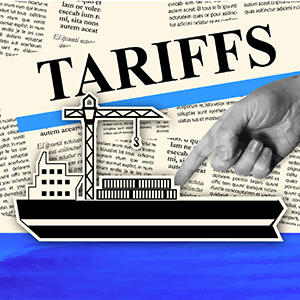
(Photo: Getty Images)
- Subscribe to the JCK News Daily
- Subscribe to the JCK Special Report
- Follow JCK on Instagram: @jckmagazine
- Follow JCK on X: @jckmagazine
- Follow JCK on Facebook: @jckmagazine