
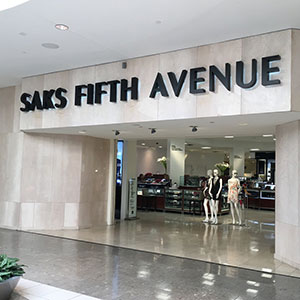
Call it “New Saks,” though with some old concerns about tariffs, the economy, and consumer demand: Saks Global’s April 5 filing of a Chapter 11 plan of reorganization gives a glimpse at how the department-store group is looking at its future.
New Saks, as the company is called in the bankruptcy court filing, will have new boards directing the company, new management incentive plans, and new agreements with its vendors—businesses large and small that did not get paid in a timely fashion prior to Saks Global entering Chapter 11 in January.
Saks Global also is selling its corporate jet, a 2003 Gulfstream Aerospace. In a separate filing, the company outlined how it worked with a consultant to market the jet and reached a deal March 30 with Jones Aviation. The final purchase price? A cool $6 million.
While Saks’ 107-page reorganization plan and its 203-page disclosure statement for the plan are full of detail, they seem vague on how exactly the retailer will end its bankruptcy. They do cover how Saks Global will handle its outstanding claims to its debtors, how it will handle its exit financing, and how it will pay for the bankruptcy.
What’s most interesting is the “Risks Associated with Business” section. There are some gems here, like personnel worries: What if the CEO leaves? What if Saks Global cannot hire qualified employees for its day-to-day activities?
Saks Global’s companies “need qualified and competent personnel to execute their business plans and serve their customers,” the plan said.
In last week’s announcement that it has secured $500 million in exit financing, Saks said it expects to emerge from bankruptcy this summer. In the new filings, however, the company says that while it does “anticipate that the plan will be confirmed and they will emerge from these Chapter 11 cases in the coming months, [it] cannot be certain of this timing.”
Plus, shoppers’ economic concerns may affect how much they buy from Saks Global stores.
“Any decline in customer demand and spending resulting from a general economic downturn could materially and adversely affect…business, financial condition, or results of operations,” the court filing said.
Inventory issues, tariffs, and vendors’ trust also are top of mind, according to the court documents. And Saks Global—which owns Saks Fifth Avenue, Neiman Marcus, and Bergdorf Goodman—faces the challenges of operating within the luxury sector.
Saks Global “must continue to maintain sufficient inventory levels and rebuild their relationship with vendors to operate their business successfully. However, it also must avoid accumulating excess inventory as they seek to minimize out-of-stock levels across all product categories and to maintain in-stock levels,” its filing said.
“As a result, [the company] may experience difficulty in responding to changes in the retail environment generally as well as any changes to their vendor relationships specifically, which makes them vulnerable to changes in price and consumer preferences.”
“If [Saks Global] does not accurately anticipate the future demand for a particular product or the time it will take to obtain new inventory, their inventory levels will not be appropriate, and the results of operations may be negatively impacted.”
(Photo courtesy of Flickr)
- Subscribe to the JCK News Daily
- Subscribe to the JCK Special Report
- Follow JCK on Instagram: @jckmagazine
- Follow JCK on X: @jckmagazine
- Follow JCK on Facebook: @jckmagazine