Richemont posted a strong first half, with sales rising 16% to €12.3 billion ($14.4 billion), powered by demand for its jewelry brands and particularly robust business in the Americas and Japan. At constant exchange rates, sales increased 17% for the six months ended Sept. 30.
The luxury group’s four jewelry maisons—Cartier, Van Cleef & Arpels, Buccellati, and Vhernier—produced €9.1 billion ($10 billion) in first-half sales, an 18% increase at actual exchange rates and 19% at constant rates.
Jewelry growth, however, moderated in the company’s second quarter, which covers July through September. Sales at the jewelry houses increased 14% at constant exchange rates, down from 24% growth in the first quarter. Reuters reported that analysts polled by RBC had expected 16% growth for the quarter, prompting some concern that the jewelry business, which has been a standout in a generally difficult luxury market, may be slowing.
Richemont executives pushed back against the idea that jewelry’s longer-term momentum is faltering. CEO Nicolas Bos told analysts that jewelry sales growth was being driven by higher volumes rather than simply price increases.
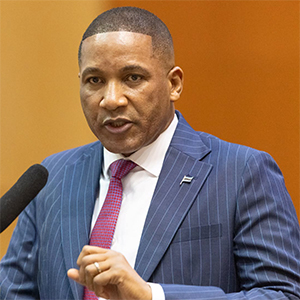
Chairman Johann Rupert said the company retained pricing power but did not intend to overuse it. “We have pricing strength; we just don’t want to be greedy,” he said, according to Reuters.
In a presentation to investors Nov. 13, Richemont said established collections—including Cartier’s Love, Clash, and Panthère and Van Cleef’s Alhambra and Perlée—continued to perform well, as did newer products and high-jewelry collections.
The Americas remained one of Richemont’s strongest regions. First-half sales there climbed 23% at constant exchange rates, with double-digit growth across all business areas. The second quarter was the region’s 11th consecutive quarter of double-digit growth.
Japan increased 30% at constant rates, while Europe grew 13% and Asia Pacific rose 16%. Mainland China remained soft, though improvement in Hong Kong and Macau helped the region overall.
Richemont’s watch business also strengthened. Sales at its specialist watchmakers, including Vacheron Constantin, IWC, Jaeger-LeCoultre, Piaget, and A. Lange & Söhne, rose 10% at constant exchange rates to €1.7 billion (almost $1.9 billion) during the half. Operating profit in the division tripled to €150 million.
Across the group, operating profit climbed 33% to €3.1 billion ($3.4 billion), while net profit increased 39% to €2.5 billion ($2.8 billion). Richemont’s profitability received a €229 million boost from one-time tariff-related items, although operating margin also improved when those benefits were excluded. The company continued to contend with elevated raw-material costs, particularly gold.
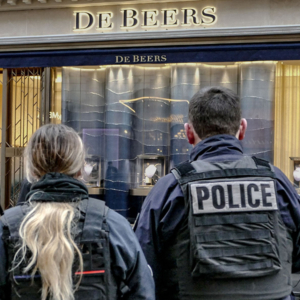
Rupert said Richemont has not decided whether to invest in De Beers. Both Richemont and Signet Jewelers have been reported as potential participants in the Global Diamond Consortium, headed by former De Beers CEO Gareth Penny, which is seeking to acquire Anglo American’s controlling interest in the diamond company.
“In terms of possible acquisitions, we haven’t made our mind up about anything,” Rupert said, according to WWD, adding that any diamond investment Richemont might make would not have a meaningful impact on its balance sheet or earnings.
The JCK News Desk uses AI to help research and produce the first draft of articles. This story was then reviewed by staff writer David Blomquist.
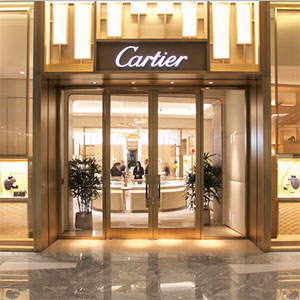
(Photo: Cartier at New York’s Hudson Yards/courtesy of Cartier)
- Subscribe to the JCK News Daily
- Subscribe to the JCK Special Report
- Follow JCK on Instagram: @jckmagazine
- Follow JCK on X: @jckmagazine
- Follow JCK on Facebook: @jckmagazine