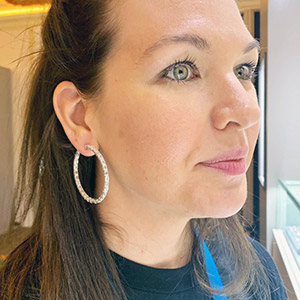
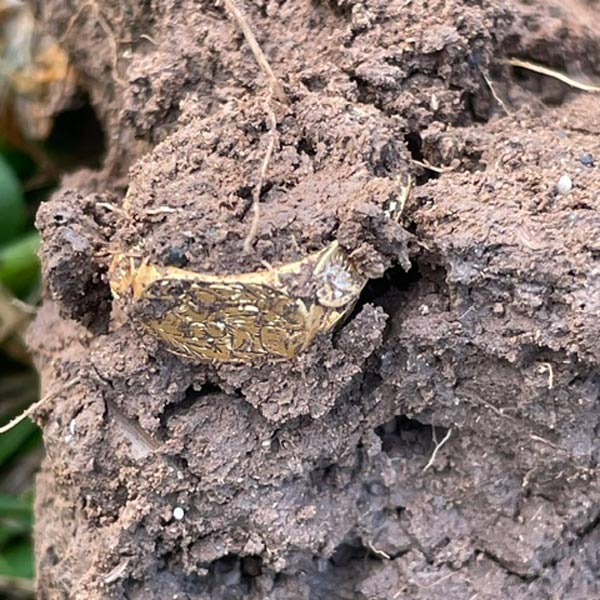
Andrew Riley, a semiretired architect from North Yorkshire, England, goes metal detecting at least twice a week—rain or shine, mostly for the exercise. In 2024, within four months of each other, he found two medieval gold rings in fields near Northallerton. They head to Noonans Mayfair on Sept. 22, and he plans to use his share of the proceeds on an interrailing trip to Italy.
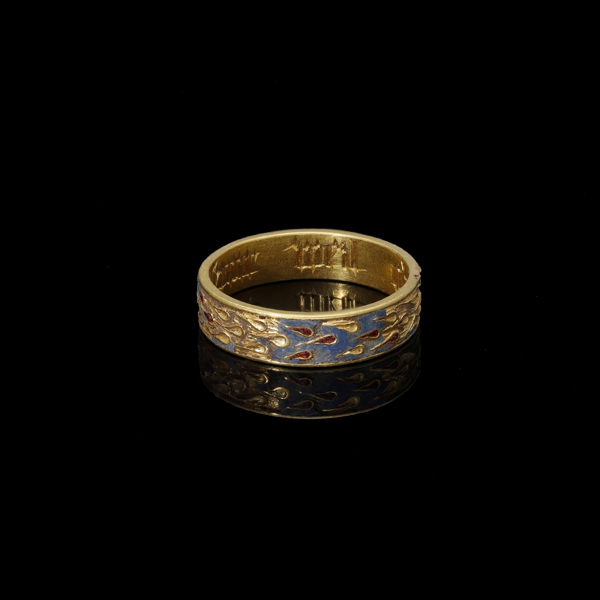
The first, a 15th-century enameled “blood of Christ” ring, is estimated at £5,000 to £7,000 ($6,700–$9,400). Riley found it about eight inches deep in a rig and furrow field he had been methodically searching for several weeks. “I thought it was just costume jewelry at first until I saw the inscription,” he recalled. “I was on my own at the time so ran up to the farmhouse to show the landowner.” The ring reflects a distinctly medieval mode of Christian devotion—a focus on Christ’s bodily suffering and the five wounds of the crucifixion that found expression in personal devotional objects as much as in manuscript illustration. Religious guilds of the period provided a social framework for that devotion: The Corpus Christi Guild at York, founded in 1408, eventually numbered 17,000 members, among them a landowner named James Strangeways whose holdings were close to the findspot—a connection that may be coincidence, but a detail that makes provenance research worth exploring.
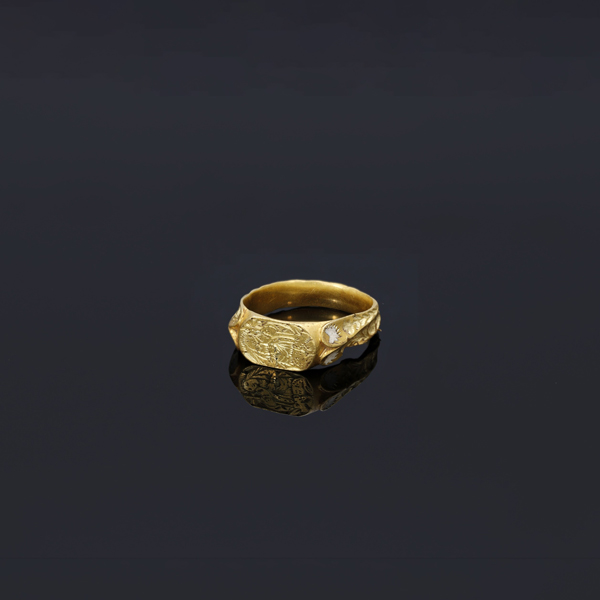
The second ring, estimated at £4,000 to £6,000 ($5,400–$8,100), depicts St. Margaret of Antioch, a figure now considered mythical but venerated throughout the medieval period, called upon particularly by women in childbirth. Her story involves a Roman governor, a dragon, a miraculous escape from its belly, and eventual beheading; the iconographic association with childbirth derives from the dragon episode. Riley found this one on a hot summer evening when he had nearly given up for the day; an Elizabeth I sixpence and some silver chain links preceded it, and then came the glint of gold. “I did the obligatory gold dance and then had a lie down in shock,” he said.
(Photo at top courtesy of Andrew Riley; others courtesy of Noonans)
Follow me on Instagram: @anniedavidsonwatson
- Subscribe to the JCK News Daily
- Subscribe to the JCK Special Report
- Follow JCK on Instagram: @jckmagazine
- Follow JCK on X: @jckmagazine
- Follow JCK on Facebook: @jckmagazine