A cautious report from the Swiss Gemmological Institute (SSEF) has turned the world’s eyes to a possible new source of copper-bearing tourmalines, known—and coveted—in the jewelry industry as paraiba tourmalines.
SSEF said in a news alert that “credible reports from trade sources” have revealed a deposit of copper-bearing tourmalines in Ethiopia. The gem lab recently received several copper-bearing tourmalines for analysis that “may be of Ethiopian origin,” it said. The person or group that submitted the stones was not disclosed.
Until now, the tourmalines known for their Windex-like color have only been found in Brazil—where miner Heitor Barbosa first unearthed them in the Paraíba state in the 1980s—as well as Nigeria and Mozambique.
SSEF said of the recent submission: “Preliminary trace-element analyses of the copper-bearing tourmalines in question exhibited considerable overlap with stones from previously known localities, and particularly those from Brazil. As a result, origin determination may be challenging for certain specimens.”
One gem expert JCK spoke with emphasized that “nothing has been verified yet” and that many in the trade want to see if GIA can determine whether the stones are paraiba-like.
However, Ethiopian gemologist Haimanot Sisay posted a video on Instagram that opens with an all-caps “confirmed in Ethiopia” onscreen. Sisay said definitively that paraiba-type tourmalines were discovered in the central Ethiopian highlands. Samples of the gemstone were being collected for “proper checkup,” and some were already on their way to Germany and Thailand, she added.
Others in the jewelry industry have been offering their thoughts on social media since the possible new paraiba deposit came to light. “If the Ethiopian deposit is confirmed, it would mark one of the most significant Paraíba discoveries in year, potentially expanding supply and opening a new chapter for this rare gemstone category,” Business of Jewellery wrote on Instagram.
Australian jeweler Nicole Winkler warned consumers about “bargains to be found on the internet” in a post about what she called “a huge discovery in the gem world.”
She explained, “New deposits need time. The quality, consistency of a new find can take years to assess. Early stones from a new discovery are not always representative of what the deposit will ultimately produce.
“My view: Fine, well-documented paraiba from Brazil and Mozambique will only become more valuable as demand grows and supply remains finite,” Winkler said. “New discoveries rarely deflate an established market. They tend to fuel curiosity and drive it further.”
SSEF noted in its news release that it continues to research the stones and is “refining the methods” used to distinguish them from copper-bearing tourmalines from known sources.
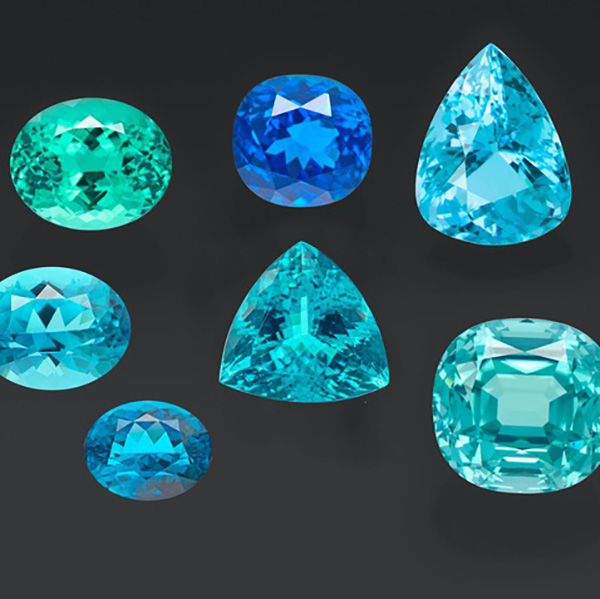
Top: Paraiba-type tourmalines of possible Ethiopian origin that were recently submitted to SSEF include the two oval stones on the bottom left, pictured with a selection of copper-bearing tourmalines from Brazil, Mozambique, and Nigeria. (Photo courtesy of SSEF)
- Subscribe to the JCK News Daily
- Subscribe to the JCK Special Report
- Follow JCK on Instagram: @jckmagazine
- Follow JCK on X: @jckmagazine
- Follow JCK on Facebook: @jckmagazine